What Happens On A Shark Cage Diving Trip: A Worked Example From Gansbaai
A shark cage diving trip is a half-day routine of check-in, briefing, boat ride, cage rotation and surface time. This guide walks through the exact sequence, the two air-supply formats on the Gansbaai roster, and what you will actually see from the cage.
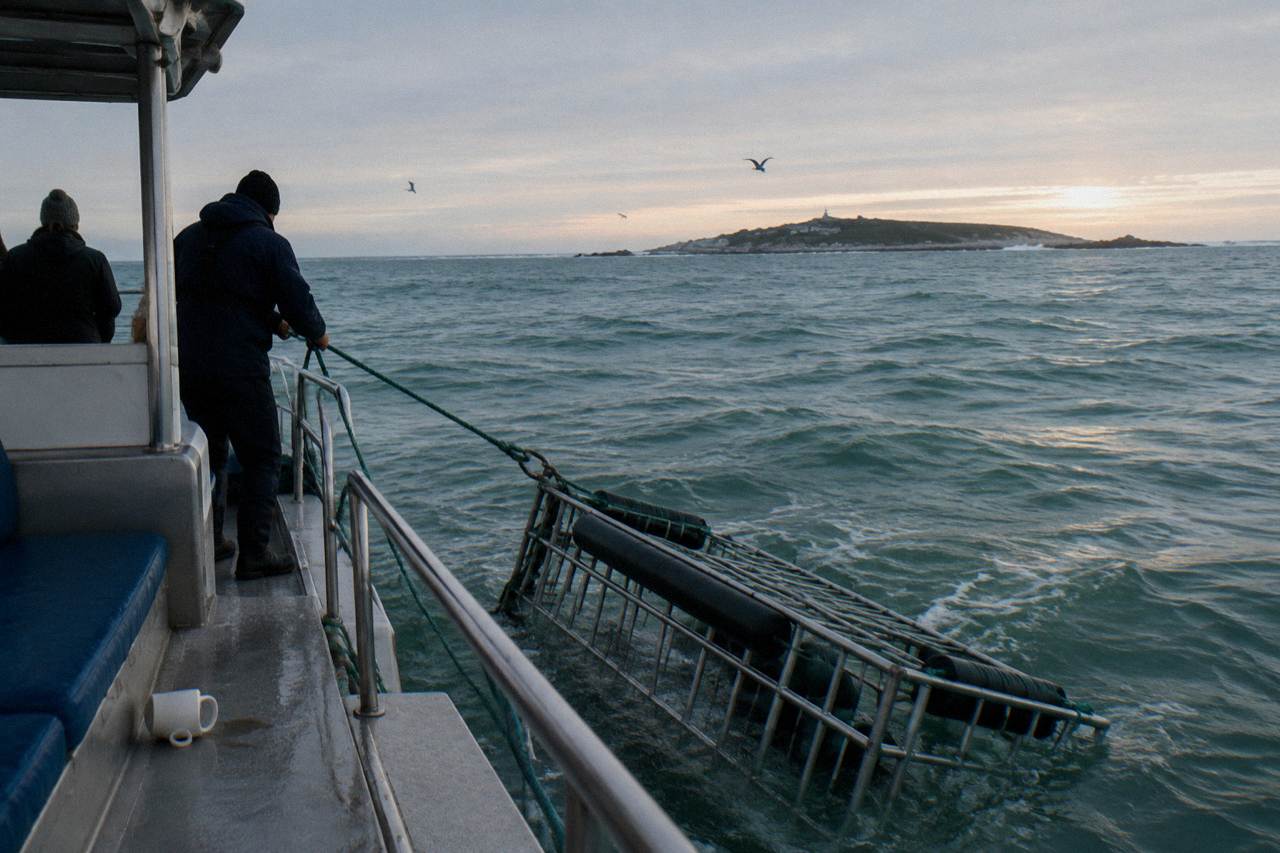
Short answer
A half-day shark cage diving trip from Gansbaai typically runs three to four hours. You check in at Kleinbaai Harbour, sit through a safety briefing, ride 20 to 60 minutes to the dive site, and rotate through the cage in roughly 20-minute turns. Bronze whaler and sevengill sharks are the most common sightings today.
What Happens On A Shark Cage Diving Trip From Start To Finish?
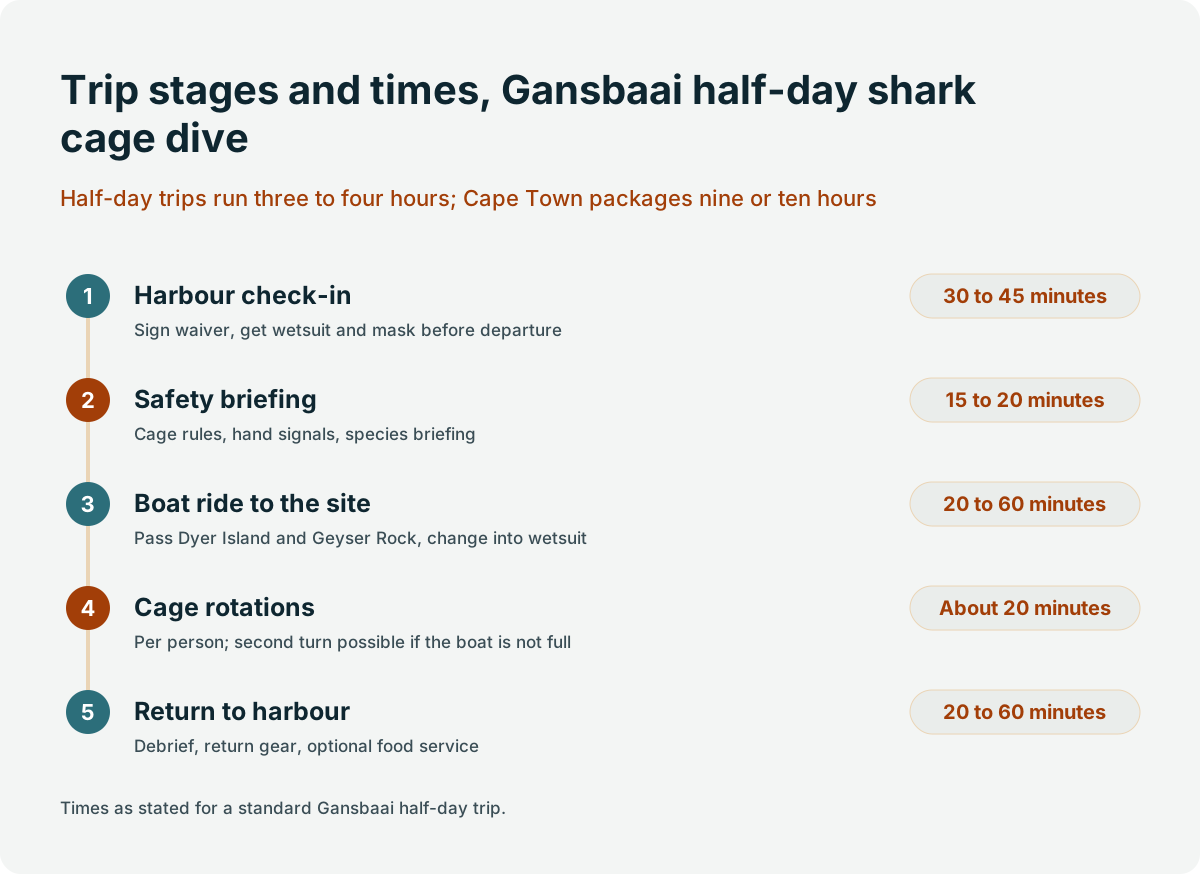
A Gansbaai half-day trip follows a fixed sequence: harbour check-in, a safety and species briefing, a boat ride of roughly 20 to 60 minutes to the site, cage rotations of about 20 minutes per person, and surface viewing time between turns. The full routine usually runs three to four hours, while Cape Town transfer packages stretch the day to nine or ten hours.
Most Gansbaai operators run the same basic half-day shape, and the routine below is the one Shark Cage Diving Cape Town uses to compare listings across the roster. The sequence is not a mystery: you arrive, get briefed, ride out, wait your turn, climb into the cage, and then spend the rest of the trip watching from the deck. What changes between operators is the boat size, the air supply inside the cage, the food, and whether the Cape Town transfer is bundled or sold as an add-on.
The worked example that follows is based on the standard Kleinbaai Harbour departure used by the Gansbaai listings on this site. It is not a promise of exact timings, because sea conditions and shark activity move the schedule around. But the order of events is consistent enough that you can plan your morning around it.
If you are still deciding which departure town fits your trip, the shark cage diving in Gansbaai guide compares the Gansbaai routine with the False Bay and Mossel Bay alternatives. The safety record and permit rules are covered in the is shark cage diving safe guide.
What Is The Harbour Check-In And Safety Briefing Like?
Check-in at Kleinbaai Harbour usually happens 30 to 45 minutes before departure. You sign a waiver, get fitted for a wetsuit, and listen to a briefing that covers cage rules, hand signals, what to do if you feel seasick, and the species you are likely to see. Operators are licensed by the Department of Forestry, Fisheries and the Environment, and the briefing is a permit condition, not a formality.
The check-in desk is where the trip becomes real. You hand over your booking reference, sign the waiver, and get a wetsuit, booties and mask assigned to you. The crew will usually ask about your shoe size and wetsuit size on the spot, so arriving early gives you a better chance of a comfortable fit. If you booked a Cape Town transfer package, the driver normally handles the harbour arrival and points you to the right operator.
The safety briefing is the most information-dense part of the day. The crew explains how to enter and exit the cage, where to put your hands, what the hand signals mean, and what to do if you feel unwell. The briefing also covers the species you are likely to see, which today means bronze whaler sharks and broadnose sevengill cowsharks at Gansbaai rather than great whites. The permit system is administered by the Department of Forestry, Fisheries and the Environment, and the code of conduct bans touching sharks and requires approved cage specifications.
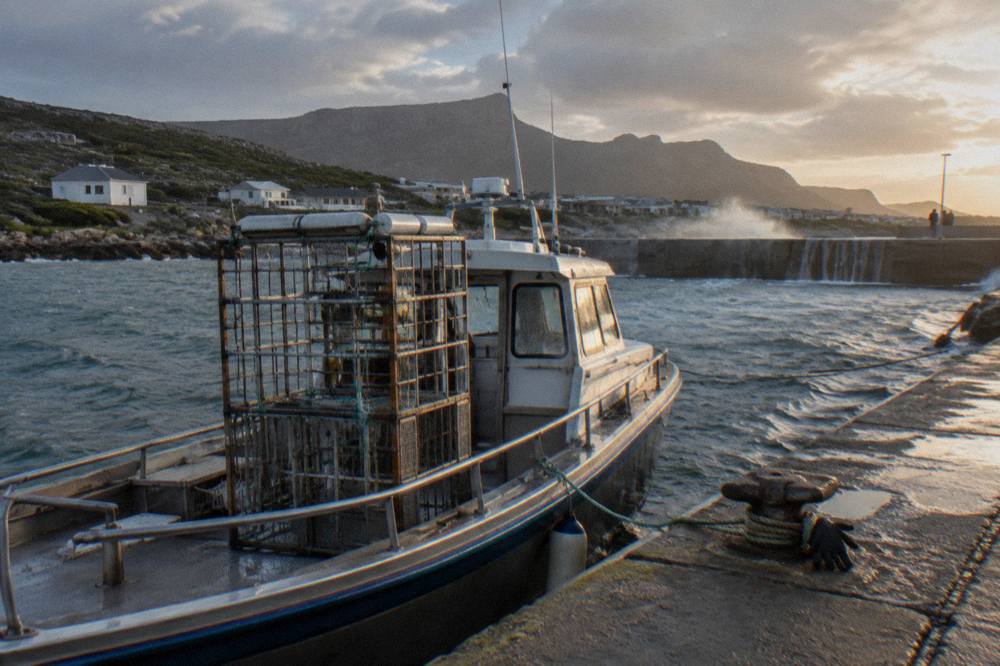
The briefing is also where operators set expectations honestly. A good crew will tell you that sightings are never guaranteed and that the boat will not chase a shark if conditions are wrong. That honesty is part of the permit culture, not a sales pitch. If you want to know what the boat ride feels like before you commit, the seasickness on a shark cage diving boat guide explains what to expect when the swell picks up.
How Long Is The Boat Ride And What Do You See On The Way?
From Kleinbaai Harbour, the ride to the dive site near Dyer Island and Shark Alley takes about 20 to 60 minutes depending on sea conditions and the operator's chosen anchorage. On the way you pass Geyser Rock, a Cape fur seal colony of roughly 60,000 animals, and in whale season you may see southern right whales in Walker Bay. The boat ride is part of the trip, not just a transfer. If those whale sightings from the boat leave you wanting more, the free cliff path viewpoints in Hermanus show you exactly where to watch southern rights from shore without spending a cent.
The boat ride is not a dull commute. Once you clear the harbour, the crew points out Dyer Island, a protected bird sanctuary about eight to ten kilometres offshore, and Geyser Rock, the seal colony that historically attracted great whites to the area. The channel between them is Shark Alley, a narrow stretch about 100 metres wide and five metres deep. Even if the sharks are slow, the seals are almost always visible, and the boat often pauses so you can watch them.
The ride itself is the moment when seasickness tends to show up, because the boat anchors or drifts in open water. Morning departures are usually calmer, but winter swells can make the crossing rough. The crew will advise you to stay on deck, keep your eyes on the horizon, and take medication before departure if you are prone to motion sickness. The boat ride is also when you change into your wetsuit, so you are ready to enter the cage when your rotation is called.
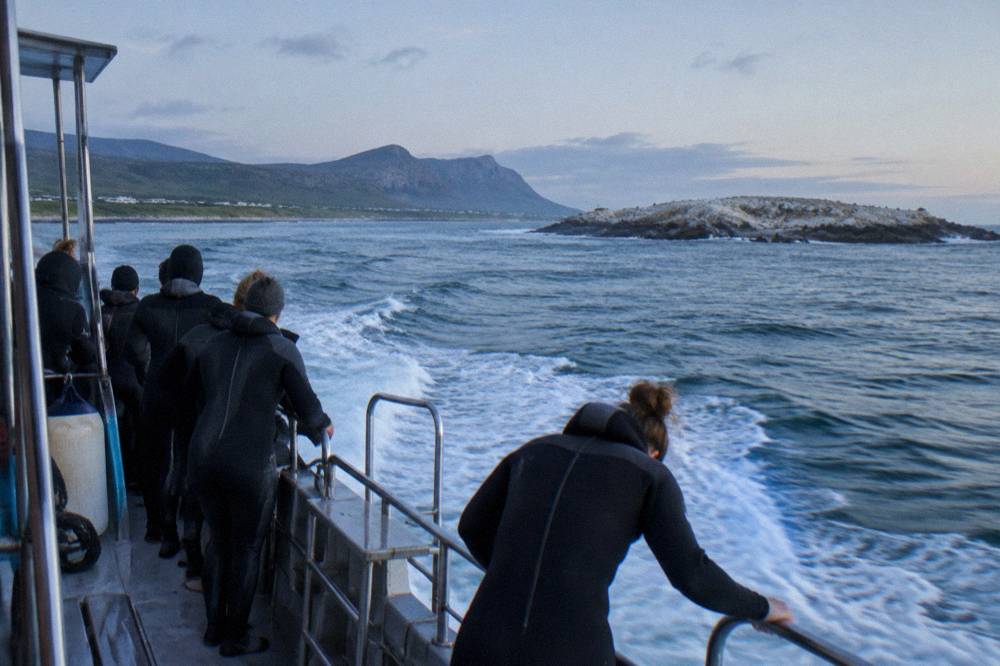
The table below shows the typical half-day timeline for a Gansbaai departure. Times are planning ranges, not operator promises, because wind, swell and shark activity shift the schedule.
| Stage | Typical Time | What Happens |
|---|---|---|
| Harbour check-in | 30 to 45 minutes before departure | Sign waiver, get wetsuit and mask, meet the crew |
| Safety briefing | 15 to 20 minutes | Cage rules, hand signals, species briefing, seasickness advice |
| Boat ride to the site | 20 to 60 minutes | Pass Dyer Island and Geyser Rock, change into wetsuit |
| Cage rotations | About 20 minutes per person | Enter the cage, watch for sharks, exit on crew signal |
| Surface viewing | Between rotations | Watch from the deck, take photos, warm up |
| Return to harbour | 20 to 60 minutes | Debrief, return gear, optional food service |
The first decision point for many readers is which operator to book for this exact routine. The three listings below show the range of Gansbaai cage dives on this roster, from the featured eco-cruise to the hookah and complimentary air-line formats.
The featured Gansbaai eco-friendly shark cage diving cruise runs about six hours and includes the full routine described here. Check availability
What Happens When You Get Into The Shark Cage?
When your rotation is called, you climb down into a floating cage attached to the side of the boat. You stand on a submerged platform with your head above water, then lower yourself to eye level with the sharks when the crew signals. Most operators run turns of about 20 minutes per person, and you stay in the cage while the boat crew manages the bait line and points out approaching sharks.
The cage entry is simpler than it looks from the deck. The cage floats alongside the boat, with a lid that opens for you to climb down. You step onto a submerged platform, and the water comes up to your chest or shoulders depending on your height. The crew tells you when to duck under, and you hold onto the inside rail while the sharks come close. There is no scuba certification required, because this is a surface cage with breath-hold or regulator-fed air, not a dive.
Inside the cage, the water is cold, the swell moves you around, and the visibility is usually between three and ten metres. The crew manages the bait line, which is a natural fish-oil lure designed to draw sharks close without feeding them. You do not touch the sharks, and the cage lid stays secured. The experience is more about watching than doing, and the crew will call out when a shark is approaching from your side.
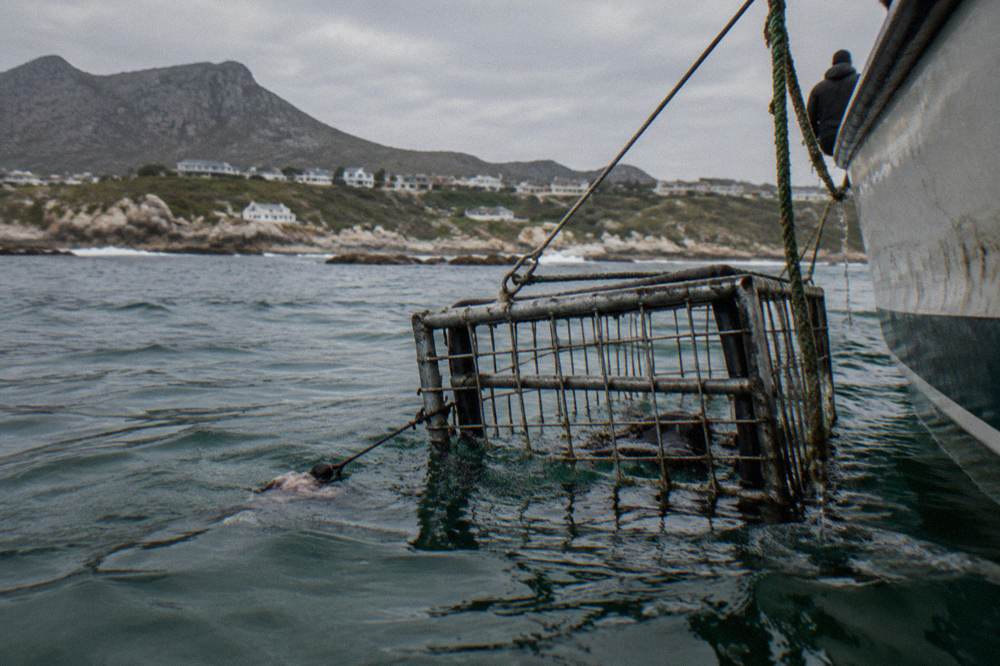
The cage routine is the core of every listing on this site, but the air supply inside the cage changes the experience. The next section compares the two Gansbaai formats that show up on the roster.
If you want the full six-hour version with the eco-cruise framing and the marine biologist commentary, the featured Gansbaai trip is the one to book. The operator also runs its own research and penguin-rescue work, so the briefing tends to go deeper on the orca-driven great white decline.
Hookah Air Supply Vs Complimentary In-Cage Air Line: What Is The Difference?
Two Gansbaai listings on this roster show the range of cage breathing setups. A hookah system feeds surface-supplied air through a regulator, so you breathe continuously underwater without lifting your head. A complimentary in-cage air line does the same job but is included in the base price on that specific listing. Standard cage dives use a snorkel and mask, which means you hold your breath when you duck under.
The difference matters because it changes how long you can stay under with your face in the water. On a standard snorkel cage dive, you duck under, look at the shark, and come up for air. On a hookah or air-line setup, you keep the regulator in your mouth and breathe normally while submerged, which means you can watch a shark move around the cage without breaking your view to breathe.
The hookah listing on this roster is the Guided Shark Cage Diving with Hookah Air Supply in Gansbaai, which runs about four hours and upgrades the cage to a surface-supplied air line instead of snorkel-style breath-holding. The complimentary air-line listing is the Sharklady Air-Line Cage Dive, which includes the in-cage air line at no extra cost and runs about three and a half hours. Both are real contrasts to the standard snorkel format. If you're planning to bring younger family members along, the guide to shark cage diving age limits for kids explains which operators can accommodate children and what to expect.
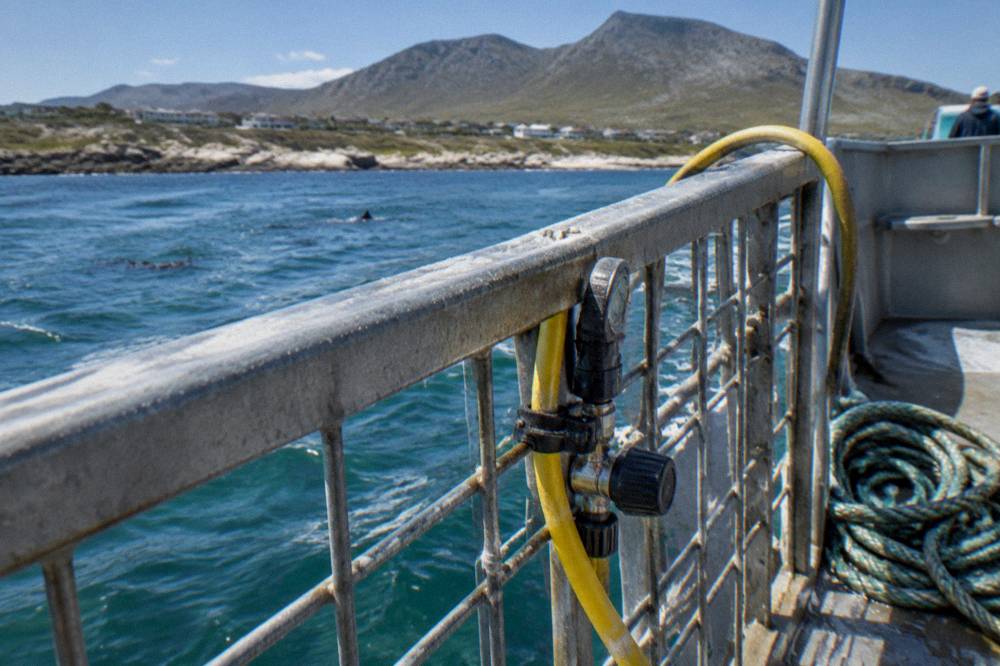
The table below lays out the three cage breathing formats side by side.
| Format | How It Works | Roster Example | Best For |
|---|---|---|---|
| Snorkel and mask | Hold your breath when you duck under | Most standard half-day listings | First-timers who want the simplest setup |
| Hookah air supply | Surface-supplied air through a regulator | Hookah Air-Supply Cage Dive | Divers who want continuous breathing underwater |
| Complimentary in-cage air line | Same air line, included in the base price | Sharklady Air-Line Cage Dive | Budget-conscious divers who want the air line without an upcharge |
The hookah and air-line formats are not scuba, and they do not require certification. The air line is fed from the boat, and you stay in the cage the whole time. If you are comparing these two listings, the hookah trip is slightly longer at four hours, while the Sharklady trip is three and a half hours and includes the air line in the base price.
How Long Do You Actually Spend Underwater On A Shark Cage Dive?
On a three to four hour half-day trip, your personal cage time is usually about 20 minutes, and you may get a second turn if the boat is not full. The rest of the trip is boat travel, the briefing, and watching from the deck. A full-day Cape Town package adds roughly five to six hours of road transfer around the same core cage routine.
The 20-minute figure is a planning range, not a guarantee. Some operators rotate faster if the boat is full, and some give longer turns if the group is small. The cage time is also split between surface breathing and submerged viewing, so the actual minutes with your face underwater are less than the total rotation. The crew controls the rotation, and they will call you up when your turn ends.
The infographic below shows how a typical half-day trip splits its time across the main stages. The cage is the headline, but the boat ride and surface viewing take up most of the day.
The White Shark Projects half-day from Gansbaai runs about three hours and includes a continental breakfast and on-board light lunch, so the cage time is compressed into a shorter window. That listing is a useful contrast if you want the same routine without a full-day transfer.
If you are staying in Cape Town and want the full-day version with hotel pickup, the transfer packages stretch the day to nine or ten hours but keep the same core cage routine. The drive from Cape Town CBD to Gansbaai is roughly 160 to 175 kilometres and takes about two to two and a half hours each way.
What Should You Bring And Wear For A Shark Cage Diving Trip?
Operators supply the wetsuit, booties, mask and weight belt, so you only need swimwear, warm layers for the boat, sunscreen, a towel and ID. A windproof jacket matters more than you expect because the boat is exposed and the wind chill on the water is real. Seasickness medication is worth taking before departure if you are prone to motion sickness.
The gear list is short because the operator handles the technical equipment. You change into the wetsuit on the boat or at the harbour, and you wear your swimsuit underneath. The wetsuit is usually a 5mm suit, which is enough for the water temperatures off Gansbaai, which run from about 15.8 degrees Celsius in winter to 20.7 degrees in summer. Booties and a mask are supplied, and some operators add gloves or a weight belt.
The boat ride is where most people get cold, not the cage. The wind on the water is stronger than it feels on land, and a wet wetsuit amplifies the chill. Bring a windproof jacket, a beanie, and dry clothes for the drive home. Sunscreen is also important, because the reflection off the water burns even on overcast days. The what to wear for shark cage diving guide goes deeper on layering and fabric choices.
| Item | Why It Matters | Operator Provides? |
|---|---|---|
| Swimsuit | Worn under the wetsuit | No |
| 5mm wetsuit | Insulation in cold water | Yes |
| Booties and mask | Foot protection and underwater vision | Yes |
| Windproof jacket | Blocks wind chill on the boat | No |
| Sunscreen and hat | UV protection on the water | No |
| Towel and dry clothes | Warmth after the trip | No |
| Seasickness medication | Prevents nausea on the crossing | No |
The Shark Zone listing from Van Dyks Bay includes wetsuit and mask and is the cheapest on the roster at $126 per person, but Cape Town pickup is a paid add-on rather than bundled. If you self-drive, that keeps the logistics simple and the price low.
What Species Are You Likely To See From The Cage?
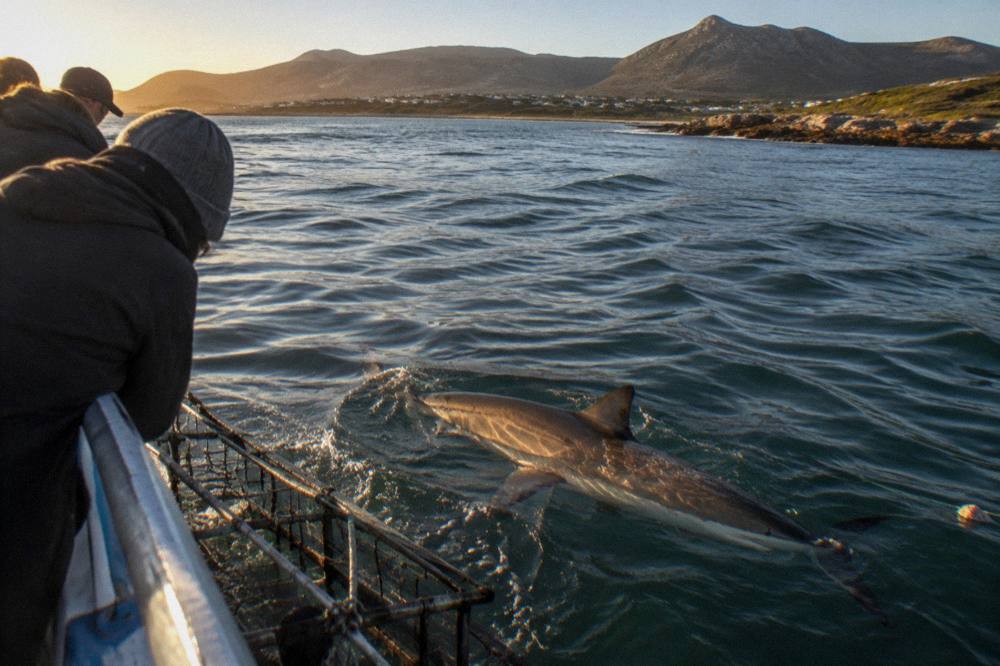
At Gansbaai and False Bay today, the reliable cage sightings are bronze whaler sharks and broadnose sevengill cowsharks, not great whites. Great whites have been largely absent from these sites since roughly 2017, when two orcas named Port and Starboard began preying on them. A single sub-adult great white was filmed near Seal Island on 23 September 2026, but that is one sighting, not a population recovery.
The species question is the most important honesty point on this site. Several listings still carry marketing titles that imply great white encounters, but what guests actually see today is different. At Gansbaai, the operators now feature bronze whaler sharks as the reliable draw, with broadnose sevengill cowsharks also common. At False Bay, the same two species lead the sightings, with the occasional seasonal variation.
The great white decline is real and documented. The peer-reviewed white shark research record confirms that great whites have been protected in South African waters since 1991, but the Gansbaai and False Bay aggregations collapsed after the orca pair Port and Starboard began hunting them in 2017. The Shark Watch SA operator page documents the current bronze whaler and sevengill focus on Gansbaai trips.
The False Bay open-water shark dive from Simon's Town is a different setting from the Gansbaai boat-based dives, and it also runs on bronze whaler and sevengill sightings. The Apex Shark Expeditions listing is the one non-refundable option on this roster, so check the cancellation terms before you book that specific trip.
The second decision band below brings the three Gansbaai cage formats back together. If you have read this far, you know the routine, the timing, and the species reality, so the choice comes down to air supply, duration and price.
If you are still deciding whether this is a real, bookable South African product at all, our page on whether you can go cage diving with great white sharks answers that basic feasibility question first.
Common Questions About What To Expect On A Shark Cage Diving Trip
Do I need scuba certification to go in the cage?
No. Shark cage diving is a surface activity, and no scuba certification is required. You either use a snorkel and mask or a surface-supplied air line, and the crew gives you a full briefing before you enter the water.
How long do I actually spend in the shark cage?
Most operators run cage rotations of about 20 minutes per person. On a half-day trip you may get a second turn if the boat is not full, but the rest of the trip is boat travel, briefing and surface viewing.
What sharks will I see on a Gansbaai cage dive?
Today the reliable sightings are bronze whaler sharks and broadnose sevengill cowsharks. Great whites have been largely absent from Gansbaai since roughly 2017, and a single September 2026 False Bay sighting does not mean the population has recovered.
Is seasickness common on shark cage diving boats?
Seasickness is the most commonly reported issue on shark cage diving trips, especially in winter swells. Operators advise taking medication before departure, staying on deck, and keeping your eyes on the horizon.
Can children go in the shark cage?
Age limits vary by operator. Boat viewing is often open to children from about five or six, while cage entry commonly starts at eight to twelve with parental supervision and a signed waiver. Confirm the specific policy before booking.
What should I wear under the wetsuit?
Wear a swimsuit under the wetsuit, and bring warm layers, a windproof jacket, sunscreen, a towel and dry clothes for after the trip. The operator supplies the wetsuit, booties, mask and weight belt.