Can You Go Cage Diving With Great White Sharks In South Africa?
Yes, cage diving with great white sharks is a real, licensed, bookable product in South Africa. Here is where whites are actually seen today, what the trips cost, and the honest picture for Cape Town.
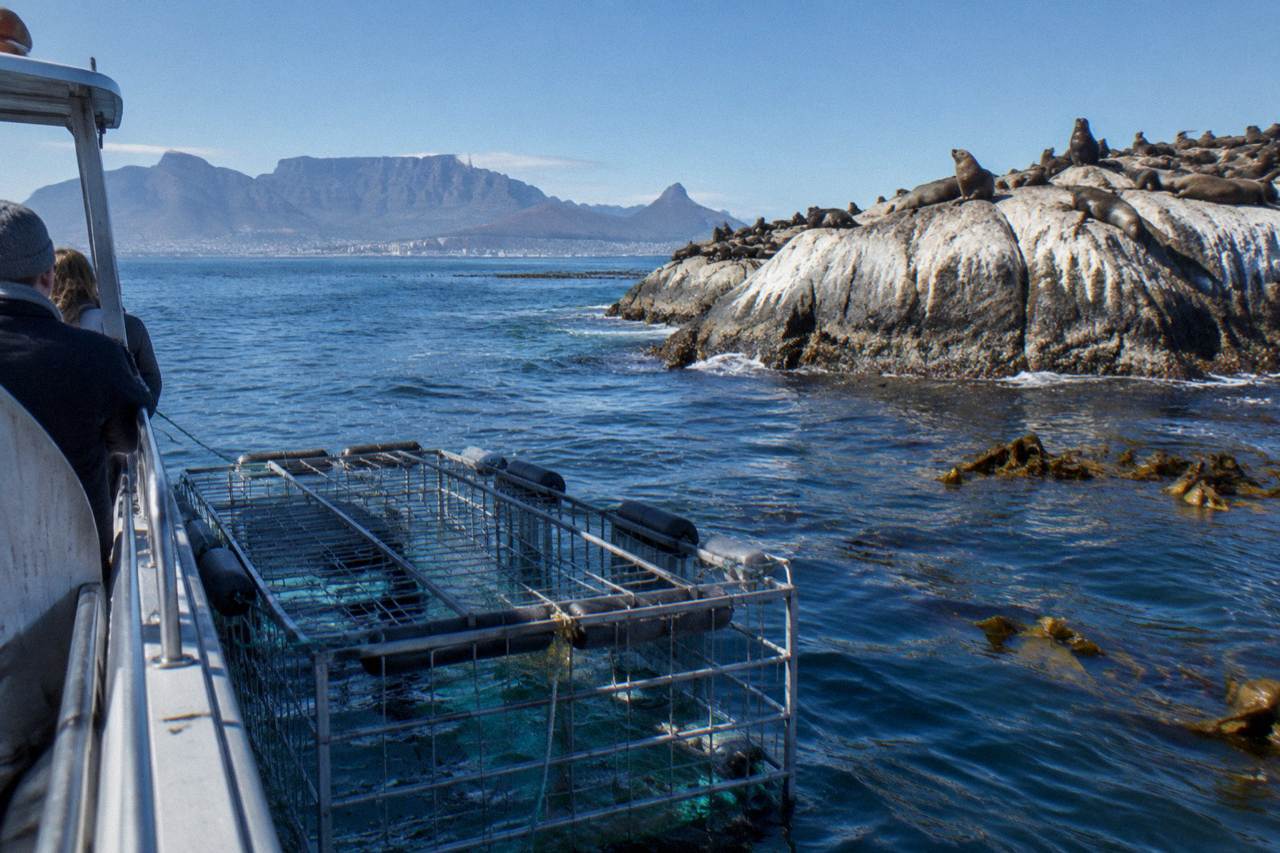
Can You Go Cage Diving With Great White Sharks In South Africa?
Yes, you can, and it is a fully licensed, regulated commercial activity rather than a fringe stunt. South Africa has run permitted white shark cage diving for decades and protected the species in 1991, the first country to do so. The honest caveat is the species itself: at Gansbaai and False Bay, the bookable sites near Cape Town, great whites have been largely absent since about 2017, and trips there now centre on bronze whaler sharks. If the great whites' disappearance leaves you wondering what that means for ordinary beach days, the honest guide to shark risk on Cape Town's beaches explains which species are actually around and how beach safety works.
That is the short version, and it matters because a lot of older travel content still describes Gansbaai as the great white capital of the world. It was, for decades. The boats still run from Kleinbaai Harbour every morning, the cages still go in the water, and the industry is still regulated by the Department of Forestry, Fisheries and the Environment under permit conditions that ban feeding sharks and require cages built to approved specifications. What changed is the animal. Two male orcas nicknamed Port and Starboard began preying on great whites off this coast in 2017, removing their livers with surgical precision, and the surviving whites largely abandoned the area.
So the answer splits in two. If your question is whether the product exists, it does, and it is easy to book. If your question is whether you will personally stare at a great white through the bars, the answer depends heavily on where you go and on luck, and the site with the more consistent white shark encounters right now, Mossel Bay, is the one place this site does not sell. The trips we do list, all real and all bookable, are honest Gansbaai and False Bay products where bronze whalers are the reliable draw.
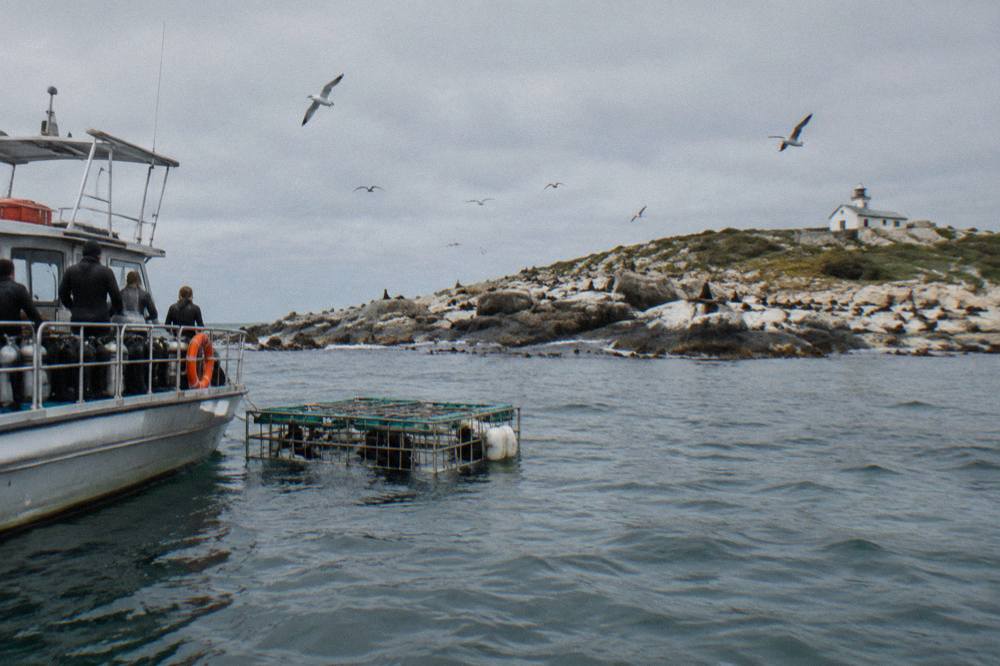
For most readers the practical choice is between three Gansbaai products that represent the range of what is on offer. The half-day trip run by White Shark Projects is one of the area's longest-running operations, from $173 per person, rated 4.7 from 451 reviews. The eco-focused cruise run by Marine Dynamics costs from $232 per person, carries a 4.6 rating from 369 reviews, and includes the operator's own marine research and penguin-rescue work around Dyer Island. At the budget end, the Shark Zone trip from Van Dyks Bay starts at $126 per person, the cheapest cage dive listing on this roster, with a Cape Town pickup sold as a paid add-on rather than bundled.
Where Great White Cage Diving Actually Happens Today
South Africa has three historic cage diving regions: Gansbaai, False Bay and Mossel Bay. Gansbaai and False Bay still run excellent, bookable trips, but their great whites have been largely absent since roughly 2017 to 2019 and the sharks you are likely to see are bronze whalers and sevengill cowsharks. Mossel Bay is currently the more consistent great white site, with one permitted operator, and it has no bookable listing on this site. Once you've picked your region, the natural next question is how much risk you're actually taking on, and our plain-language guide to cage safety around great whites answers it honestly.
Gansbaai is the industry's historic heart. The boats work the shallow channel between Dyer Island and Geyser Rock, where a Cape fur seal colony of roughly 60,000 animals once drew white sharks in predictable numbers. Today the same operators, the same cages and largely the same crews run trips that feature bronze whaler sharks, sometimes sevengills, and a briefing that explains, honestly, what happened to the whites. The Marine Dynamics founder said publicly in June 2026 that the company simply does not have great whites at the moment, while logging hundreds of bronze whaler sightings in the same period.
False Bay, departing from Simon's Town, tells a similar story with one remarkable recent twist. A single sub-adult great white was filmed near Seal Island on 23 September 2026, the first confirmed sighting there in about eight years, found by African Shark Eco-Charters. The marine biologists on record were explicit that one animal is not a population recovery. The bookable False Bay trips, like the open-water dive run by Shark Explorers, rated 5.0 from 37 reviews and from $216 per person, are sold on bronze whalers and seasonal sevengills, and that is what guests overwhelmingly report seeing. Note that one False Bay operator, Apex Shark Expeditions at $277.05 per person, is the only non-refundable listing on this roster, so check that policy before booking.
Mossel Bay, about four and a half hours east of Cape Town, is where 2026 operator reports describe the more consistent great white encounters, including claims of several individuals sighted on single tours, alongside bronze whalers. There is one permitted commercial operator there. This site has no Mossel Bay listing to sell, which we state plainly rather than papering over: if seeing a great white is the single purpose of your trip, the Mossel Bay cage diving guide explains the case for that site, and the Gansbaai and False Bay products below remain the trips you can actually book through these pages.
| Site | Departure Point | Sharks Seen Today | Great White Odds | Bookable Here |
|---|---|---|---|---|
| Gansbaai | Kleinbaai Harbour | Bronze whalers, sevengills | Rare to absent since about 2017 | Yes, 10 listings |
| False Bay | Simon's Town | Bronze whalers, seasonal sevengills | One confirmed sighting, Sept 2026 | Yes, 3 listings |
| Mossel Bay | Mossel Bay harbour | Great whites more consistently, bronze whalers | Best current odds in the country | No listing on this site |
If you want a Gansbaai trip that leans into the science story, the conservation-framed cage dive run by the White Shark Diving Company is the highest-rated cage dive on this roster, 4.8 from 237 reviews, from $169 per person, with breakfast, lunch and snacks included and a conservation-education framing throughout the day.
What A Great White Cage Dive Is Really Like
A cage dive is a surface event, not a scuba dive. You float in a steel cage lashed to the boat, breathing through a snorkel or a surface-supplied air line, while crew members chum the water and pull you up by signal when a shark approaches. No certification is required, the water is cold, and most guests get roughly 20 minutes of cage time in rotation.
The morning starts early, usually at dawn, because the sea tends to be calmer and the sharks more active. After a briefing on safety and on the species you are likely to meet, the boat runs out to the anchoring spot, which from Kleinbaai is the channel locals still call Shark Alley. The cage holds two to six people depending on the operator, sits partly above the waterline, and has a lid that locks. You change into a supplied 5mm wetsuit, booties and mask on board, and you enter the water from the boat's platform.
The moment itself is quieter than the documentaries suggest. The crew calls "shark, right" or "down, down", you take a breath and drop below the surface, and a bronze whaler, an animal up to three metres long, slides past the bars. Visibility in these waters typically runs 3 to 10 metres, averaging 6 to 8, and it is at its best in the cooler months from April to September when plankton drops. Then you surface, breathe, and wait for the next pass. Guests who book the upgraded hookah trip run by the same conservation operator, from $205.08 per person, get a surface-supplied air line instead of breath-holding, which allows longer, calmer stretches underwater.
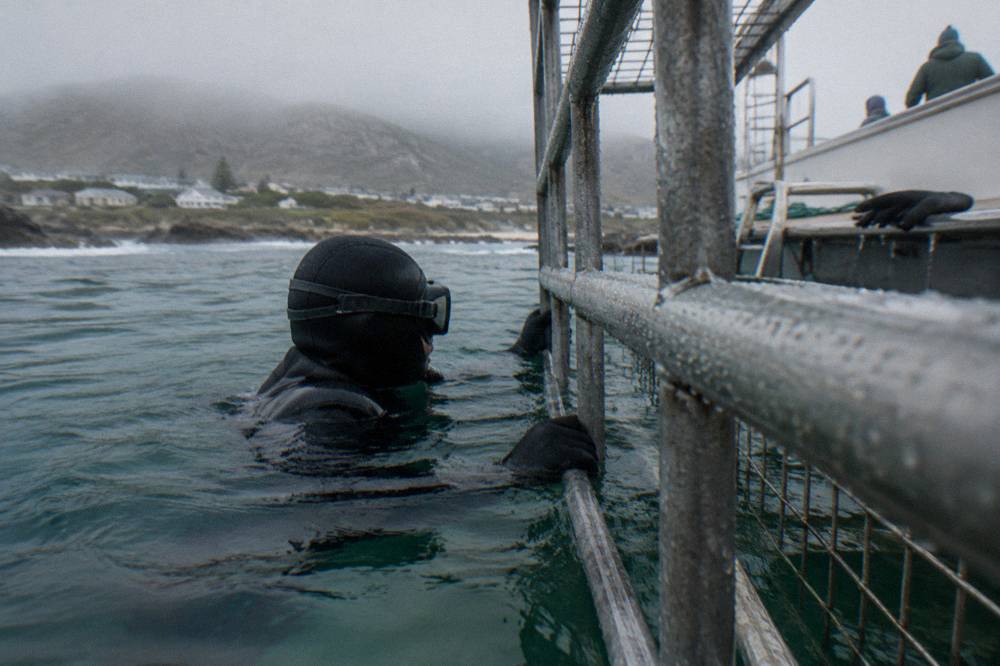
The rest of the trip is boat-based viewing, and it is a bigger part of the experience than most first-timers expect. Between rotations you are on deck with hot drinks, watching sharks circle the boat, seals on the rocks, and, in season, southern right whales in Walker Bay. The full-day packages that include a Cape Town hotel pickup stretch to 9 or 10 hours door to door, of which roughly three or four are at sea; the half-day Gansbaai trips are about 3 hours at the harbour and boat. If you are prone to motion sickness, this is the part that gets people: the boat anchors, it rolls, and the seasickness on a shark cage diving boat guide is worth reading before you commit a vacation morning to it.
| Trip Element | What Actually Happens |
|---|---|
| Certification | None needed, surface cage with breath-hold or air line |
| Cage time | Roughly 20 minutes per person, in rotations |
| Trip length | 3 to 4 hours half-day, 9 to 10 hours with Cape Town transfer |
| Water temperature | About 16 to 21 degrees Celsius depending on month and site |
| Visibility | Typically 3 to 10 metres, best April to September |
| Gear supplied | 5mm wetsuit, booties, mask, weight belt where needed |
If that half-day format sounds right for you, the White Shark Projects trip is the listing most first-timers land on, and it is worth holding a date while you finish planning the rest of the trip.
Why The Great Whites Vanished From Cape Town's Coast
Two adult male orcas, nicknamed Port and Starboard for their collapsed dorsal fins, began killing great whites off this coast in 2017, removing their livers with startling precision. The surviving sharks fled the area, and sightings at Gansbaai and False Bay collapsed. A peer-reviewed study of 2009 to 2024 boat data recorded 423 white shark sightings with no site fidelity and no increase over time, and operators have rebuilt their trips around bronze whalers.
The first hard evidence arrived between February and June 2017, when five white shark carcasses washed up in the Gansbaai area with characteristic wounds and missing livers. Researchers including Alison Towner documented the orcas' tactic of inducing tonic immobility before feeding. Between 2017 and 2025 there were 11 documented predation events on white sharks, and the pair has since been recorded killing sevengill sharks in the same way, 17 in a single day off Pearly Beach in February 2023. White sharks that survive an encounter do not come back quickly: the Gansbaai aggregation was abandoned for stretches of two and a half years at a time.
The scientific picture matches the operators' experience. A study published in the journal Biology in June 2025 analysed roughly 560 hours of cage diving boat observations from 2009 to 2024, recording 423 white shark sightings with only five re-sightings, no site fidelity, and no increase in sighting rate across the whole period. In plain terms, the sharks that pass through do not stay, and the ones that left after 2017 have not been replaced.
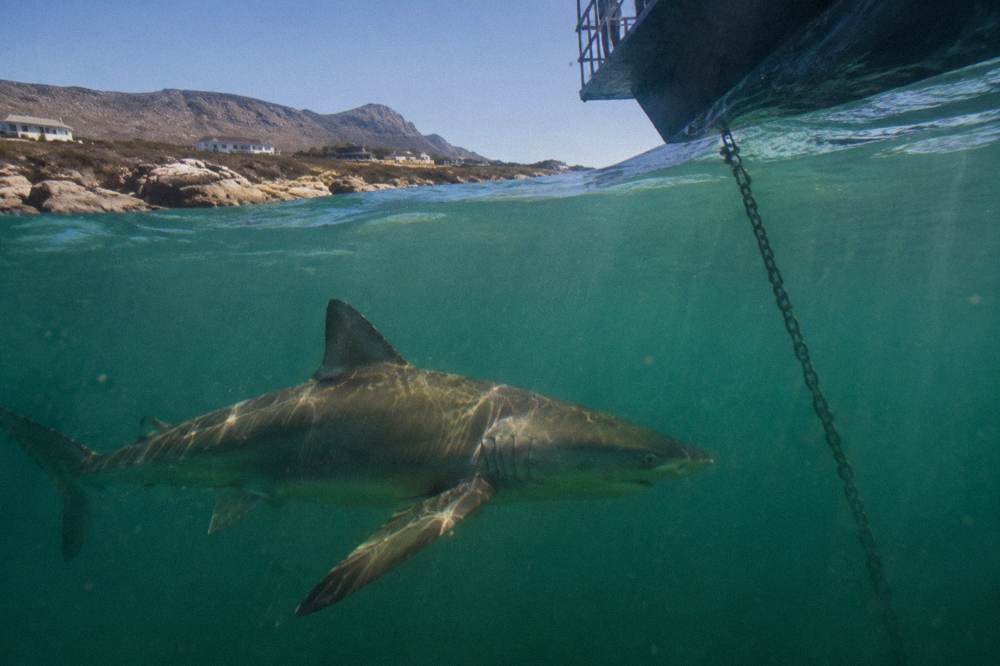
This is why the marketing language on some listings needs translating. Several Gansbaai products still carry "great white" in their heritage branding, and the trips themselves are excellent, but the animals guests actually meet are bronze whalers, copper-coloured sharks up to about three metres that now fill the niche the whites left. Operators brief guests on the decline openly, and the better trips, like the one run by Shark Cage Diving Cape Town's featured operators, treat the ecology as part of the experience rather than an embarrassment. If the science story interests you, the article on why sharks fear orcas goes deeper into the predation tactics.
How Much A Cage Dive Costs, And How To Book One
Bookable cage dives on this roster run from $126 to $305 per person, with the price driven by transport, trip length and inclusions rather than by species. Half-day Gansbaai trips cluster between $126 and $232, Cape Town round-trip packages run $277.71 to $303.54, and the two shark-plus-whale combos top the range at $286 and $305. Every listing except one offers free cancellation on the platform listing.
The cheapest genuine cage dive is the Shark Zone trip from Van Dyks Bay at $126 per person, wetsuit and mask included, with Cape Town pickup as a paid add-on. From there the ladder climbs with what is bundled. The White Shark Projects half-day at $173 includes a continental breakfast and an on-board light lunch. Marine Dynamics' eco cruise at $232 includes its research and penguin-rescue framing. The full-day transport packages, like the Marine Dynamics round trip from Cape Town at $303.54, rated 4.5 from 622 reviews, the deepest review pool on this roster, bundle breakfast, refreshments and the two-hour drive each way into one price.
| Listing | Price From | Rating | Duration | Cancellation |
|---|---|---|---|---|
| Shark Zone, Gansbaai | $126 | 4.5 from 68 reviews | 3 hours | Free |
| White Shark Diving Company, conservation | $169 | 4.8 from 237 reviews | 4 hours 30 minutes | Free |
| White Shark Projects, half-day | $173 | 4.7 from 451 reviews | 3 hours | Free |
| Marine Dynamics, eco cruise | $232 | 4.6 from 369 reviews | 6 hours | Free |
| Marine Dynamics, Cape Town round trip | $303.54 | 4.5 from 622 reviews | 10 hours | Free |
| Shark Explorers, Simon's Town | $216 | 5.0 from 37 reviews | 4 hours | Free |
Booking is straightforward, and the listings on this site are the operator's live listings rather than our own inventory. Check the cancellation terms, the meeting point and the season before you pay. Two listings carry a genuine "often sells out" flag, the Marine Dynamics eco cruise and the Shark Explorers False Bay dive, so those are the ones to book ahead during peak months. The one non-refundable listing is Apex Shark Expeditions in False Bay, which is worth knowing before you commit. For the half-day Gansbaai trip that balances price, review depth and inclusions, the White Shark Projects listing is the one we would point most first-timers at, and you can Check availability on the live listing before deciding. The full cost breakdown guide covers the wider price ladder in more detail.
If your heart is set on the False Bay open-water format instead, the Shark Explorers dive from Simon's Town, 5.0 from 37 reviews and from $216 per person, includes snacks and hot drinks and a different setting from the Gansbaai boats, with bronze whalers and seasonal sevengills viewed from an open-water cage.
Planning Tips Before You Book A White Shark Trip
Book a half-day Gansbaai trip unless transport changes the maths, go between April and October for the best visibility, take seasickness medication before you board rather than after, and read the species expectations on the listing rather than the title. Age minimums vary by operator, commonly 8 to 12 for cage entry with an adult, and no scuba certification is ever required.
Timing matters more than most guides admit. The Gansbaai season runs year-round, but visibility peaks in the cooler months from April to September, water temperatures sit in the 16 to 19 degree range in winter, and the sea is at its calmest on early morning departures. If you are pairing the trip with whale watching, southern right whales are in Walker Bay from roughly June to November, peaking September and October, and the two combo listings on this roster bundle both into one boat day. The season guide for shark cage diving breaks the month-by-month picture down in more detail.
A few practical points close the loop. Wear a swimsuit under your clothes and bring warm layers, because the boat deck is cold even in summer and the wind off Walker Bay is real. Bring ID, sunscreen and a towel. If you are travelling with children, the age limit guide covers the operator-by-operator pattern, boat viewing from about 5 or 6 and cage entry commonly from 8 to 12 with a parent. And if your whole reason for booking is the word "great" in "great white", read the Gansbaai species guide first: it is the difference between arriving disappointed and arriving for what is genuinely one of the most accessible large-shark experiences on earth.
Common Questions About Cage Diving With Great White Sharks
Can You Go Cage Diving With Great White Sharks?
Yes. Cage diving is a licensed, regulated commercial activity in South Africa with a decades-long history. The honest caveat is where: at Gansbaai and False Bay, the bookable sites near Cape Town, great whites have been largely absent since about 2017 and trips feature bronze whaler sharks. Mossel Bay currently offers the more consistent great white encounters, and this site has no Mossel Bay listing to book.
Do I Need Scuba Certification To Go In The Cage?
No. The cage sits at the surface, you breathe through a snorkel or a surface-supplied air line, and no certification or dive experience is required. Operators supply the wetsuit, booties and mask, and crew supervise every rotation.
Will I Definitely See A Great White On A Cape Town Trip?
No operator can promise that, and at Gansbaai and False Bay the honest answer is that you probably will not. The sharks reliably seen there today are bronze whalers and sevengill cowsharks. One sub-adult great white was filmed near Seal Island in False Bay in September 2026, the first sighting in about eight years, but experts are clear this is not a population recovery.
How Much Does A Cage Dive Cost?
On this roster, bookable cage dives run from $126 to $305 per person. The cheapest is the Shark Zone Gansbaai trip at $126; the priciest is the Cape Shark Adventures whale-season combo at $305. Half-day Gansbaai trips cluster between $126 and $232, and full-day Cape Town round trips run $277.71 to $303.54.
Where Is The Best Place To See Great Whites In South Africa Right Now?
Mossel Bay, according to 2026 operator reports, which describe more consistent great white encounters there than at Gansbaai or False Bay. It is about four and a half hours from Cape Town and has one permitted operator, and there is no bookable Mossel Bay listing on this site, so plan it separately from the trips sold here.
Is Cage Diving Safe?
Yes, within reason. There are no documented shark-caused guest fatalities in licensed cages in South Africa. The one serious incident in the area's history was a 2008 boat capsize near Gansbaai in which three tourists drowned, ruled sea-condition negligence rather than anything shark-related. Seasickness, not sharks, is the most common problem guests actually report.