Are Sharks A Problem In Cape Town?
An honest look at shark risk in Cape Town waters: which species live there, what happened to the great whites, how beach safety works, and why licensed cage diving is a different kind of exposure.
Are Sharks A Problem In Cape Town?
Sharks are a permanent, natural presence in Cape Town's waters, not a problem in the sense most visitors fear. The region supports bronze whaler sharks, broadnose sevengill cowsharks, and historically great whites, alongside seals, penguins, dolphins and whales. Encounters with people are rare, beach safety systems exist precisely because the risk is known and manageable, and licensed cage diving has no documented shark-caused guest fatalities. The honest answer is context, not panic. For travelers who would like to meet these animals on their own terms, this guide to cage diving with great white sharks in South Africa explains where the licensed boats actually depart from and what a trip realistically involves.
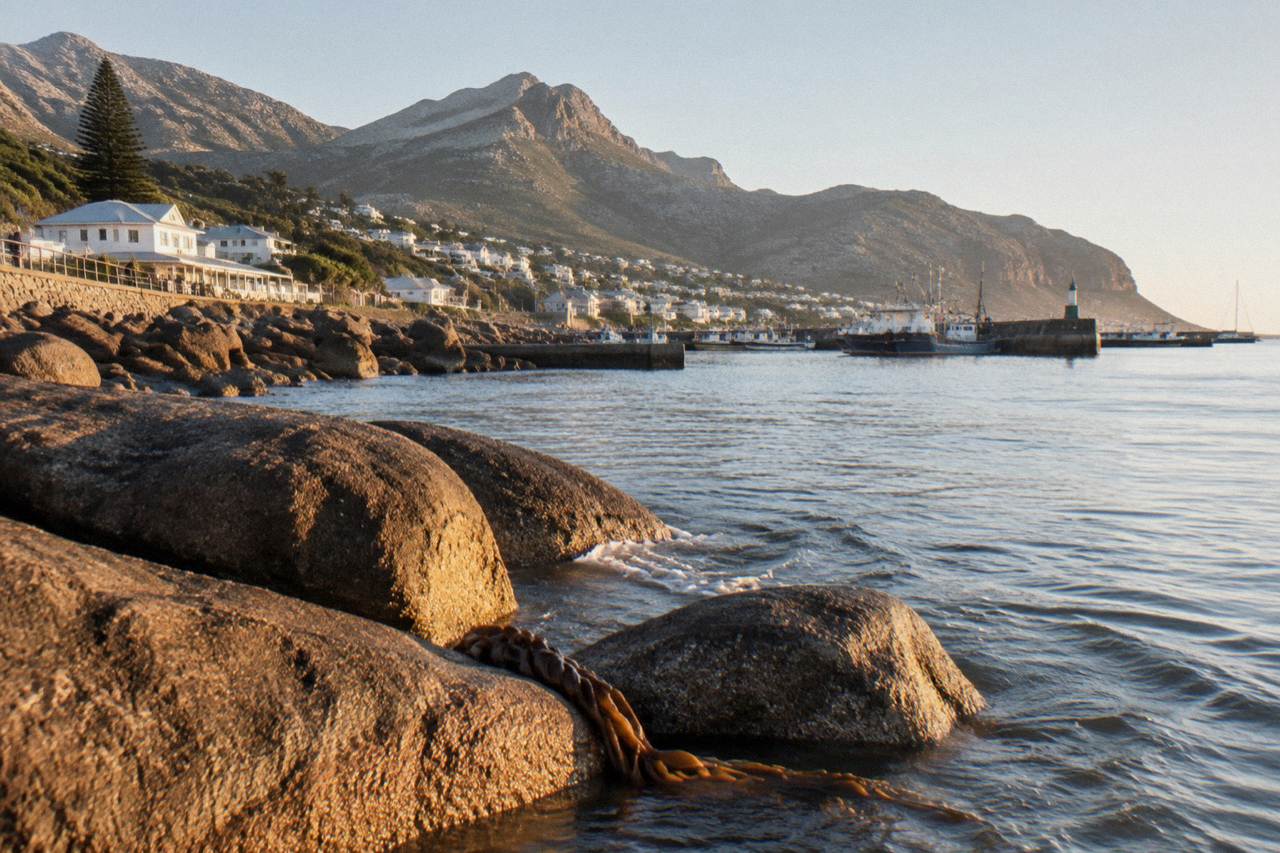
The question deserves a straight answer rather than a reassuring one, because the straight answer is actually the reassuring one. Cape Town sits on a cold, productive stretch of the Atlantic and Indian Ocean confluence, with seal colonies, kelp forests and upwelling currents that support large marine predators. Sharks have been here longer than the city has. The presence of apex predators is a sign of a functioning ecosystem, and the same biology that draws sharks draws the whales, dolphins and penguins that make the False Bay and Gansbaai coastlines worth visiting in the first place.
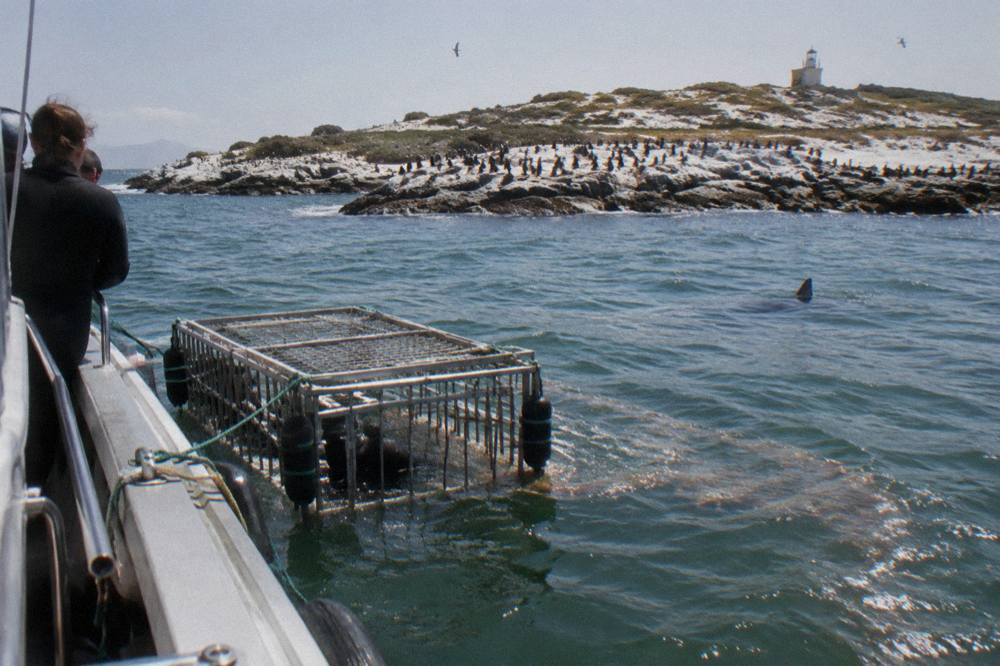
What trips most people up is a category error: lumping every shark, every location and every activity into a single mental image of a fin cutting through surf. A swimmer at an unguarded beach at dawn faces one kind of exposure. A diver inside a steel cage attached to a permitted commercial boat faces something entirely different, governed by national permit regulations that dictate how the cage is built, how sharks are attracted and how close they may come. Treating those two situations as the same risk is like treating a game drive and a solo hike through lion country as the same walk.
This article separates the pieces. It covers which sharks actually live around Cape Town, what happened to the famous great whites, how the beach-safety apparatus works, what the real incident record says, and how all of that maps onto the cage-diving products you can actually book, including the featured False Bay open-water shark dive and the wider roster this site compares. If you want the short version of which trips suit which travellers, the trio below is where most people start.
What Sharks Actually Live In The Waters Around Cape Town?
The species you are most likely to encounter around Cape Town today are bronze whaler (copper) sharks and broadnose sevengill cowsharks, with great whites now rare or absent at the traditional sites. Bronze whalers are the reliable draw at Gansbaai and False Bay, sevengills patrol the kelp, and smaller species round out the picture. The great white remains protected in South African waters, but its local presence collapsed after 2017.
The shift is the single most important fact about sharks in this region, and it is well documented rather than anecdotal. Two adult male orcas nicknamed Port and Starboard, identified by their collapsed dorsal fins, began preying on great whites in the area from roughly 2017, with carcasses washing ashore showing their livers surgically removed. Researchers documented 11 predation events between 2017 and 2025, and the great whites' response was immediate and sustained: they abandoned the Gansbaai aggregation site for extended periods, and sightings at Seal Island in False Bay dropped to near zero from around 2018. The full story of that displacement is covered in why sharks are so afraid of orcas, and it reframes what any trip here today actually offers.
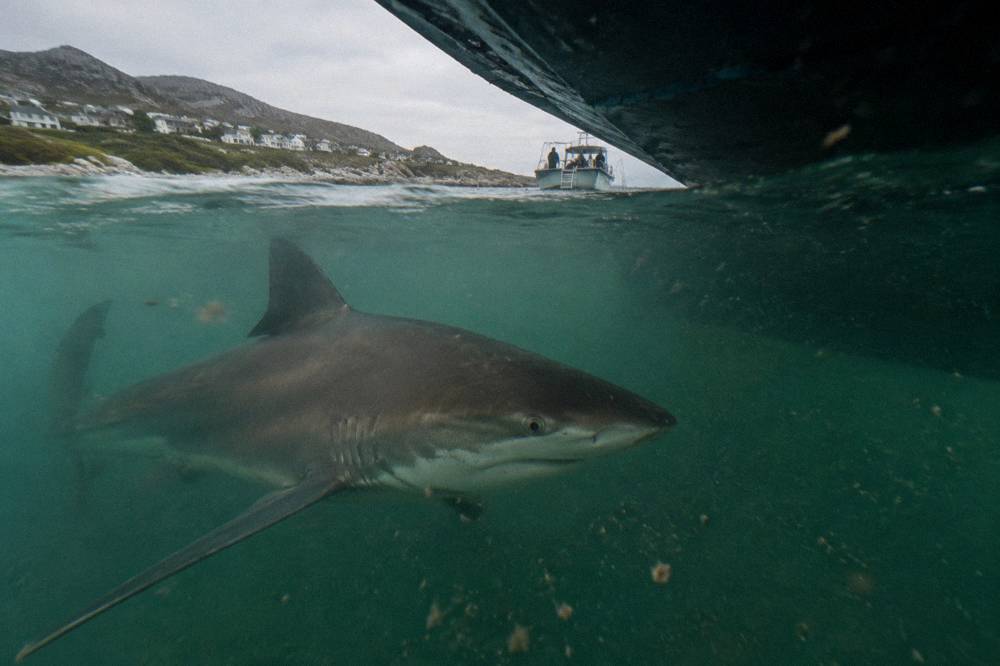
What filled the vacancy is not nothing. Operators at Gansbaai and False Bay now feature bronze whalers as the dependable encounter, and the numbers back that up. In one recent month before a June 2026 interview, Marine Dynamics logged 33 trips with 312 bronze whaler sightings and no great whites mentioned, a ratio that tells you exactly what a booking today buys. A peer-reviewed study in the journal Biology, published in June 2025, analysed roughly 560 hours of cage-diving boat observations from 2009 to 2024, recording 423 white shark sightings with only five re-sightings and no site fidelity, which supports what the operators say: the whites that do pass through do not stay.
| Species | Where you encounter it | Status around Cape Town | What a cage trip offers |
|---|---|---|---|
| Bronze whaler (copper) shark | Gansbaai, False Bay | Common, the reliable sighting | Close passes at the cage, often several per trip |
| Broadnose sevengill cowshark | False Bay kelp, Gansbaai | Common | Slower, curious encounters |
| Great white shark | Historically Gansbaai, Seal Island | Largely absent since 2017-2018, one 2026 False Bay sighting | Not promised by any honest operator |
| Cape fur seal | Geyser Rock, Seal Island | Abundant, about 60,000 at Geyser Rock | Seen on almost every Gansbaai trip |
| Southern right whale | Walker Bay, False Bay | Seasonal, roughly June to November | The whale combo trips target these |
One clarification matters for trip planning. On 23 September 2026 a sub-adult great white was filmed near Seal Island in False Bay, the first confirmed sighting there in about eight years, found by the team at African Shark Eco-Charters. The marine biologists on record were explicit that a single sighting is not a population recovery, and no honest operator or writer should treat it as one. It is a genuinely interesting data point in an ongoing ecological story, nothing more.
How Does Cage Diving Risk Compare With Swimming At The Beach?
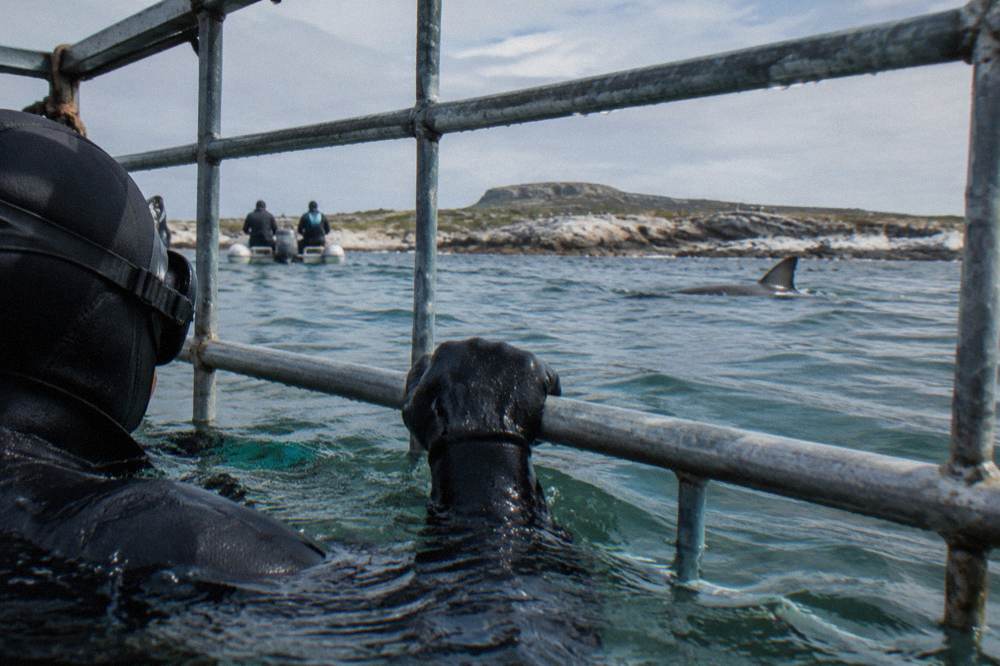
Cage diving and recreational swimming are different risk categories. Licensed cages are built to regulated specifications with lids, sharks are attracted with bait rather than fed, and there are no documented shark-caused guest fatalities in licensed South African cages. Beach swimming carries a small but real exposure at unguarded locations, which is why flag systems and spotter programs exist. The cage is the controlled environment; the open beach is not.
The regulatory layer is what most people do not know exists. White shark cage diving in South Africa operates under permits issued by the Department of Forestry, Fisheries and the Environment, with a historic allocation of eight commercial permits for the Dyer Island and Gansbaai area, three for Seal Island and False Bay, and one for Mossel Bay. The permit rules are specific: chumming is allowed only as a natural bait or fish-oil lure to draw sharks close, never direct feeding, and the code of conduct bans touching sharks and requires cages built to approved specifications with lids. Operations are monitored under DFFE and SAMSA rules. This is a licensed, inspected activity, not a freelance adventure. If you would rather dive from the False Bay side, the licensed cage diving operators working out of Simon's Town show what this permit system looks like in practice.
The beach is a different matter, and honesty cuts both ways. Cape Town's popular swimming beaches sit near seal colonies and kelp beds, and the city has long treated shark presence as a managed reality rather than a surprise. The shark spotter program and flag warning systems exist precisely because the risk, while small, is not zero at every location and every hour. Common-sense rules do real work: swim at guarded beaches during patrol hours, avoid dawn and dusk sessions, stay out of murky water after storms, and do not swim near seal haul-outs or where fishing activity concentrates. None of this is alarmism; it is the same logic as swimming between the flags at a surf beach.
For travellers whose interest in sharks is curiosity rather than anxiety, the cage is genuinely the safest way to be near them. The Simon's Town open-water dive run by Shark Explorers, rated 5.0 from 37 reviews and priced from $216 per person with free cancellation, puts you inside that regulated cage in False Bay, with snacks and hot drinks on the boat and a crew whose entire job is managing the encounter. It is also one of the listings that often sells out, so if the date matters, book early.
Do Shark Attacks Happen In Cape Town?
Shark bites on people do occur in South African waters, as they do along any coastline with sharks, and Cape Town has a decades-long history of documented incidents at surf and swim spots. But the incidents that shape the statistics involve swimmers, surfers and divers in open water, never paying guests inside licensed cages. The activity you are considering, a permitted cage dive, sits entirely outside the incident pattern that gives the region its reputation.
That distinction is the whole answer, and it is worth being precise about why. A surfer in a wetsuit paddling at dusk near a seal colony is presenting, from below, roughly the silhouette of a seal. A cage diver is a person inside a steel structure attached to a boat, surrounded by crew, with the shark's approach controlled by the operator's bait lines and the cage's physical barrier. These are not variations of the same exposure. The South African cage-diving industry's safety record reflects that separation: no documented shark-caused guest fatalities in licensed cages, across years of daily operations at Kleinbaai, Simon's Town and Mossel Bay.
The one incident that surfaces in searches about cage diving is real and worth understanding correctly. In 2008 a Gansbaai-area vessel capsized while anchored, and three tourists drowned. The court ruling attributed the deaths to negligence related to sea conditions and anchoring, not to sharks, and it was not a cage failure. It is the incident behind honest questions like what really happened in the Gansbaai accident, and it is the reason the industry's weather-call culture is as strict as it is: operators cancel trips rather than push conditions, because the sea, not the shark, is the actual hazard on these boats.
For readers who want the national picture on fatalities, the dedicated longread on how many fatal shark attacks happen in South Africa covers the numbers and their context in detail. The pattern worth carrying away here is the same one the incident data shows: risk concentrates in unmonitored open-water recreation, and the commercial cage industry has built its entire operating model around removing people from that exposure while still delivering the encounter.
How Do Shark Spotters And Beach Safety Work?
Cape Town manages shark presence at its beaches with dedicated spotter programs and a flag warning system rather than by pretending sharks are absent. Spotters watch the water from elevated positions, flags communicate the current risk level to swimmers, and beaches with the fullest coverage are the safest places to swim. It is a working public-safety system, not a marketing gesture.
The logic of the system is simple: you cannot eliminate sharks from a coastline that belongs to them, but you can see them coming and get people out of the water. Elevated spotting positions over popular beaches give trained observers a view that a swimmer at water level will never have, and the flag system translates what they see into an immediate, visible signal on the sand. When a flag indicates elevated risk, the correct response is to leave the water, wait, and let the spotters confirm the animal has moved on. This is the same philosophy as lifeguard coverage: the protection is real but it requires you to actually heed it.
For visitors, the practical translation is a short list. Swim at beaches with active spotting and lifeguard coverage. Check the flag before entering and treat it as information, not bureaucracy. Avoid the water at dawn and dusk, when large sharks hunt and spotters have less visibility. Stay clear of river mouths, murky water, seal haul-outs and areas where fishing is cleaning catch. None of these precautions are unique to Cape Town; they are standard practice on any shark-inhabited coastline from Australia to California, and locals follow them without a second thought.
The contrast with a cage trip could not be sharper. On a cage dive you are not hoping a spotter sees the shark before you do; the operator's crew is actively working to bring sharks to a known, controlled position beside the boat, where the cage's design and the permit rules govern what happens next. The Gansbaai eco-cruise run by Marine Dynamics, rated 4.6 from 369 reviews and priced from $232 per person, includes a marine-biologist presence on board, which means the encounter comes with interpretation, not just adrenaline. It is also one of the two listings on this roster that often sells out, a practical note for planners.
What Does This Mean For The Cage Diving You Can Book?
Every bookable cage dive around Cape Town today is, first and foremost, a bronze whaler and sevengill experience, and the honest listings say so. The roster on this site runs from $126 to $305 per person across 15 trips, split between Gansbaai boat dives, Simon's Town open-water dives and two shark-plus-whale combos. Ratings range from 4.0 to 5.0, review pools from 11 to 622, and every listing except one offers free cancellation.
Choosing between them is mostly choosing logistics, not risk. The Gansbaai trips depart Kleinbaai Harbour, roughly two to two and a half hours' drive from Cape Town, and several bundle a Cape Town hotel pickup into a full-day package. The Simon's Town trips are 45 to 60 minutes from the city and run in the kelp-lined waters of False Bay, a genuinely different setting: open-water cage viewing of bronze whalers and, seasonally, sevengills, closer to home and shorter on the clock. The combos add a whale-watching leg from the same harbour area, weather permitting.
| Listing | Departure | Price from | Rating and reviews | Cancellation |
|---|---|---|---|---|
| Shark Explorers, Simon's Town | Simon's Town | $216 pp | 5.0 from 37 reviews | Free cancellation |
| Marine Dynamics eco-cruise | Kleinbaai, optional Cape Town transfer | $232 pp | 4.6 from 369 reviews | Free cancellation |
| African Shark Eco-Charters | Simon's Town harbour | $251.32 pp | 4.5 from 163 reviews | Free cancellation |
| Shark Zone, Gansbaai | Van Dyks Bay / Kleinbaai | $126 pp | 4.5 from 68 reviews | Free cancellation |
| Apex Shark Expeditions | Simon's Town | $277.05 pp | 4.7 from 129 reviews | Non-refundable |
Two honesty notes belong beside that table. First, Apex Shark Expeditions is the one listing on this roster with no free cancellation; if your travel dates are soft, weigh that before booking. Second, the Simon's Town trip run by African Shark Eco-Charters deserves a mention for a reason no marketing line captures: it was their team that filmed the September 2026 great white near Seal Island, the first in eight years. A 4.5 rating from 163 reviews, from $251.32 per person, with free cancellation, buys you a crew with an unusually sharp eye on what is actually in that bay.
If you are still weighing whether the whole thing is worth the money and the early start, the longread on whether cage diving in Cape Town is worth it works through the value question with the same figures, and the planning guide on what to expect on a cage diving trip covers the hour-by-hour reality, seasickness included.
Should You Worry About Sharks On Your Cape Town Trip?
No, in the sense that worry is the wrong tool: information is the right one. Sharks are present, the great whites are mostly gone for now, the species you will meet are bronze whalers and sevengills, the beaches are managed by a functioning spotter and flag system, and the cage-diving product you can book operates inside a permit regime with no documented shark-caused guest fatalities. Manage the sea, heed the flags, and the sharks take care of themselves.
That last clause is not flippancy. The genuine hazards on a cage trip are the ones every operator briefs on: cold water, swell, and seasickness, which is the most commonly reported issue on these boats, not the animal in the water. Wetsuits, booties and masks are supplied; you bring layers, sunscreen and a willingness to take motion-sickness medication in advance rather than on board. The guide to seasickness on a shark diving boat covers the mitigation in full, and the short version is that the people who struggle are usually the ones who skipped the briefing's advice. Once the seasickness question is settled, the next thing most first-timers ask about is clothing, and a plain guide to the colors sharks notice in the water explains why the operator's wetsuits look the way they do and what you should leave on the boat.
For the broader question of whether Shark Cage Diving Cape Town deserves its place on your itinerary, the ecological story is arguably the strongest argument for going now rather than someday. You would be visiting during a documented, once-in-a-generation shift in one of the world's most famous shark ecosystems, with biologists on the boats who can explain what you are seeing and why it changed. The bronze whalers are not a consolation prize; they are fast, large, curious animals that come within metres of the cage, and the sevengills of False Bay are a species most divers never otherwise meet.
The trio below is the same shortlist from the top of the article, repeated where the decision actually gets made: the Simon's Town open-water dive closest to the city, the most-reviewed Gansbaai eco-cruise, and the False Bay operator whose crew logged the bay's first great white sighting in eight years. Check availability on the dates that matter, because two of the three carry genuine sell-out risk.
Common Questions About Sharks In Cape Town
Are Sharks a Problem in Cape Town?
Sharks are a permanent presence, not a problem in the sense most visitors fear. The species encountered today are mainly bronze whaler and sevengill sharks, beaches are managed by spotter programs and flag systems, and licensed cage diving has no documented shark-caused guest fatalities. Risk concentrates in unguarded open-water swimming, not in the regulated cage product.
Are there great white sharks in Cape Town waters now?
Largely no. Great whites have been rare or absent from Gansbaai and False Bay since roughly 2017 to 2018, after orca predation triggered a sustained displacement. One sub-adult was filmed near Seal Island on 23 September 2026, the first sighting in about eight years, but experts state plainly that a single sighting is not a population recovery.
Is cage diving safer than swimming at the beach?
The two are different categories. Cage diving operates under national permits with cages built to approved specifications with lids, bait rules and crew supervision, and has no documented shark-caused guest fatalities. Open-water swimming carries a small but real exposure that the spotter and flag systems exist to manage.
What sharks will I actually see on a cage dive?
Almost certainly bronze whaler (copper) sharks, and possibly broadnose sevengill cowsharks, particularly on the False Bay trips. One operator logged 312 bronze whaler sightings across 33 trips in a recent month. No honest operator promises a great white at Gansbaai or False Bay today.
Has anyone died on a shark cage diving trip in South Africa?
There are no documented shark-caused guest fatalities in licensed cages. The one widely cited incident, a 2008 Gansbaai-area boat capsize in which three tourists drowned, was ruled negligence related to sea conditions, not a shark event and not a cage failure.