How Many Fatal Shark Attacks Have There Been In South Africa?
The verified numbers on fatal shark incidents in South Africa, the zero-fatality record of licensed cage diving, the real 2008 Gansbaai boat capsize, and why the shark deaths themselves now make bigger headlines.
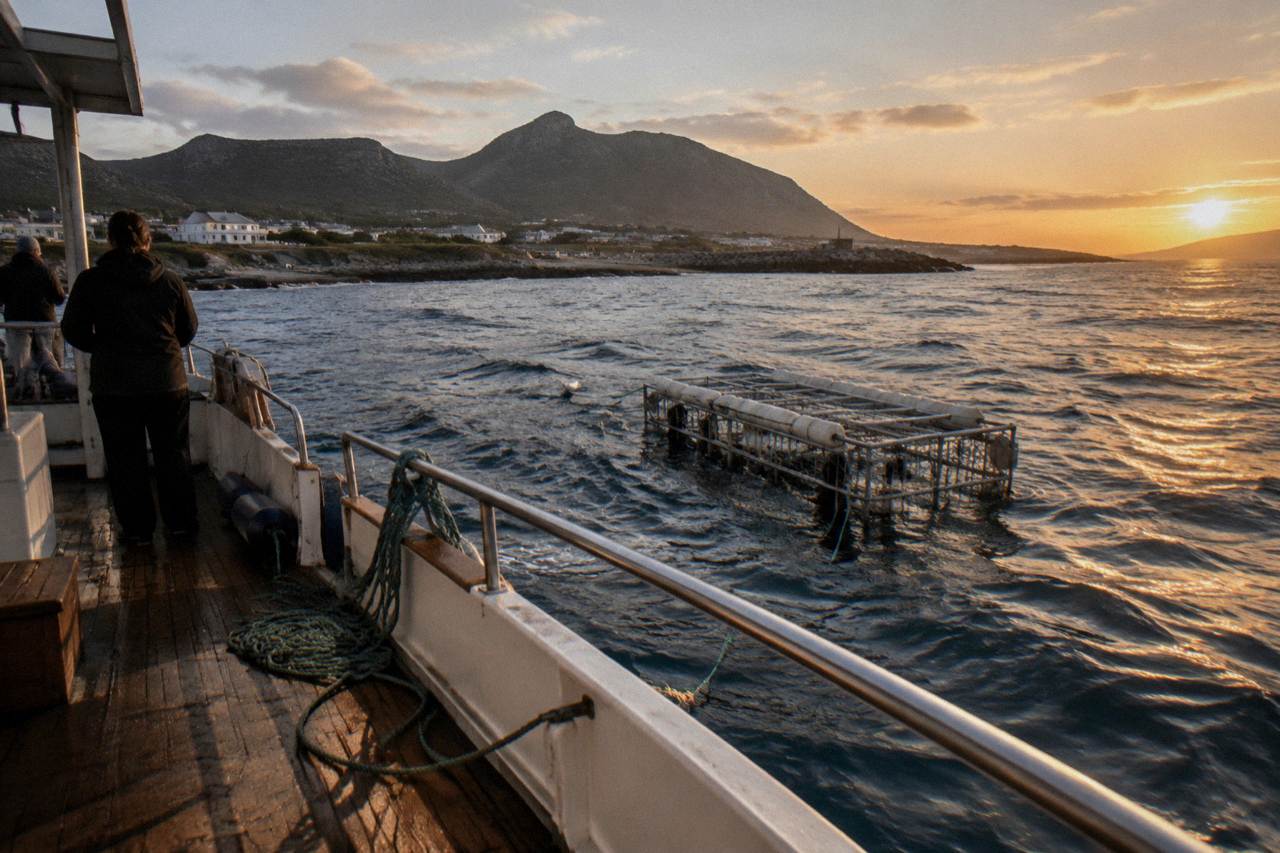
Great white sharks have been fully protected in South African waters since 11 April 1991, the first country in the world to grant them that status. That protection exists because the species is vulnerable, not because it is harmless, and South Africa's long, exposed coastline has produced some of the most closely studied shark incidents anywhere. Yet the number people usually want, a clean national total of fatal attacks, is not the number that matters for anyone booking a cage dive. The two records barely touch.
This article separates them. The wild-water record involves swimmers, surfers and abalone divers, and it belongs to the ocean at large. The cage-diving record is a regulated commercial activity run under government permit, and its verified fatality count from shark interaction is zero. The only event that ever killed paying guests on a Gansbaai shark trip was a boat capsize in 2008, ruled negligence over sea conditions, with no shark involvement at all. Those three deaths are real, and this site reports them plainly, because pretending otherwise would be worse than the truth. For the full account of that day, read what really happened in Gansbaai.
How Many Fatal Shark Attacks Have There Been In South Africa?
The number that can be verified for licensed shark cage diving is zero: no documented shark-caused guest fatalities in regulated cages, a record the industry's own safety watchers state plainly. Fatal shark incidents in South Africa do exist, but they involve swimmers, surfers and abalone poachers in open water, a completely separate record from the permitted cage-diving product, which has never lost a guest to a shark.
The distinction matters more than the totals. A cage dive is a controlled operation: a steel cage built to approved specifications with a lid, a permitted boat, a crew trained under Department of Forestry, Fisheries and the Environment rules, and a code of conduct that bans touching the sharks. A swimmer at an unprotected beach shares the water with whatever is hunting, on no terms but their own. Lumping the two together produces the wrong answer to both questions.
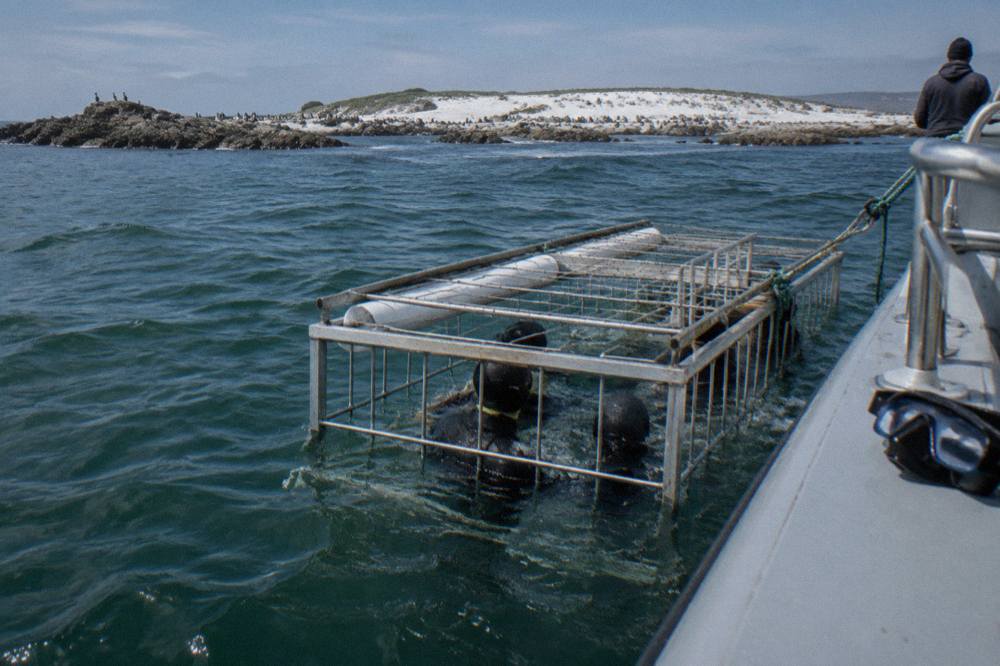
For readers planning a trip, the practical takeaway is short. The activity with the spotless shark record is the one you book; the incidents that give the country its fearsome reputation happened to people in the water without a cage, a boat or a crew (see The Gansbaai Accident). The rest of this article lays out what the verified sources actually say, including the 2008 capsize that is sometimes misreported as a shark attack, and the orca predation that has quietly become the deadliest shark story in South African waters, for the sharks.
If a cage dive is what you are weighing, these are the three listings this site's comparison rates most highly for the purpose:
What Does The Verified Record Say About Cage Diving Deaths?
Licensed cage diving in South Africa has no documented shark-caused injuries or fatalities to paying guests inside cages. Industry safety sources state this directly, and the one fatal event in the activity's history, the 2008 capsize of a Gansbaai-area vessel, killed three tourists by drowning and was ruled negligence over sea conditions and anchoring, not anything a shark did.
That 2008 incident deserves its own accounting, because it surfaces in search results as a "shark diving death" and it was not one. A boat called Shark Team, anchored off Gansbaai, was hit by a large wave and capsized; three tourists drowned. The court record that followed, preserved in the South African Legal Information Institute archive, the 2014 Western Cape High Court judgment, found the deaths stemmed from sea conditions and operational negligence. No shark touched anyone. The case reshaped how operators handle anchoring and weather calls, and it is the reason licensed trips cancel readily when the swell looks wrong.
| Event | Year | Location | Deaths | Shark involvement | Ruling or finding |
|---|---|---|---|---|---|
| Licensed cage diving, all operators | ongoing | Gansbaai, False Bay, Mossel Bay | 0 | None documented to guests in cages | Consistent industry and safety-source record |
| Shark Team capsize | 2008 | Gansbaai area | 3 (drowned) | None | Sea-condition and anchoring negligence, not shark-related |
The zero is not a marketing line. Safety sources that track the industry, including the Shark Watch SA safety page, report no shark-related injuries or fatalities to paying guests inside regulated cages, with one major operator noting none on its boats since 2005. The regulation behind that record is real too: cage diving operates under White Shark Cage Diving permits issued through the NEMBA Threatened or Protected Marine Species Regulations, with cage construction standards, baiting rules that prohibit feeding, and a ban on touching the animals.
The permit system itself explains much of the record. Historic allocation gave the Dyer Island and Gansbaai area eight commercial permits, False Bay three, Mossel Bay one, Quoin Point two and Algoa Bay two, a deliberately small number of licensed boats, each answerable to inspectors. Chumming is permitted only as a natural bait or fish-oil lure to draw sharks close, never direct feeding or provisioning, which keeps the animals from learning to associate boats with food. Cages must be built to approved specifications with lids, and the code of conduct regulates how close the animals may be drawn and forbids contact. A cage is not simply a box of bars; it is an engineered piece of equipment inspected under a national regulatory framework, and the fatality count is one measure of how seriously that framework is taken.
So the honest framing for a nervous reader is this: the cage has never been the site of a fatal shark attack in South Africa, and the one tragedy on a shark dive boat was a boating accident that regulation has since worked to prevent. The Shark Cage Diving Cape Town roster's featured trip, the Marine Dynamics eco cruise from Kleinbaai, rated 4.6 from 369 reviews and priced from $232 per person, runs under exactly that permit regime, with a research crew on board and free cancellation on the listing.
Which South African Shark Incidents Actually Involve People?
The fatal and serious shark incidents in South Africa's record involve people in open water: swimmers, surfers, spearfishers and abalone poachers, typically at unprotected beaches and dive sites. These cases belong to the wild ocean, not to commercial cage operations, and the verified research on them notes they are unrelated to cage tours in every documented respect.
This is where the country's reputation comes from, and it is worth being precise about. The research gathered for this site notes that other South African shark incidents, the ones that do injure and kill people, typically involve swimmers, surfers or abalone poachers. Those groups enter the water alone, often at dawn or dusk, often near seal colonies or river mouths, and without any of the barriers, briefings or boat support a licensed trip provides. Their stories are genuine tragedies and they dominate public memory of sharks in South Africa, but they are a different activity in a different setting.
It also matters which animals are involved. The great white shark has been protected since 1991, and the species most often implicated in serious South African incidents historically is the same one that has now largely vanished from the Gansbaai and False Bay cage-diving sites. Since roughly 2017, when the two male orcas nicknamed Port and Starboard began preying on them, great whites have been rare to absent at both locations, with 11 documented orca predation events on white sharks between 2017 and 2025. A swimmer's risk profile and a cage diver's risk profile were never the same, and today they are not even sharing the same water with the same animals. If the changing lineup of sharks has you second-guessing a cage trip, our look at how safe you actually are in the cage with great white sharks covers the cage design, the permits and what the record really shows.
| Exposure type | Setting | Barriers and support | Documented fatal shark incidents | Who carries the risk |
|---|---|---|---|---|
| Licensed cage dive | Permitted boat, steel cage with lid | Trained crew, safety briefing, regulator oversight, weather cancellations | Zero shark-caused guest fatalities | Effectively none from shark interaction |
| Wild-water swimming and surfing | Unprotected beaches, often dawn and dusk | None | Real fatal incidents on record | The individual, alone |
| Abalone poaching and free diving | Deep, remote, often night operations | None, often illegal entry | Real fatal incidents on record | The individual, alone |
The table is not meant to diminish the wild-water deaths. It is meant to show that the question "how many fatal shark attacks in South Africa" is really two questions wearing one coat. The person asking from a laptop, wondering whether to book a cage trip, is asking about row one. The families and communities affected by row two lived a different reality, one that no permit system ever reached, because those victims were in the ocean on their own terms.
For readers who want the fuller safety picture, including how the cage is built and why no certification is needed, the companion guide Is Shark Cage Diving Safe In Cape Town? walks through the equipment and the permit rules in detail, and the longread How Many People Have Died Cage Diving With Sharks? covers the global record. The short version of both: the danger people imagine when they picture a shark trip, an animal breaking into the cage, has no documented case behind it in South African waters.
Why Are The Sharks Themselves Dying?
The deadliest shark story in South African waters right now has no human victims at all: between 2017 and 2025, two male orcas documented 11 predation events on great white sharks, killing them for their livers, and the white shark population at Gansbaai and False Bay collapsed as a result. The sharks, not the divers, are the ones being attacked.
The orca pair, named Port and Starboard for their collapsed dorsal fins, one leaning left and one right, first made headlines in 2017 when five white shark carcasses washed up in the Gansbaai area with their livers surgically removed. The documented record on the pair's predation history now counts 11 events on white sharks between 2017 and 2025, plus attacks on sevengill sharks, including 17 killed in a single day off Pearly Beach in February 2023. The tactic involves holding the shark upside down to induce tonic immobility and extracting the liver with what researchers describe as surgical precision.
The consequence for the cage-diving towns has been sweeping. Great whites abandoned Gansbaai aggregations for stretches of up to two and a half years, and sightings near Seal Island in False Bay fell to near zero from around 2018. A peer-reviewed study in the journal Biology, drawing on roughly 560 hours of boat observations from 2009 to 2024, recorded 423 white shark sightings but found no site fidelity and no increase in sighting rates, the published study concludes. Marine Dynamics' founder said in a June 2026 interview that the company simply does not have great whites at the moment, logging 312 bronze whaler sightings across 33 recent trips without a single white.
That September 2026 sighting deserves its own caution. A single sub-adult great white was filmed near Seal Island in False Bay, the first confirmed sighting there in roughly eight years, and marine biologists on record were quick to say it is one animal, not a return. Any article that tells you the whites are back at False Bay is ahead of the evidence. What the licensed boats reliably show today at Gansbaai and Simon's Town are bronze whaler, or copper, sharks and broadnose sevengill cowsharks, and the honest operators say so before you book.
There is a strange symmetry in all of this. The question this article answers, how many fatal shark attacks, was once asked almost entirely about humans. In 2026 the most accurate answer has to include a second column: the sharks themselves are dying in documented, counted numbers, at the flukes of two orcas, while the humans in the cages have never been safer. The protected predator since 1991 now needs that protection more than it did when the law was written.
Does The Zero-Fatality Record Apply To Every Listing?
The shark-safety record applies across every licensed operator, but the booking terms differ listing by listing: 14 of the 15 trips on this site's roster offer free cancellation, while the Apex Shark Expeditions trip from Simon's Town is non-refundable, a booking risk rather than a physical one. Reading the cancellation terms before paying is the one place the record should make a reader careful.
The distinction is worth spelling out because nervous travelers sometimes conflate the two. Nothing about the Apex listing, rated 4.7 from 129 reviews and priced from $277.05 per person, suggests anything but the same permitted, crewed, cage-based operation as its competitors. Its policy is simply stricter with your money if the weather or your plans change. Every other listing on this roster, from the $126 Shark Zone trip at Van Dyks Bay to the $305 Cape Shark Adventures whale-season combo, carries free cancellation on the platform listing.
The half-day White Shark Projects trip from Gansbaai illustrates the standard package well: rated 4.7 from 451 reviews, from $173 per person, about three hours, with a continental breakfast and on-board light lunch included, run by one of the area's longest-standing operators. Reviews for these trips consistently describe the sharks seen, bronze whalers and sevengills, not great whites, which is exactly the honest picture the operators themselves now present.
The False Bay alternative runs on the same logic. The award-winning Simon's Town open-water trip, rated a perfect 5.0 from 37 reviews and priced from $216 per person, puts divers in a cage off Simon's Town for about four hours of shark viewing with snacks and hot drinks included, and it carries the roster's sells-out-often badge, so early booking matters more than usual.
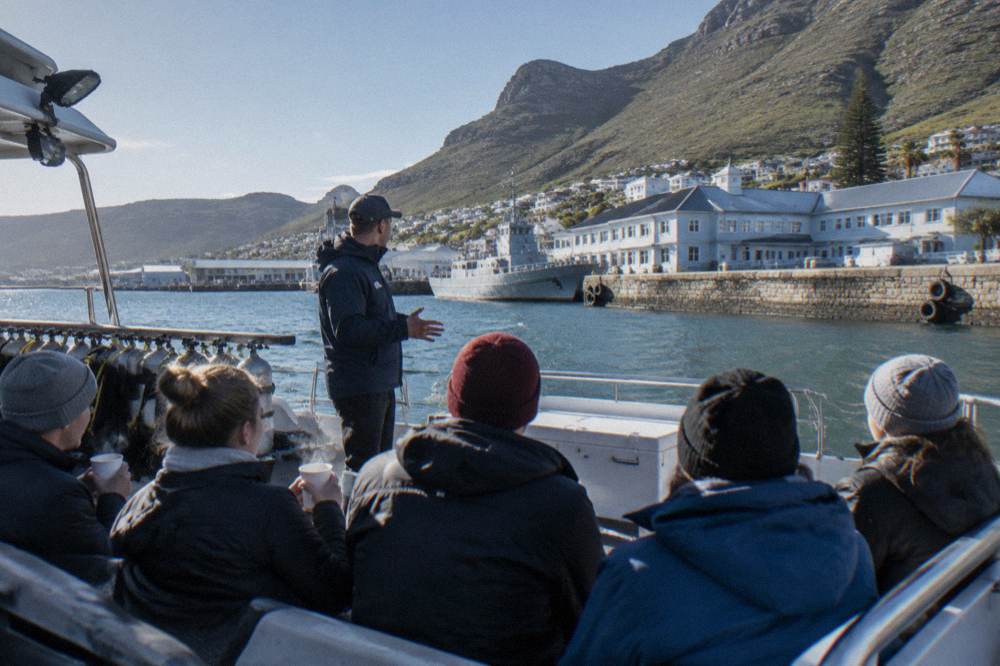
One practical note ties the safety record to the calendar. Trips cancel for sea conditions, especially in winter when the swell runs bigger, and the 2008 judgment is the reason crews take those calls seriously. Free cancellation on your booking is what turns a weather cancellation from a lost holiday into a rescheduled one. It is the single feature most worth checking, and this roster makes it easy: everything except the Apex listing has it.
A final word on what to do with the fear itself. The verified numbers say a licensed cage is one of the safest places you can put a human in shark water, safer by the documented record than an ordinary beach swim on the same coastline. If the question that brought you here was really "should I be scared of booking this", the answer the data gives is no. Be careful with the sea, respect the weather calls, read the cancellation terms, and go see the bronze whalers that actually live there now.
Common Questions About How Many Fatal Shark Attacks Have There Been In South Africa?
How Many Fatal Shark Attacks Have There Been in South Africa?
South Africa has a real record of fatal shark incidents involving swimmers, surfers and abalone poachers in open water, but licensed shark cage diving has zero documented shark-caused guest fatalities. The only fatal event on a shark dive trip was the 2008 Gansbaai-area boat capsize, in which three tourists drowned, ruled sea-condition negligence with no shark involvement.
Has Anyone Died Cage Diving With Sharks in South Africa?
No paying guest has died from shark interaction inside a licensed South African cage. The three deaths sometimes cited in connection with Gansbaai shark diving came from the 2008 capsize of the vessel Shark Team, a boating accident attributed to sea conditions and anchoring negligence, not to any shark.
Are Great White Sharks Still Attacking Anything in South African Waters?
The most documented predation in these waters now runs the other way: two male orcas, Port and Starboard, have been linked to 11 great white shark deaths between 2017 and 2025, with carcasses found with their livers removed. The orca predation, not human incidents, is the dominant fatal-attack story at Gansbaai and False Bay.
Is Shark Cage Diving Itself Dangerous?
The verified record says the shark risk is effectively zero: no documented shark-caused guest fatalities or injuries in licensed cages, under a permit regime that mandates cage specifications, lids, a no-touch code of conduct and a ban on feeding. The realistic risks are seasickness and weather cancellations, both of which the operators brief and manage.
Do Any Shark Cage Diving Listings Lack Free Cancellation?
On this site's roster, one: the Apex Shark Expeditions trip from Simon's Town, rated 4.7 from 129 reviews and priced from $277.05 per person, is non-refundable. Every other listing, including the featured Marine Dynamics eco cruise from $232 per person, offers free cancellation on the platform listing.
Does The September 2026 False Bay Sighting Mean Great Whites Are Back?
No. One sub-adult great white was filmed near Seal Island on 23 September 2026, the first sighting there in about eight years, and the marine biologists on record explicitly state it is a single animal, not a population recovery. The licensed boats at Gansbaai and False Bay today mainly show bronze whaler and sevengill cowsharks.
If this article has done its job, the number you leave with is not a vague dread but a clean split: zero for the cage, a wild-water record that belongs to swimmers and surfers, and an orca story in which the sharks are the victims. The trips below are the licensed, free-cancelling ways to see what is actually in the water: