Are You 100% Safe In The Cage While Diving With Great White Sharks?
No cage dive is ever 100% safe, but licensed South African operations have a strong record. Here is what the cage, the permits and the real data say about risk.
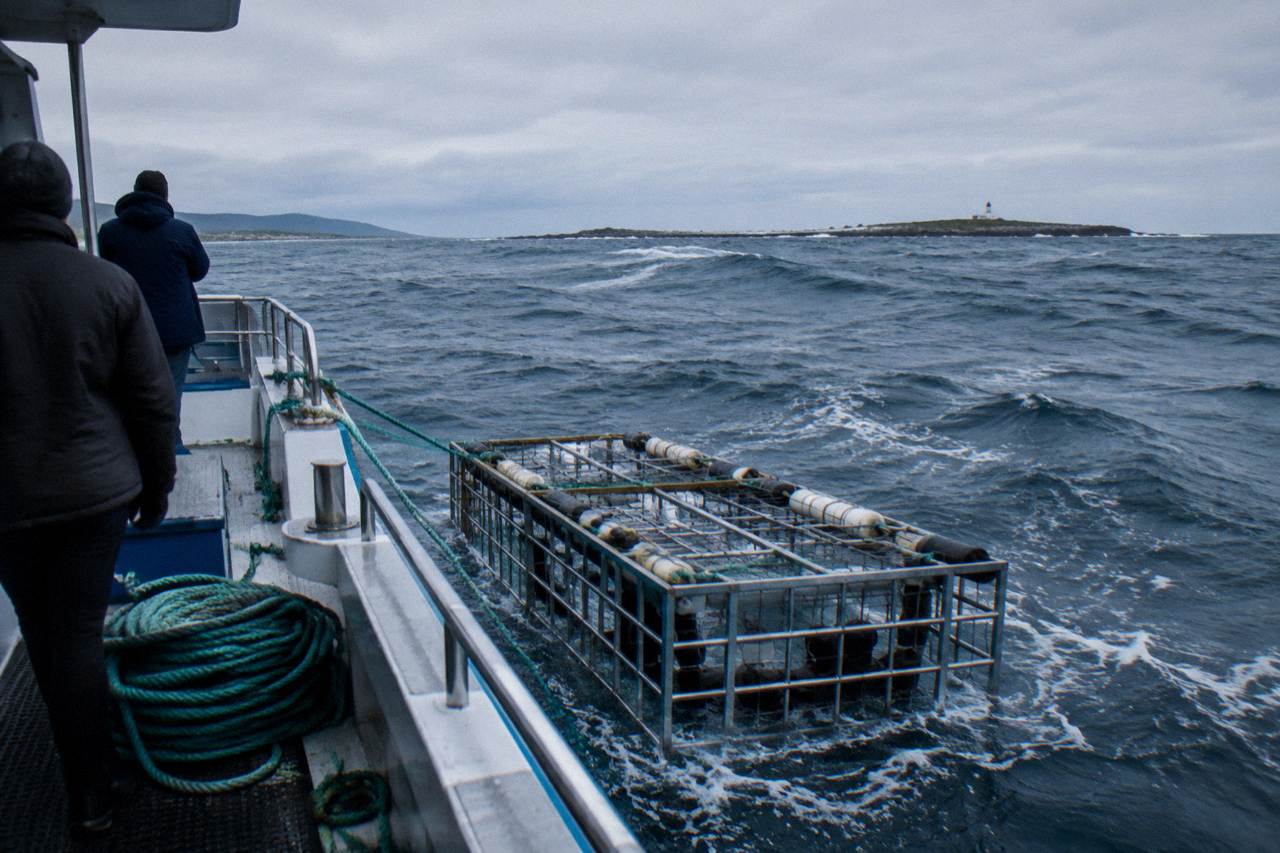
Are You 100% Safe In The Cage While Diving With Great White Sharks?
No, and any operator who tells you that a cage dive is 100% safe is selling you a slogan rather than a fact. No activity in open water is risk-free, and honest operators say so plainly in their briefings. What the record actually shows is a licensed industry with no documented shark-caused guest fatalities in regulated cages, structured permit rules, and a set of real but manageable risks that have almost nothing to do with sharks attacking anyone. If that honest risk picture leaves you curious rather than put off, our guide to going cage diving with great white sharks in South Africa covers where the sharks are actually seen today and what a trip really involves.
The question deserves a straight answer, so here it is: cage diving sits in the same risk category as any commercial marine activity, think whale watching, sea kayaking or a day of diving off a charter boat, rather than in the category of extreme sports marketing hype. The cage is an engineered barrier, the industry is state-regulated, and the boats operate under maritime safety rules. The genuine dangers are the ones the ocean supplies to every vessel: swell, wind, cold water and seasickness.
There is also a species reality that most safety articles skip entirely. Great white sharks have been largely absent from Gansbaai and False Bay since roughly 2017, when two male orcas nicknamed Port and Starboard began preying on them. The trips you can actually book today mostly put you in the water with bronze whaler sharks and broadnose sevengill cowsharks, which changes the risk conversation considerably. We will come back to that, because it matters for what "safe" means in practice.
If you are weighing a booking, these three listings represent the range of current options, from a conservation-framed Gansbaai dive to a small-operator Kleinbaai trip and an open-water False Bay experience:
How Is The Cage Actually Built To Keep You Safe?
A South African shark cage is a welded steel frame fixed to the boat's side, floating at the surface, with a secure lid, gaps too narrow for a shark's snout, and handholds that keep a person in a wetsuit inside the frame even in choppy water. It is engineered equipment built to the national permit code's specifications, not an improvised box over the side. You stand in it with your head above water between breath-hold dives.
The design brief is simple: the shark is large and curious, the human is small and slow, and the barrier has to hold in both calm and rough conditions. The cage floats at the surface, which matters more than people realise. Because the cage rides at the top of the water column, you are never submerged for long stretches: you breathe air normally, duck under to watch the shark approach, and surface whenever you like. No scuba certification is required for exactly this reason.
The permit code adds structural rules on top of the engineering. Cages must be built to approved specifications with lids, sharks must never be touched or fed, and baiting is restricted to natural bait and fish-oil lures that draw the animal close without provisioning it. The regulator, the Department of Forestry, Fisheries and the Environment, issues a limited number of permits per area, and those permits are the mechanism that keeps every licensed boat on the same safety page.
| Cage safety feature | What it does | Why it matters |
|---|---|---|
| Welded steel frame | Physical barrier between diver and shark | A great white's investigatory bite cannot reach a person inside an intact frame |
| Secure lid | Prevents a person exiting upward in panic | Keeps the human contained, which is half of what the cage protects |
| Surface-floating position | Head above water between dives | No certification, no air supply, no decompression, easy exit |
| Narrow entry gaps | Blocks a shark's snout and teeth | The animal physically cannot fit through the viewing gaps |
| Boat-mounted attachment | Cage cannot drift away | Divers stay within arm's reach of crew at all times |
| Crew supervision | A divemaster watches every rotation | Human error is caught in seconds, not minutes |
The featured trip for this article, the Shark Cage Diving, Adventure Meets Conservation listing from Gansbaai, is a good example of how the safety framing and the education framing now go together: the operator's briefing covers both the cage mechanics and the species decline, and the trip carries a 4.8 rating from 237 reviews with free cancellation on the listing, from $169 per person.
What Rules Do South African Permits Impose On Operators?
Every licensed operator works under a White Shark Cage Diving permit issued by the Department of Forestry, Fisheries and the Environment, under the Threatened or Protected Marine Species Regulations. The permit system caps how many boats operate per area, bans direct feeding, prohibits touching sharks, mandates cage construction standards and subjects operations to monitoring under maritime safety rules. The practical effect is that safety on these boats is a legal obligation, not a marketing choice.
The regulatory structure is worth understanding because it is the strongest single answer to the safety question. A permit is not a rubber stamp. The historic allocation allowed 8 commercial permits for the Dyer Island and Gansbaai area, 3 for Seal Island and False Bay, and a single permit for Mossel Bay, which means the number of boats that can legally run trips is small and each one is identifiable. The full permit framework is published in the consolidated national regulations, and operators describe their compliance obligations openly on their own information pages, such as the permit and code-of-conduct summary published by Sharkwatch SA.
Two permit rules do the most safety work. First, chumming is permitted only as a lure, a natural bait and fish-oil slick that attracts sharks to the boat, never as feeding. A shark that associates boats with food behaves differently from a shark that investigates a slick and finds nothing to eat, and the rule exists to keep that association from forming. Second, the code of conduct bans touching sharks, which protects the animal and the diver in the same stroke, since a hand on a shark's skin is the moment a barrier stops mattering.
There is a third layer that rarely gets mentioned: the great white shark itself has been fully protected in South African waters since 11 April 1991, the first such protection anywhere in the world. The protection and its evidence base are documented by Oceans Research, and it means the entire industry operates around a protected species, with the legal scrutiny that implies. Boats that cut corners lose permits, and a permit is the whole business.
What Is The Real Safety Record Of Cage Diving?
The verified record shows no documented shark-caused guest fatalities in licensed cages, alongside one genuine tragedy: a 2008 Gansbaai-area boat capsize in which three tourists drowned, ruled by the court to be negligence related to sea conditions and anchoring, not a shark incident. The honest reading is that sharks have never killed a guest in a licensed cage here, and that the sea itself is where the real risk has always lived.
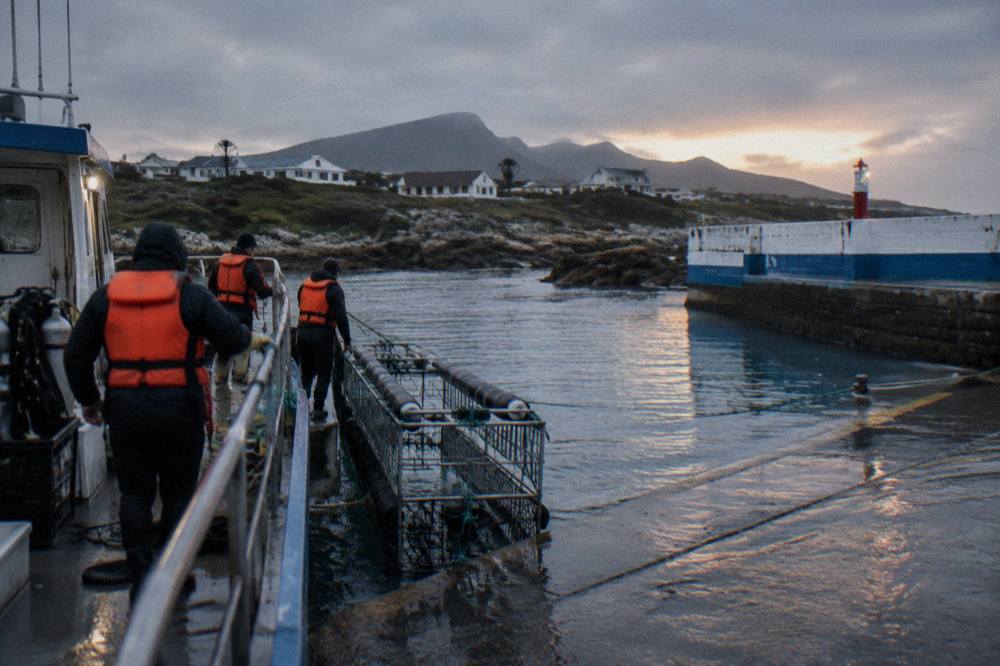
That 2008 incident deserves to be described accurately rather than buried, because it is the only fatal event in the industry's modern history and it was not about sharks at all. A vessel anchored off Gansbaai was struck by a large wave and capsized, and three tourists drowned. The court ruling that followed found the cause was negligence tied to the sea conditions on the day, not the animals, not the cage, and not a shark attack in any sense. The industry's safety protocols for weather calls and anchoring were reshaped in its aftermath, and today's skippers cancel trips for conditions far more readily than the marketing copy suggests.
The shark-specific record is, if anything, quieter than people expect. Sharks investigate cages. They bump them, they mouth the bait lines, sometimes they gnaw on a rope or push against the frame, and divers get a story. What the documented record does not contain is a licensed cage failing in a way that let a shark injure a guest. The cage is built for exactly the behaviour sharks actually exhibit, which is curiosity, not predation on a steel box.
| Risk factor | Documented record | Realistic severity for a guest |
|---|---|---|
| Shark entering or breaching a licensed cage | No documented case in regulated South African operations | Extremely low, the frame is engineered against it |
| Shark-caused guest fatality in a licensed cage | No documented cases on record | The headline fear, unsupported by any incident |
| Boat capsize or sea-condition incident | One fatal event in 2008, 3 drowned, ruled sea-condition negligence | Low but real, mitigated by modern weather protocols |
| Seasickness | The most commonly reported issue on trips, no quantified rate | High likelihood on rough days, medically harmless |
| Cold water and exposure | Water 15.8 to 20.7 degrees C depending on month and site | Managed with supplied 5mm wetsuits and layers |
| Slips, trips and falls on deck | Occasional, as on any boat | Standard maritime caution applies |
For readers who want the full incident-by-incident breakdown, the fatality numbers and the 2008 capsize are covered in detail elsewhere on this site. The short version for this page: the fatality question and the shark question are two different questions, and conflating them is how the myth of dangerous cages survives.
Which Sharks Are You Actually Sharing The Water With Today?
On the current Gansbaai and False Bay trips, the sharks you are most likely to meet are bronze whalers and broadnose sevengill cowsharks, not great whites. Great whites have been largely absent from both areas since roughly 2017, displaced after the orca pair Port and Starboard began preying on them. One sub-adult great white was filmed near Seal Island on 23 September 2026, the first sighting in about eight years, explicitly not a recovery, per the biologists on record.
This is the part of the safety question that almost nobody asks and everybody should. The risk profile of a cage dive depends on what is on the other side of the steel, and the honest answer in 2026 is that it is usually a bronze whaler. Bronze whalers are large, powerful sharks, typically two to three metres, and they are genuinely thrilling to watch from a cage, but they are not the animal the posters promised. A May 2025 operator update from one Gansbaai company put it plainly: the chance of not seeing a great white had become greater than the chance of seeing one.
The science backs the operators up. A peer-reviewed study published in the journal Biology in June 2025 analysed roughly 560 hours of cage-diving boat observations in Gansbaai from 2009 to 2024, recording 423 white shark sightings with only five re-sightings, no site fidelity and no increase in sighting frequency across the whole period. In June 2026, the founder of Marine Dynamics, one of the area's longest-running operators, confirmed the near-total local disappearance on the record, attributing it to the orca influx that began in 2017. In one recent month his crews logged 33 trips with 312 bronze whaler sightings and no great whites mentioned at all.
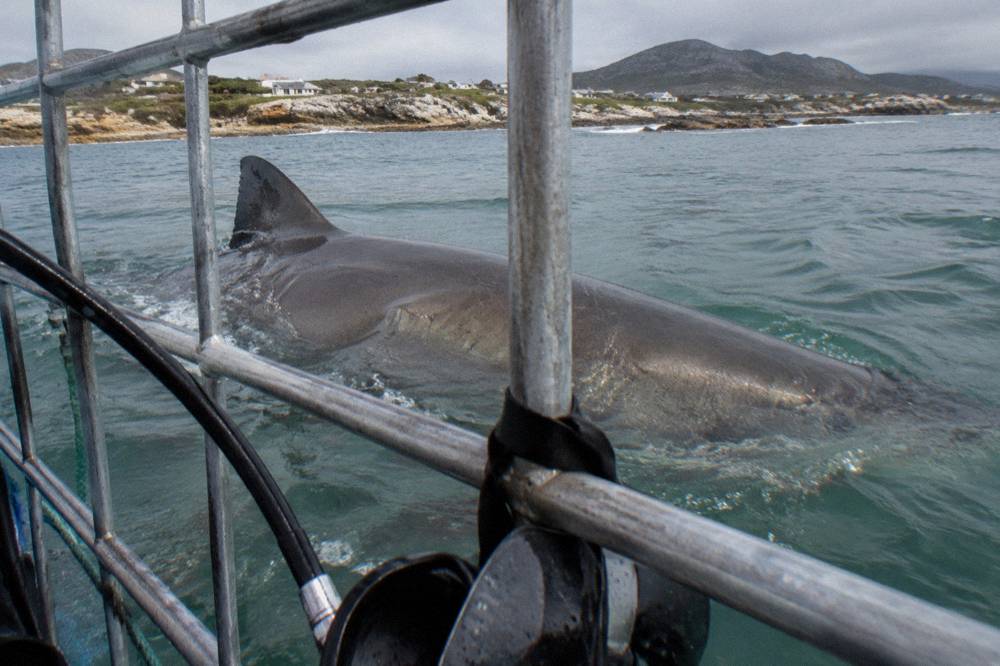
What does this mean for safety? It means the cage is doing its job against an animal that is itself a fraction of the headline risk. It also means the listings that still carry "great white" in their marketing titles are describing a historical draw, and a good briefing will tell you what you are actually likely to see. The Gansbaai shark cage diving and viewing boat trip from Kleinbaai Harbour is a case in point: it is top-rated among reviewed listings at 4.9 from 17 reviews, from $171 per person with free cancellation, and its own reviewers note that great whites are not guaranteed while other large sharks are commonly seen. That is the honest version of the pitch, and it is the one worth booking against.
The False Bay side of the roster is the same story with a different setting. The open-water trips from Simon's Town, such as the award-winning Simon's Town listing rated 5.0 from 37 reviews at from $216 per person, offer cage viewing of bronze whalers and, seasonally, other sharks, and they carry the same honest framing. One False Bay operator, Apex Shark Expeditions at 4.7 from 129 reviews and from $277.05 per person, is the single non-refundable listing on this roster, so if you book that one, read the cancellation terms before you commit.
What Are The Real Risks If Sharks Are Not The Main One?
The risks that actually send people home worse than they arrived are seasickness, cold and the ordinary hazards of a small boat in open water, in that order. Seasickness is the most commonly reported issue on these trips, with no quantified rate but universal acknowledgment from operators, and no cage design can fix it. The water runs 15.8 to 20.7 degrees C depending on month and site.
The mitigation is unglamorous and it works. Take motion-sickness medication in advance rather than on the boat, stay hydrated, get fresh air on deck and fix your eyes on the horizon, and tell the crew early rather than being brave about it. Operators brief this at the start of every trip because a seasick guest is the most common bad outcome they see, and the crew has seen every severity of it. Morning departures tend to run calmer than afternoon ones, which is one reason the standard schedule starts early.
Cold is the second real factor. Operators supply 5mm wetsuits, booties and masks, so you bring no gear of your own, but the advice that matters is layers for the boat: wind on the ride out is cold even in summer, and you will be wet and wind-chilled between cage rotations. The packing detail is covered properly in the what to wear for shark cage diving guide, and the seasickness question, including what to do if it hits you mid-trip, has its own piece on getting seasick during shark cage diving.
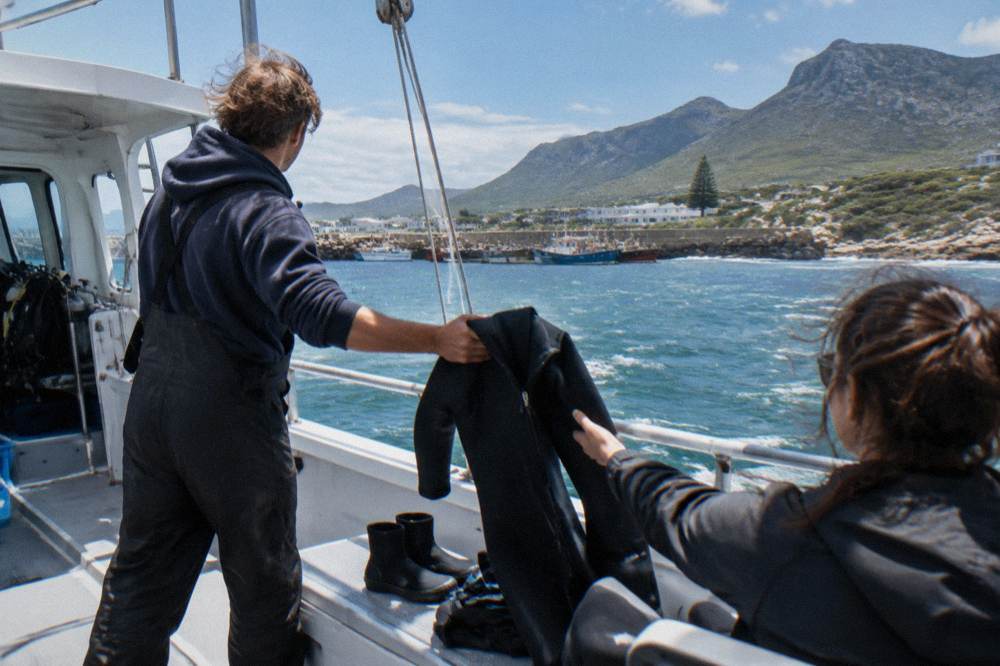
The third category is ordinary maritime risk, the kind every boat trip carries. Decks are wet and moving, footwear matters, and life jackets are part of the drill. This is where the 2008 capsize belongs in your mental filing system: the one fatal event in the industry's modern history was a sea-condition event, and the response to it, stricter weather calls and anchoring protocols, is precisely why the skipper's cancellation decision is the most important safety mechanism on the boat. When a trip is called off for conditions, that is the system working.
For the False Bay open-water trips, the same logic applies with a shorter transit: Simon's Town is about 45 to 60 minutes from central Cape Town, against roughly 2 to 2.5 hours to Gansbaai, so the door-to-day exposure to rough water is smaller even though the on-site conditions are the same ocean. The Simon's Town open-water shark dive listing runs about 4 hours of shark viewing with snacks and hot drinks included, from $216 per person, 5.0 from 37 reviews, free cancellation, and it is one of only two listings on this roster that often sells out, so the urgency on that one is real.
So Should You Feel Safe Getting In The Water?
Yes, you should feel safe getting in the water, provided you book with a licensed operator and follow the standard advice. The cage and permit system have held up across decades with no shark-caused guest fatality on record, and the real risks are seasickness, cold and sea conditions rather than the sharks themselves. Treat a weather cancellation as the system doing its job, not a reason for alarm.
The gap between the question people ask and the answer the data gives is the whole story here. "100% safe" is a phrase that belongs to no ocean activity anywhere, and the cage diving industry around Cape Town does not claim it. What it offers instead is a documented engineering standard, a state permit system with teeth, a court-tested response to its one real tragedy, and a species reality that operators now explain upfront because the alternative is a disappointed guest in the water. This site, Shark Cage Diving Cape Town, exists to lay that reality out listing by listing so nobody books on a poster's promise.
That last point is worth ending on. The most common negative in guest reviews is not fear, it is expectation mismatch: people arrive for a great white and meet a bronze whaler. The fix is not a better cage, it is a better briefing, and the operators who give one, like the conservation-focused Gansbaai listing this article features, are the ones whose reviews show guests leaving satisfied with the shark they actually met. Safety, in the end, includes the safety of knowing what you signed up for.
If you are ready to compare the current bookable options side by side, these three listings cover the honest spread of what is actually on the water right now:
Common Questions About Cage Safety With Great White Sharks
Are You 100% Safe in the Cage While Diving With Great White Sharks?
No. No open-water activity is 100% safe, and honest operators do not claim it. What the record shows is no documented shark-caused guest fatalities in licensed cages, a state permit system with construction and conduct rules, and real risks that are mostly seasickness, cold and sea conditions rather than the sharks themselves.
Has a shark ever broken into a cage and hurt someone?
There is no documented case of a shark breaching a licensed South African cage and injuring a guest. Cages are built to approved specifications with lids and gaps too narrow for a shark's snout, and sharks investigate cages with bumps and bites on the frame rather than any entry attempt.
Has anyone died cage diving with sharks in South Africa?
Three tourists drowned in a 2008 Gansbaai-area boat capsize, which the court ruled was negligence related to sea conditions and anchoring, not a shark incident in any sense. There are no documented shark-caused guest fatalities in licensed cages on the record.
Do you need scuba certification to go in the cage?
No. The cage floats at the surface and you breathe air normally, ducking under on breath-hold to watch sharks approach. No scuba certification is needed, and operators supply the wetsuit, booties and mask.
Will you actually see great white sharks on a Cape Town cage dive?
Probably not. Great whites have been largely absent from Gansbaai and False Bay since roughly 2017 after orca predation, and today's trips mostly feature bronze whaler and sevengill cowsharks. One sub-adult great white was filmed in False Bay in September 2026, the first sighting in about eight years, but experts are clear it is not a population recovery.
What is the most common safety problem on these trips?
Seasickness, by a wide margin. Operators report it as the most common issue guests face, which is why briefings cover medication timing, fresh air and horizon-watching before anyone gets near the cage.