What To Wear Shark Cage Diving: The Practical Packing Guide
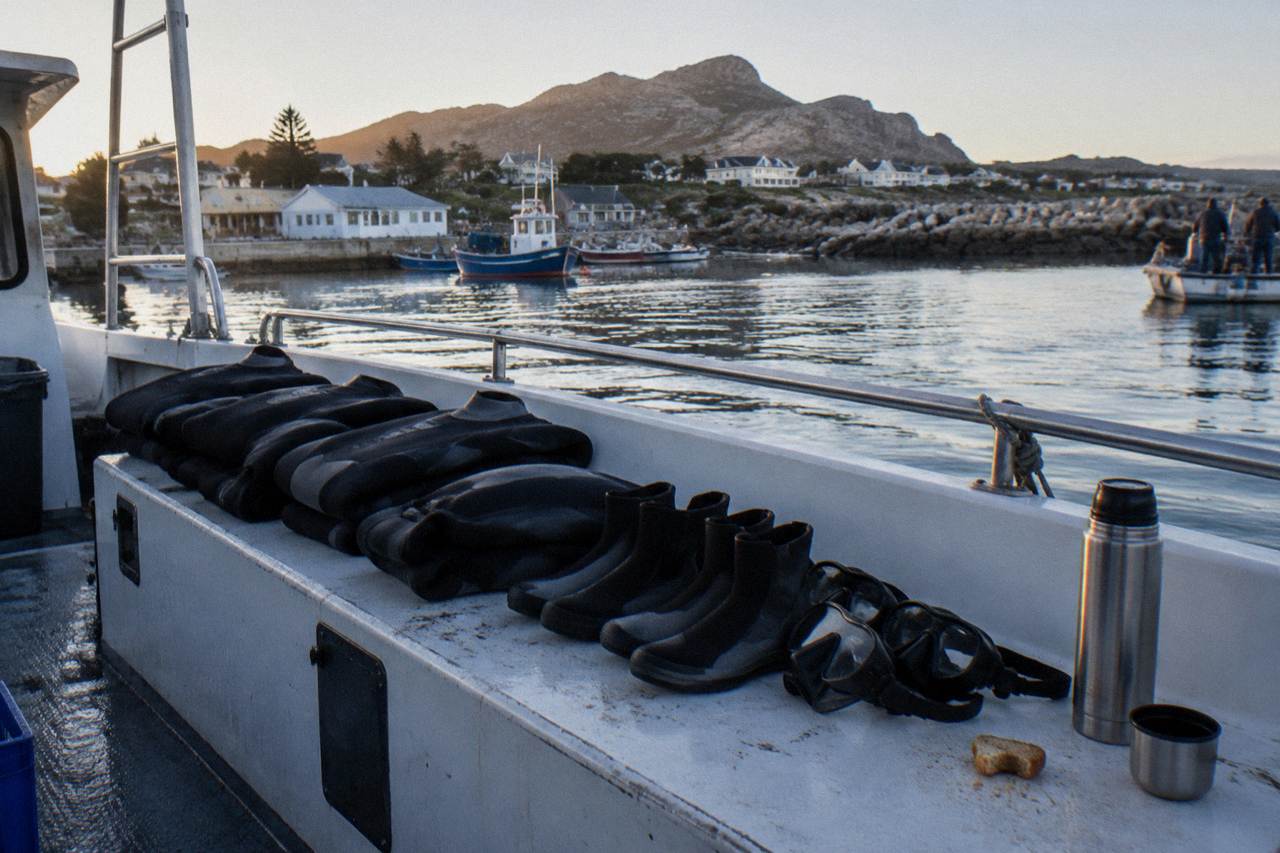
The wetsuit, booties and mask are supplied on every listing on this roster, so the real packing question is everything around the cage: warm layers for the boat, a dry change for afterwards, and the small items that make a cold morning tolerable.
Short answer
Operators supply the 5mm wetsuit, booties and mask, so you bring a swimsuit to wear underneath, warm layers for the boat, a towel and a dry change of clothes. Gansbaai water runs about 15.8 to 20.7 degrees Celsius across the year, and winter boat decks are windy, so layers matter more than the swimsuit. No scuba certification or personal dive gear is needed.
What Do You Actually Need To Wear For Shark Cage Diving?
The short answer: very little of your own. Every listing on this roster supplies the wetsuit, booties and mask, and no scuba certification is required. What you bring is the layering around the dive: a swimsuit worn under your clothes, warm windproof layers for the boat, a towel, a dry change for afterwards, and sun protection. The cage is a surface cage, so you either hold your breath in short rotations or breathe from a supplied air line.
That answer surprises people who expect to rent or buy dive equipment. A commercial shark cage dive in South Africa is closer to a boat-based wildlife tour with a short swim stop than to a scuba dive (see Fatal Shark Attacks). The operator holds the permits, the boat, the cage and the gear; the guest holds a swimsuit and a warm jacket. The Department of Forestry, Fisheries and the Environment regulates cage diving permits and the code of conduct around the cages, which is one reason the equipment is standardised rather than improvised.
What you wear matters mostly because of the two environments you move through in a single morning. The water off Gansbaai sits between roughly 15.8 and 20.7 degrees Celsius depending on month, cold enough that a 5mm wetsuit is the default. The boat deck, meanwhile, is windier and colder than almost any visitor expects, especially on a winter trip between June and August. Getting the boat layering right is what separates a comfortable trip from a miserable one.
This guide covers the full picture: what the operator supplies versus what you bring, how the water temperature shapes the wetsuit question, how the hookah air choice changes your kit, and the small details people forget. If you are still choosing between trips, the homepage comparison on Shark Cage Diving Cape Town lays out the roster side by side.
What Does The Operator Supply And What Do You Bring?
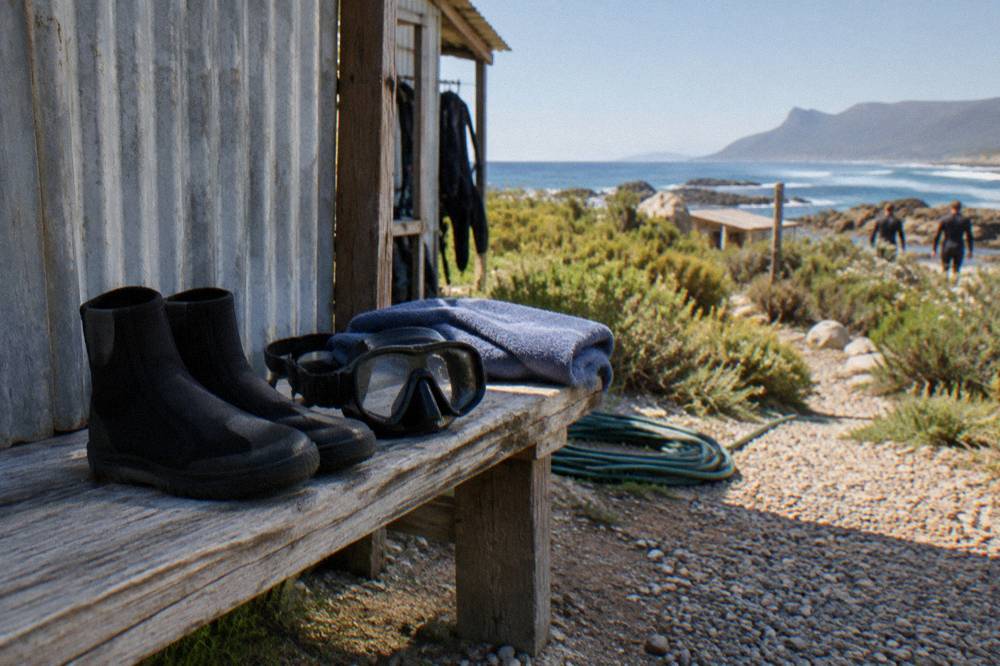
Every listing on this roster supplies the core in-water kit: a wetsuit, booties and a mask, with the wetsuit typically 5mm neoprene. Some operators add weight belts or gloves. You bring the swimsuit worn underneath, layers for the boat, a towel, a dry change of clothes, sunscreen, a hat and your ID or passport. No personal diving gear is needed, and no scuba certification is required for any listing.
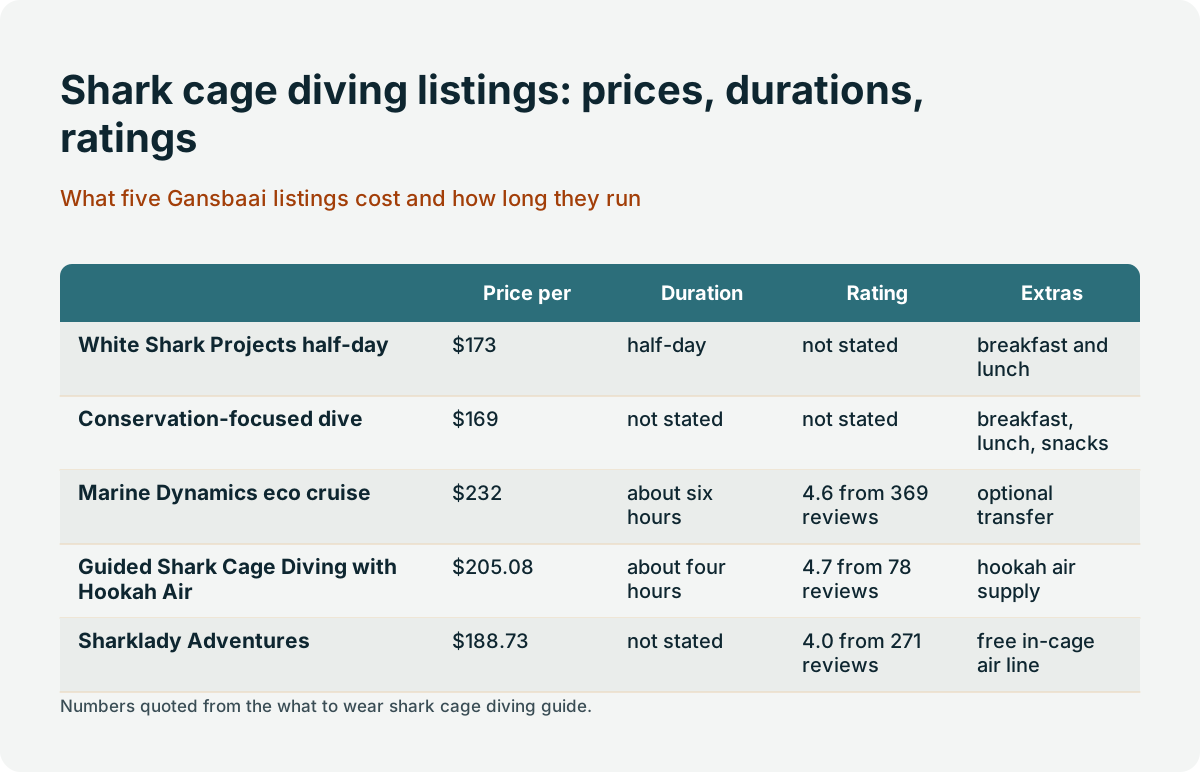
The division of responsibility is simple once you see it. The operator owns everything that touches the water; you own everything that keeps you comfortable out of it. Where a listing bundles meals, like the White Shark Projects half-day from $173 per person with continental breakfast and on-board light lunch included, or the conservation-focused dive from $169 per person with breakfast, lunch and snacks, food is also off your packing list. Check the specific listing's inclusions before you pack a cooler bag.
| Item | Supplied by operator | You bring | Notes |
|---|---|---|---|
| Wetsuit | Yes, typically 5mm | No | Sizes run on board; wear a swimsuit underneath |
| Booties | Yes | No | Bring socks only if you want them for the boat |
| Mask | Yes | No | Contact lens wearers should note prescriptions are not supplied |
| Weight belt | Some operators | No | Used to help you stay level in the cage |
| Swimsuit | No | Yes | Worn under clothes; you change on the boat |
| Warm layers | No | Yes | Windproof outer layer is the key item |
| Towel and dry change | No | Yes | There is no substitute for dry clothes afterwards |
| Sunscreen and hat | No | Yes | Boat glare is intense even in winter |
| ID or passport | No | Yes | Needed for check-in and any local-rate proof |
| Motion sickness remedy | No | Yes | Take it before departure, not after |
The one category worth spending real thought on is the boat layers, because that is where most of your day is actually spent. Trips run roughly three to six hours on the water for Gansbaai listings, and longer with a Cape Town transfer, so a cold, underdressed guest has hours to regret it. The seasickness angle is covered in detail in the guide to seasickness on a shark cage diving boat, which also explains why morning departures tend to be the calmer choice.
How Cold Is The Water And Will The Supplied Wetsuit Keep You Warm?
Gansbaai and Walker Bay water averages about 15.8 degrees Celsius in the July-to-September trough and about 20.7 degrees in January, while False Bay runs slightly cooler at 15.4 to 19.5 across the same range. A 5mm wetsuit, properly fitted, is designed for exactly these temperatures and keeps most divers comfortable for the short cage rotations. The cold that actually gets to people is the wind on deck, not the water.
The monthly numbers matter because they tell you how much boat layering to add, not because you get to choose your own wetsuit. In the winter peak season, roughly May to September, when Gansbaai activity and visibility are at their best, you are diving in the coldest water of the year. In summer the water is warmer but visibility typically drops, with underwater visibility averaging 6 to 8 metres and reaching its best in the cooler months.
| Month | Gansbaai / Walker Bay (°C) | False Bay / Simon's Town (°C) | What it means for your kit |
|---|---|---|---|
| January | 20.7 | 19.5 | Lightest neoprene feel; boat still windy |
| March | 20.6 | 19.3 | Warm water, patchier visibility |
| May | 17.4 | 16.9 | Add a windproof layer for the deck |
| July | 15.8 | 15.4 | Coldest water; full layering on the boat |
| September | 15.8 | 15.4 | Peak season, cold water, best visibility |
| November | 18.3 | 17.5 | Warming; whale season tail in Walker Bay |
A few practical notes on fit. A wetsuit only keeps you warm if it is snug; a loose suit flushes cold water through with every movement. Say your size honestly at check-in, and if the first suit fights you, ask for the next size. Wear the swimsuit under your clothes before you board, because changing space on the boats is compact. After your rotation, get out of the wet suit and into dry clothes quickly; standing around in a wet suit in the wind is the fastest way to end a good day early.
The cold-water reality also shapes which listing suits you. The Marine Dynamics eco cruise, 4.6 from 369 reviews and from $232 per person, runs about six hours with an optional Cape Town transfer, which is a long day to be cold on if you under-dress; it also carries a genuine "often sells out" flag, so booking ahead matters.
Hookah Air Or Breath-Hold: How The Air Supply Changes What You Need?
Most cage dives work on breath-hold: you surface, breathe, and duck down in short rotations, so no breathing gear is needed on your part. A hookah system replaces that with a surface-supplied air line, letting you breathe normally while your face is in the water. For packing, the difference is small, you bring the same kit either way, but for comfort the hookah option suits anyone uneasy about holding their breath near a shark.
The hookah listing on this roster is the Guided Shark Cage Diving with Hookah Air Supply in Gansbaai, from $205.08 per person, 4.7 from 78 reviews, about four hours, run by the same operator as the conservation-focused dive (see Gansbaai Shark Dive Reviews). The upgrade is the air line itself: instead of pulling the regulator-free breath-hold routine, you stay down longer with a steady air supply. Nothing about your packing list changes, the mask, suit and booties are still supplied, but the experience in the cage is calmer for many first-timers because breathing is not a task.
The breath-hold standard is not a hardship, and it is worth saying so plainly. Rotations are short, typically around 20 minutes per person split into dips, and the cage floats at the surface so your head is never far from air. Sharklady Adventures offers a middle path on its listing, with a complimentary in-cage air line included at no extra cost on a trip from $188.73 per person, 4.0 from 271 reviews, about three and a half hours. If you know you want air in the cage, either listing answers that; if you are happy holding your breath, every other roster listing works too.
One kit note specific to air-line dives: masks fog faster when you breathe through a line at surface pressure, so expect the crew to brief you on clearing it. Bring nothing for this, it is their gear and their briefing, but knowing it is coming makes the first five minutes in the cage less disorienting.
What Should You Wear On The Boat Between Cage Rotations?
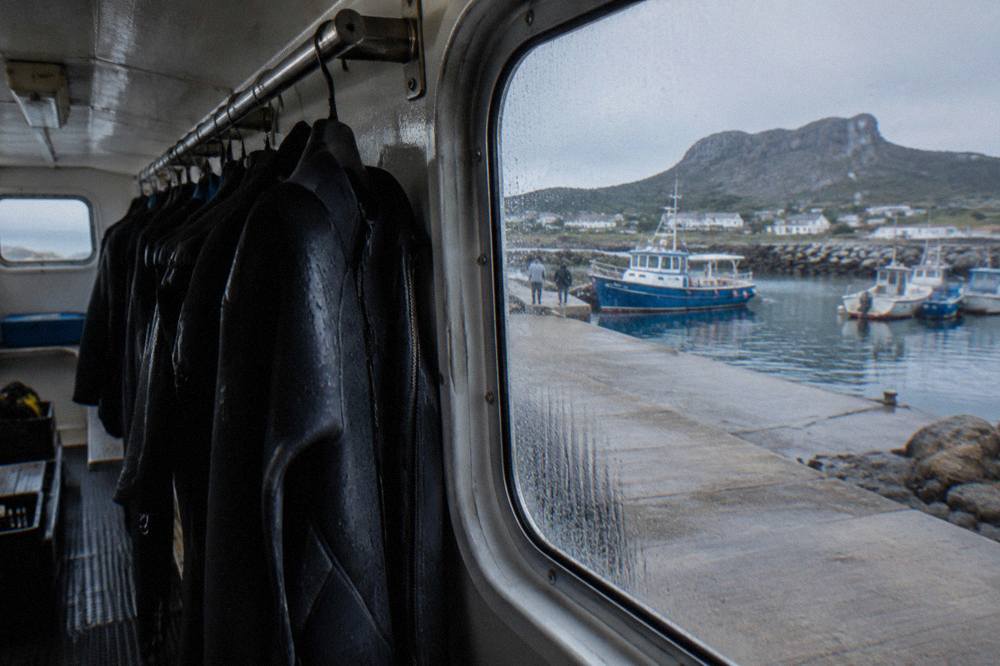
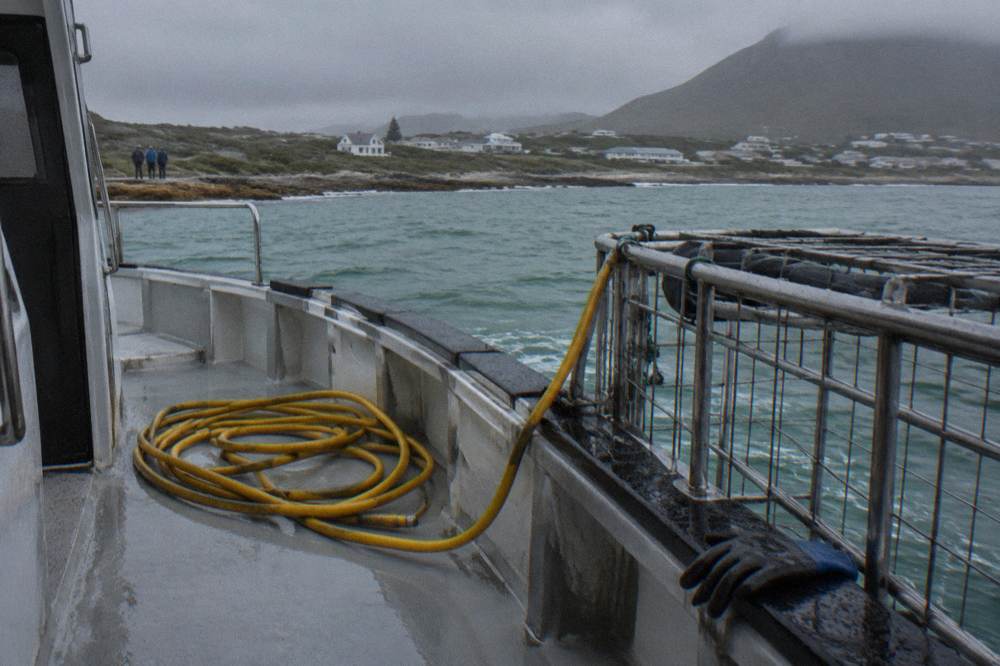
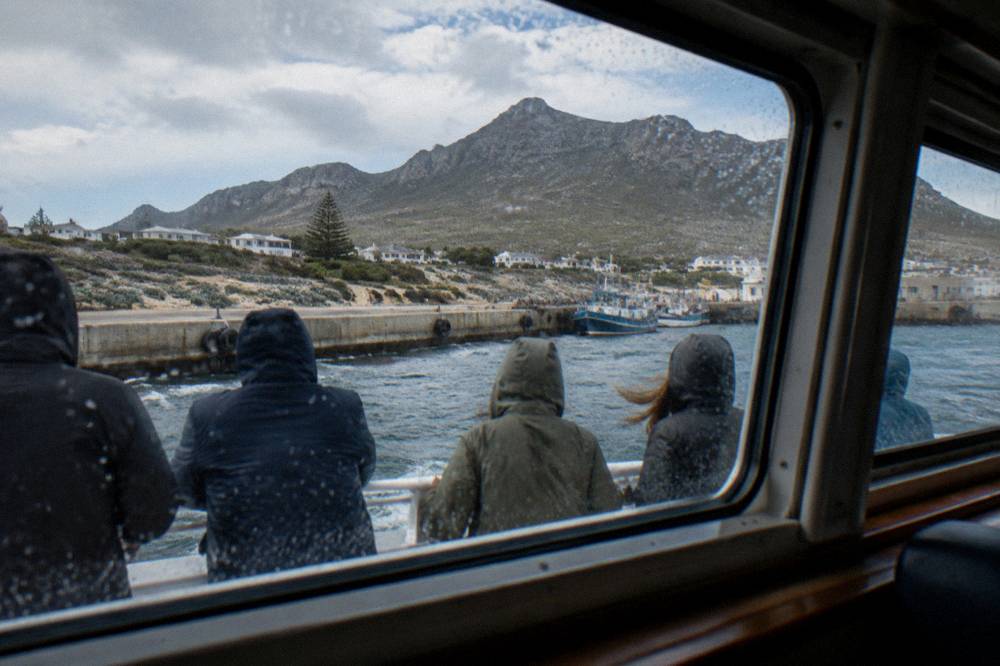
Windproof outer layers over warm mid-layers, a beanie or warm hat, and closed shoes you can slip off quickly for the wetsuit change. The boat deck is the coldest place on the trip, windier than the harbour and colder than the water feels once you are in a wetsuit. Skip cotton as your base, it stays damp; prefer synthetic or wool layers that keep warmth when wet.
Think of the boat as a two-outfit day. Outfit one is your street clothes for the drive and the check-in, with the swimsuit underneath. Outfit two is the dry change you put on after your final rotation. The wetsuit period in between is the operator's problem, clothing-wise; the deck periods are yours, and they are longer. On a six-hour trip like the Marine Dynamics eco cruise, you may spend four hours or more on deck between briefing, the ride out, rotations and the return.
Sun protection is the item people drop in winter and regret. Sea glare is intense year-round in the Western Cape, and a winter wind can mask how much sun you are taking on. Sunscreen, sunglasses and a hat that will not blow overboard all earn their place. If your trip includes a Cape Town transfer, note that pickups run roughly 2 to 2.5 hours each way to Gansbaai; the transport and pickup guide covers those options, and pickup where not bundled costs roughly R500 to R950 per person extra.
Footwear, Glasses, Cameras And Other Details People Forget?
Wear sandals or slip-on shoes for the boat, since you will remove them for the wetsuit change, and bring a strap for glasses or plan for contacts because masks do not accommodate spectacles. Cameras and phones need a lanyard and a dry bag; boats are wet and there is no safe place to set a loose phone. Bring cash or a card for extras, and ID for check-in.
Footwear is a small decision with an outsized effect on your morning. You will take shoes off to step into the suit, often standing on a moving deck, so anything with laces slows the whole rotation. Sandals or slip-ons go on and off in seconds and dry fast. On the boat itself, barefoot or socked feet are normal; the booties go on only for the water.
| Detail | The common mistake | The better plan |
|---|---|---|
| Glasses in the cage | Expecting to wear them under the mask | Contact lenses, or a prescription mask arranged in advance |
| Phone on deck | Holding it loose near the rail | Wrist strap or lanyard, plus a dry bag |
| Towel | Assuming one is supplied | Pack your own; it is the most forgotten item |
| Hair | Leaving it loose under the mask hood | Tie it back; a low bun sits best under a hood |
| Jewellery | Rings and bracelets in the suit | Leave them at the hotel; neoprene and metal do not mix |
| Motion sickness tablets | Taking them at the harbour | Take them before departure, per the packet's lead time |
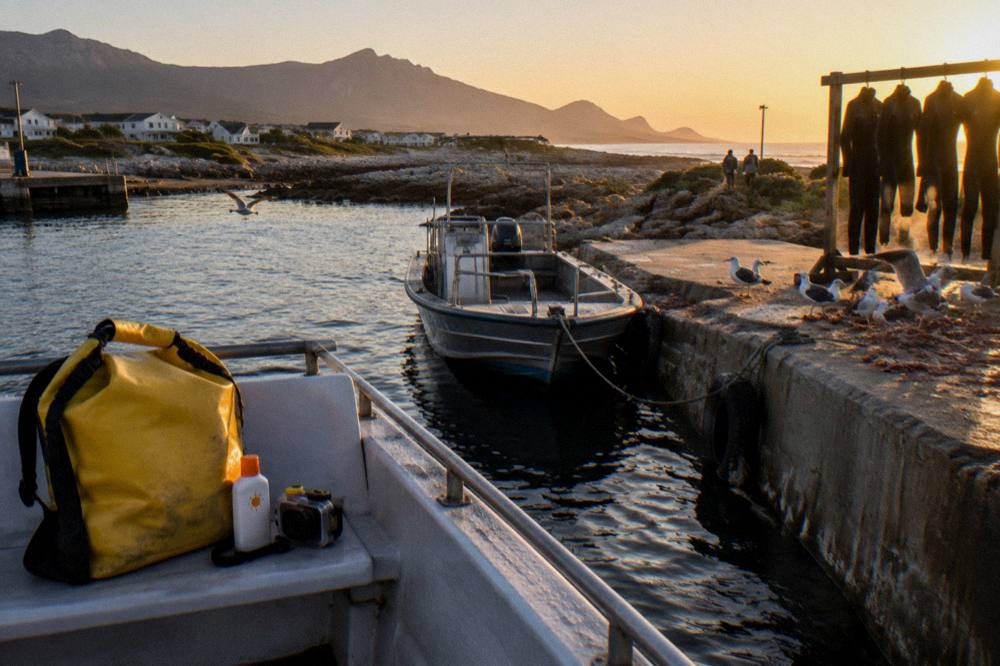
Cameras deserve one honest note. The best shark photos from these trips are usually taken by the crew or from the upper deck, not from inside the cage, where your hands are busy holding the bars and the view is a green blur of water. If photography is a priority, a small waterproof camera with a wrist strap beats a phone every time. Some listings mention photo packages; check the specific listing rather than assuming.
Does Clothing Colour Or Style Affect Sharks Around The Cage?
No credible evidence links clothing colour to shark behaviour in a cage diving context, and the cage, bait and chum do the attracting regardless of what you wear. Inside the cage your colour choices are irrelevant; the sharks are drawn to the lure line the crew manages. The colour question matters for swimmers and surfers in open water, a different situation covered separately.
This comes up often enough to answer directly, partly because shark lore travels faster than shark science. The operators' chum and bait setup, regulated so that it is a natural lure rather than direct feeding, is what brings sharks alongside the boat. Your black wetsuit is one of dozens the operator has put in that water. The interesting colour-and-contrast research concerns open-water activity like surfing and swimming, where a silhouette against the surface is the relevant signal; the site's piece on what colours not to wear in the ocean for sharks covers that question in full.
For the cage, dress for warmth and comfort, full stop. If a crew member ever gives you a specific instruction about gear or clothing, follow it; they know their boat, their cage and their day's conditions better than any guide can.
Your Full Packing Checklist For A Shark Cage Diving Trip?
Pack a swimsuit worn under your clothes, windproof and warm boat layers, a beanie, slip-on shoes, a towel, a full dry change, sunscreen, sunglasses, a hat, ID or passport, motion sickness remedy taken in advance, and a small dry bag for electronics. Leave the dive gear, the towel assumptions and the jewellery at home. Everything that touches the water is supplied.
Here is the whole list in one place, split by what goes in the bag versus what goes on your body at departure.
| Worn at departure | In your day bag | Leave at the hotel |
|---|---|---|
| Swimsuit underneath | Towel | Dive gear of any kind |
| Warm base layer, non-cotton | Full dry change of clothes | Jewellery and watches |
| Fleece or mid-layer | Sunscreen and lip balm | Bulky tripods |
| Windproof jacket | Sunglasses and brimmed hat | Drone (restricted around vessels) |
| Beanie or warm hat | Motion sickness tablets | |
| Slip-on shoes or sandals | Dry bag, phone lanyard | |
| ID or passport |
Two roster-specific notes finish the picture. If you have booked the cheapest listing, the Shark Zone trip from $126 per person, remember the Cape Town pickup is a paid add-on rather than bundled, so plan your own transport and pack accordingly for an early self-drive. And if you have chosen a False Bay trip instead, like the Simon's Town listings from $216 per person, the drive is only about 45 to 60 minutes from Cape Town, which shortens the day but does not change the packing list: the water there is just as cold and the deck just as windy.
The last word on warmth: the operators who run these trips daily, in every month of the year, have settled on the same supplied kit because it works. Your job is the margin around it. Guests who arrive with a windproof layer, a proper towel and a dry change consistently report the better mornings, and the reviews on the live listings say so in various words. Pack like you are spending a cold morning on a small boat at sea, because you are.
Common Questions About What To Wear Shark Cage Diving
Do I need to bring my own wetsuit?
No. Every listing on this roster supplies the wetsuit, typically 5mm neoprene, along with booties and a mask. There is nothing to rent or buy before the trip.
Do I need a swimsuit under my clothes?
Yes. You change into the supplied wetsuit on the boat, and wearing a swimsuit underneath your street clothes makes that change quick and simple in a compact space.
Is the water cold enough to need extra thermal gear?
The supplied 5mm suit is matched to local water of roughly 15.8 to 20.7 degrees Celsius in Gansbaai and is adequate for the short cage rotations. If you feel the cold badly, ask the crew about a hood or vest on the day; do not buy gear in advance.
Can I wear glasses inside the cage?
Masks do not accommodate spectacles. Use contact lenses, or arrange a prescription mask with the operator well before the trip.
What shoes should I wear?
Sandals or slip-ons. You will remove them for the wetsuit change, often on a moving deck, so anything quick to take off beats anything with laces.
Does clothing colour matter to the sharks?
Not in the cage. The regulated bait and chum setup attracts the sharks, and your supplied wetsuit is the same one hundreds of guests have worn. Colour research concerns open-water swimming and surfing, a different situation entirely.