Why Are Sharks So Afraid Of Orcas?
The orca pair Port and Starboard rewired the shark population of the South African coast. Here is the predation mechanism, the science behind the mass flight, and what cage divers actually see today.
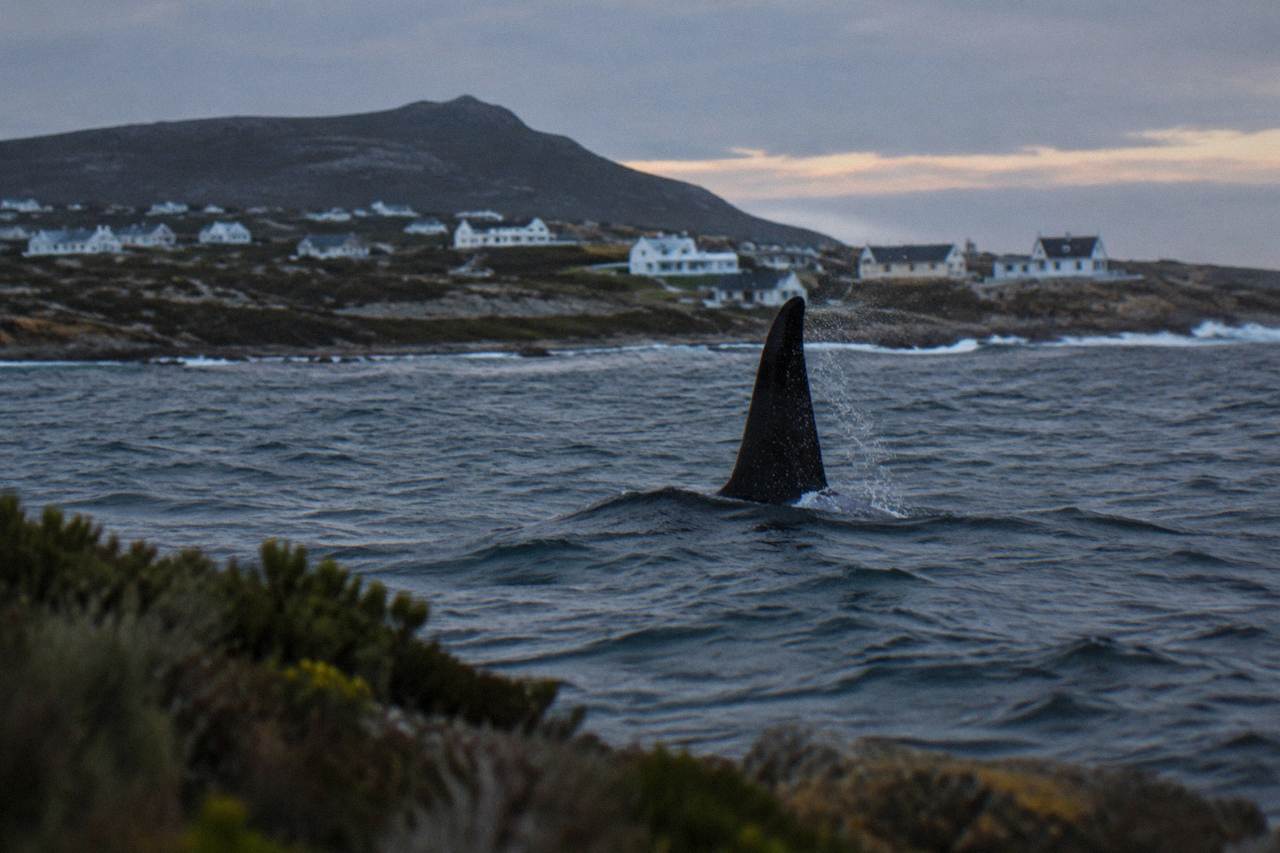
Great white sharks sat at the top of the ocean's food hierarchy for millions of years, and then two orcas with bent dorsal fins changed the South African coast in a single season. Between February and June 2017, five white shark carcasses washed up around Gansbaai, each with the same signature wound: a clean incision across the shoulder and the liver surgically removed, everything else left behind. The sharks that did not wash up did something arguably more startling. They left, and most of them have not come back.
This is not a fringe theory. It is the documented, peer-reviewed explanation for why Shark Cage Diving Cape Town and every other operator in the region now advertises bronze whaler and sevengill cowsharks rather than the great whites that built the industry's reputation. The orca pair at the center of it, nicknamed Port and Starboard, is still alive, still hunting, and still reshaping what divers see when the cage drops.
Why Are Sharks So Afraid Of Orcas?
Great whites flee because orcas hunt them in a way no other predator does: they flip a shark upside down, hold it in tonic immobility, and extract its calorie-dense liver with surgical precision, and sharks that witness or survive these attacks abandon entire feeding sites for months to years. Between 2017 and 2025 researchers documented eleven such predation events. Fear on this scale is learned, inherited, and entirely rational.
The fear is not a vague anxiety. It is a behavioral response with a measurable trigger, and it was captured in detail by South African researchers including Alison Towner, whose work tracked the Gansbaai aggregation before and after the orcas arrived. When Port and Starboard appeared in False Bay and Gansbaai waters, tagged white sharks that had been patrolling Seal Island and Shark Alley for weeks broke off their normal behavior and swam hundreds of kilometers away, some clustering in areas with far less prey. A shark that abandons a rich seal colony to avoid a predator is making a costly decision, and evolution only rewards that kind of decision when the alternative is worse.
What makes the fear unusual is that great whites are themselves apex predators. They do not flee from seals, dolphins, or other sharks. Orcas are the one animal on the planet that treats a white shark as food rather than competition, and the sharks behave accordingly. The peer-reviewed record of that dynamic is laid out in a June 2025 study in the journal Biology, which analyzed roughly 560 hours of cage-diving boat observations from Gansbaai between 2009 and 2024 and recorded 423 white shark sightings with only five re-sightings, no site fidelity, and no recovery in sighting rates over the whole period (the full study is open access).
If you want to see the sharks that still patrol these waters after the whites moved on, the cage dives below are the bookable options, all with free cancellation on the live listing.
Who Are Port And Starboard?
Port and Starboard are two adult male orcas identifiable by their collapsed dorsal fins, one bending left and one bending right, which is how they got their names. They have been linked to white shark predation in South African waters since 2017, and they are not typical members of the coastal orca population: they hunt large sharks other orcas largely ignore.
The pair was first noticed off the Western Cape well before the shark disappearances made them famous, but their impact became undeniable in 2017. Between February and June of that year, five white shark carcasses washed ashore in the Gansbaai area, and each necropsy told the same story: the livers were gone, removed through a precise wound behind the pectoral fins, with the rest of the body, including meat-rich areas, untouched. Port and Starboard were photographed in the area around each event. The timing was not coincidental.
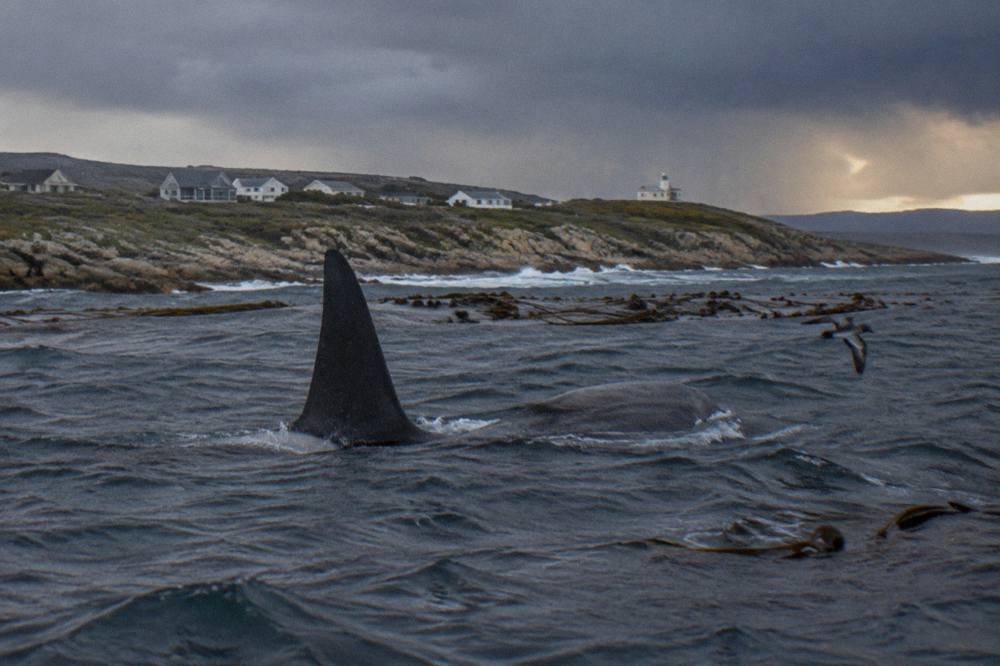
Marine biologists who have followed the pair describe them as specialists. Most orcas off South Africa feed on fish, rays, and smaller sharks; Port and Starboard target large, liver-rich sharks, including sevengill cowsharks and white sharks, and they use the same technique on both. In February 2023 they killed seventeen sevengills in a single day off Pearly Beach, near Gansbaai, each with the liver extracted. The Wikipedia record of the pair and the predation events is maintained with citations to the underlying research (see the documented event history here).
One detail from the research deserves emphasis because it explains the scale of the fear. The orcas induce tonic immobility, a natural paralysis that occurs when a shark is inverted, by turning their prey upside down. The shark is alive and conscious while it is immobilized. From an evolutionary standpoint, there is no more terrifying predator than one that can switch off your body and eat a single organ before leaving the rest.
| Event | Date | Location | What was documented |
|---|---|---|---|
| First linked carcass washups | February to June 2017 | Gansbaai area | 5 white shark carcasses, livers removed, orcas present at each event |
| Site abandonment begins | 2017 onward | Gansbaai aggregation | White sharks fled the area for roughly 2.5 years at a stretch |
| Sevengill mass predation | February 2023 | Pearly Beach | 17 sevengill cowsharks killed in one day, livers extracted |
| Documented predation events | 2017 to 2025 | Multiple Western Cape sites | 11 documented orca predation events on white sharks |
| First False Bay white sighting in 8 years | 23 September 2026 | Near Seal Island, False Bay | One sub-adult white filmed, explicitly not called a recovery by experts |
The question that follows all of this, for anyone planning a cage dive, is whether the trips are still worth booking (see Shark Cage Injuries). The honest answer is that the industry has rebuilt itself around what the sharks left behind, and the best operators are upfront about it. The Marine Dynamics eco-cruise from Kleinbaai, the most-reviewed cage dive on this roster at 4.6 from 369 reviews, from $232 per person for roughly six hours, runs with a marine biologist on board who briefs guests on the great white decline as part of the trip; it also carries a genuine often-sells-out warning on its live listing, so early booking matters.
How Do Orcas Kill Great White Sharks?
An orca kills a white shark by ramming or circling it into a vulnerable position, flipping it upside down to trigger tonic immobility, then opening the body cavity behind the pectoral fins and removing the liver, which can account for a large share of the shark's energy reserves. The wounds found on South African carcasses are consistent and precise, which points to a learned technique.
The liver is the prize. It is the shark's largest internal organ, packed with oil and squalene, and it can make up a substantial portion of the body's weight in a large shark. For two orcas that have learned to extract it efficiently, a white shark is not a fight but a meal with one edible component. Necropsies from the 2017 washups found bites concentrated in a single region, with the liver cavity emptied cleanly. Nothing else was consumed.
Tonic immobility is the mechanism that makes the kill possible. Sharks have a well-documented physiological quirk: invert one and it enters a paralyzed, trance-like state that can last minutes. Some orca populations worldwide exploit this, and Port and Starboard appear to use it on South African sharks. The shark cannot resist while inverted. Researchers have also noted that the pair's collapsed dorsal fins, Port's to the left and Starboard's to the right, are rare in wild orcas and have made them individually identifiable across years of sightings, which is why the predation record is unusually complete.
The technique is not reserved for whites, and that matters for the ecosystem. The sevengill cowsharks the pair killed off Pearly Beach in 2023 died the same way, livers extracted, bodies otherwise intact. Sevengills are one of the two species cage divers now most often see in Gansbaai and False Bay, which means the orcas' presence looms over the exact sharks the current industry depends on. Operators report that sevengill sightings can drop sharply after orca passes through the area, then rebuild over weeks.
Why Do Sharks Flee The Entire Area Instead Of Fighting Back?
Great whites flee because they cannot win and cannot defend a food source against a predator that kills them on sight: white sharks have no anti-predator response against orcas, no group defense behavior, and no way to detect the threat before an attack is underway. Abandoning a site, even a rich one, costs less energy than dying. The flight response is immediate and can last years.
Satellite tagging data from the period after the 2017 attacks showed the scale of the retreat. White sharks that had been resident around Seal Island in False Bay vanished within days of orca presence, and the Gansbaai aggregation emptied for roughly two and a half years. Some tagged sharks traveled as far as the Eastern Cape. These were not short spooked dashes; they were permanent relocations from feeding grounds the sharks had used for years.
The logic of the flight becomes clearer when you compare it with how sharks handle other threats. A white shark confronted by a rival shark can escalate, retreat a short distance, or return once the rival moves on. Orcas do not offer that option. They are faster, they hunt cooperatively, and they have a kill method that works on sharks of any size. A white shark that stays in orca-patrolled water is not defending territory; it is waiting to be the next liver.
There is also a learning component. Sharks do not need to witness a kill individually for the behavior to spread. When a portion of the local population dies or flees, the aggregation dissolves, and new sharks arriving at the site find too few conspecifics to form the group behavior that makes an aggregation work in the first place. The June 2025 Biology study's finding of no site fidelity among the 423 recorded sightings suggests the old pattern, whites returning reliably to Gansbaai year after year, has broken down at a structural level, not just a temporary one.
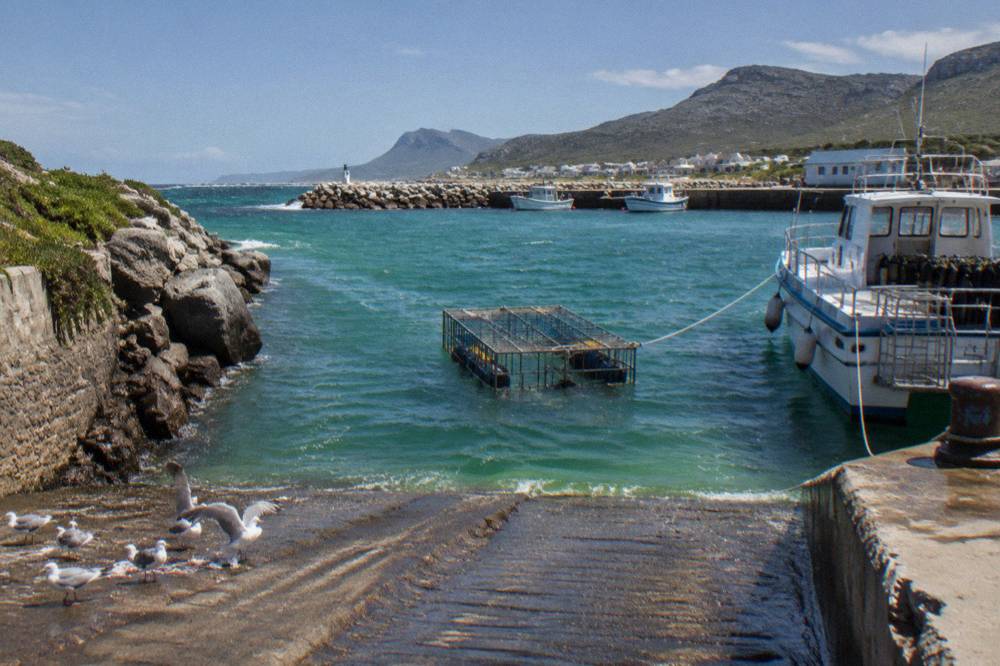
This is the part of the story that cage divers feel directly. The cage did not change, the boats did not change, the permits did not change. The sharks changed, because two orcas changed the cost-benefit math of living in Walker Bay and False Bay.
What The Science Shows About The Gansbaai Disappearance
The peer-reviewed record confirms the disappearance is real, sustained, and not a perception issue: a June 2025 study in the journal Biology analyzed 2009 to 2024 boat observation data from Gansbaai, recorded 423 white shark sightings across roughly 560 hours on the water, and found no increase in sighting rates and no evidence the sharks are returning. Observation effort dropped to about 9 hours per year in 2023 and 2024.
That last number is the quiet heartbreak of the study. Cage-diving operators log hours on the water because sharks keep the business alive. When observation effort collapses to single-digit hours per year, it means the boats are not spending time with white sharks because there are no white sharks to spend time with. The study's finding of only five re-sightings among 423 sightings, meaning almost every white shark recorded passed through once and never came back, is the statistical signature of a broken aggregation.
The operator-side record matches the science. In a June 2026 interview, Marine Dynamics founder Wilfred Chivell said the company still has an amazing shark population in the area, but no great whites at the moment, and attributed the near-total disappearance to the orca influx that began in 2017. In one recent month the operator logged 33 trips with 312 bronze whaler sightings and no great whites. A May 2025 update from another Gansbaai operator, Cape Shark Adventures, told prospective divers plainly that the chance of not seeing a great white had become greater than the chance of seeing one.
| Species around Gansbaai and False Bay | Status today | What cage divers report |
|---|---|---|
| Bronze whaler (copper) shark | Reliable, year-round, the main draw | Multiple sightings per trip, the species operators now feature |
| Broadnose sevengill cowshark | Common, especially in False Bay | Frequently seen, but sightings dip after orca passes |
| Great white shark | Largely absent since 2017 at Gansbaai, near-zero at False Bay since about 2018 | One sub-adult filmed near Seal Island, 23 September 2026, first in eight years |
| Cape fur seals and dolphins | Abundant, unaffected | Standard part of most trips |
| Southern right whales | Seasonal, June to November, peak September to October | The backbone of the shark-and-whale combo trips |
What Divers Actually See Today In Gansbaai And False Bay
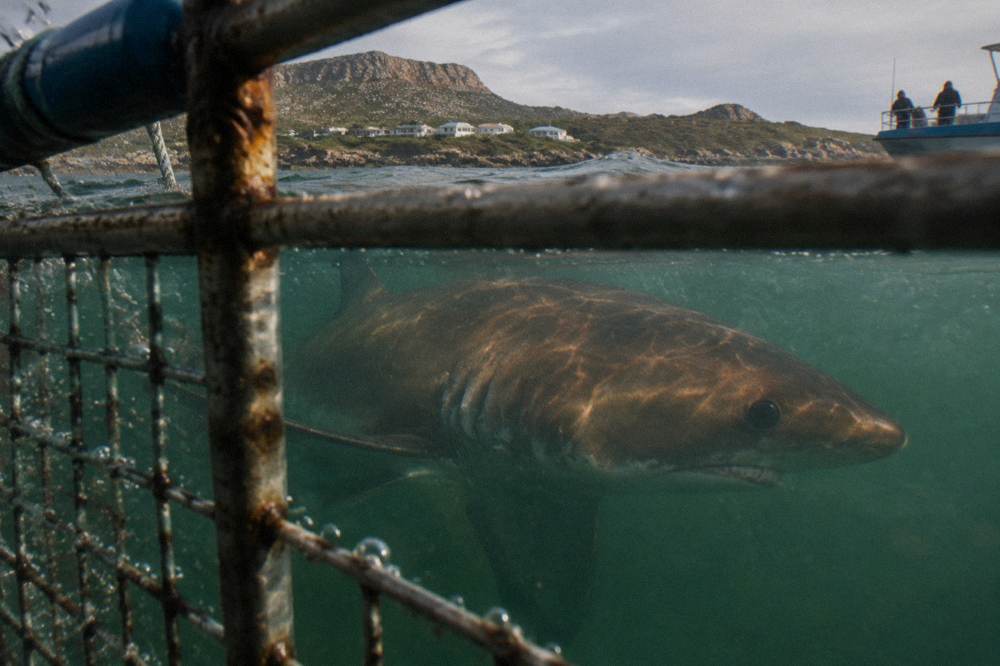
Divers today overwhelmingly see bronze whaler sharks in Gansbaai and bronze whalers plus sevengill cowsharks in False Bay, with white sharks effectively off the menu at both sites. Operators have rebuilt their trips around these species, and the best listings say so plainly rather than leaning on great white imagery. Honest listings now describe what you will actually meet in the cage.
The bronze whaler, also called the copper shark, is a large requiem shark that grows well over two meters and hunts in the same inshore waters the whites once patrolled. In the cage it is a genuine encounter: fast passes, close approaches to the bait line, and enough size to make the water feel occupied. Sevengills, the other staple, are prehistoric-looking animals with seven gill slits instead of five, and False Bay's shallow kelp beds hold one of the most accessible populations anywhere.
The listings on this roster reflect the shift. The Marine Dynamics eco-cruise from Kleinbaai, from $232 per person for roughly six hours, is the most-reviewed cage dive here at 4.6 from 369 reviews, and its marine-biologist briefings cover the great white decline directly. White Shark Projects, one of Gansbaai's longest-running operators, runs a half-day trip from $173 with a 4.7 rating from 451 reviews, continental breakfast and on-board light lunch included. In False Bay, the Shark Explorers trip out of Simon's Town holds a 5.0 rating from 37 reviews, from $216 for roughly four hours, and its reviews consistently note that while great whites are not guaranteed, other large sharks are commonly seen.
One caution for False Bay planners: the Apex Shark Expeditions listing from Simon's Town, 4.7 from 129 reviews, from $277.05 per person, is the one trip on this roster that is non-refundable, with no free cancellation. Every other listing here offers free cancellation on the live listing, but that one does not, so it deserves a plain warning before anyone books it.
The deeper background on what happened to the white sharks at each site is covered in the guide to whether great whites still visit Gansbaai, and the wider national picture, including why Mossel Bay has become the more reliable white shark site even though this site carries no bookable Mossel Bay listing, is in where to go shark diving in South Africa.
Does The September 2026 False Bay Sighting Change Anything?
No, not yet: the single sub-adult white filmed near Seal Island on 23 September 2026 is the first confirmed sighting there in about eight years, and the marine biologists on record, plus the operator that filmed it, explicitly state it does not indicate a population recovery. One shark passing one island is a data point, not a comeback, and no cage operator is promising whites on the strength of it.
The sighting matters because it proves the species still moves through these waters. African Shark Eco-Charters, a False Bay operator whose trip runs from Simon's Town harbour at 4.5 from 163 reviews and from $251.32 per person with free cancellation, captured the footage just north of Seal Island. It was the operator's first white shark on its Seal Island trips since 2018. Local and national media covered it as exactly that: a first in eight years, with expert commentary attached saying it should not be read as a return.
For a cage diver, the practical read is straightforward. The odds of a white shark appearing at your cage in Gansbaai or False Bay remain close to what they have been since 2017, which is to say very low. The odds of a good shark encounter have not collapsed, because bronze whalers and sevengills have filled the niche, and that is the honest pitch the better operators now make. Anyone promising you a great white at either site today is selling you a version of the coast that no longer exists.
The sighting does raise one genuine question worth watching: if whites are testing these waters again, even sporadically, the next few seasons of sighting data will show it. The Biology study's authors would be the first to say that four or five sightings prove nothing. Five hundred would prove something.
Common Questions About Sharks And Orcas
Why Are Sharks So Afraid of Orcas?
Because orcas kill them in a way nothing else does: they induce tonic immobility by inverting the shark, then extract its liver with surgical precision. Between 2017 and 2025 researchers documented eleven predation events on white sharks in South African waters. Sharks that survive or witness these attacks abandon entire feeding sites for months to years, which is a rational response to a predator they cannot fight or outrun.
Do orcas eat the whole shark or just the liver?
Just the liver, in the documented South African events. Carcasses found around Gansbaai in 2017 had the livers removed through a single clean wound, with the rest of the body, including meat-rich areas, left untouched. The liver is the shark's largest organ, dense with oil and energy, which makes it the highest-value target for the least effort.
Are Port and Starboard still alive and hunting?
Yes. The pair has been photographed repeatedly through 2023 and beyond, including the February 2023 event in which they killed seventeen sevengill cowsharks off Pearly Beach in a single day. Their collapsed dorsal fins, one bending left and one right, make them individually identifiable, which is why the predation record for this pair is unusually complete.
Will great white sharks return to Gansbaai?
Nobody knows, and the current evidence points against a near-term return. The June 2025 study in the journal Biology found no increase in white shark sighting rates at Gansbaai between 2009 and 2024, and no site fidelity among the sharks recorded. The single sub-adult filmed near Seal Island in False Bay on 23 September 2026 was the first sighting there in about eight years, and experts explicitly do not call it a recovery.
Is cage diving still worth it without great whites?
For most divers, yes. Bronze whaler sharks are large, fast, reliable year-round visitors, and False Bay adds sevengill cowsharks. The best operators are honest about the species shift and build their trips around what is actually in the water. Reviews on the live listings for the Gansbaai and Simon's Town trips consistently describe satisfying encounters with these sharks.
Can orcas attack a shark cage?
There is no documented case of orcas interacting with a shark cage anywhere in South African waters, let alone attacking one. Port and Starboard target free-swimming sharks and have never shown interest in dive operations, cages, or boats. Licensed cages are built to approved specifications with lids, under permit rules that prohibit touching or feeding the sharks.
If the orca story has convinced you that the coast is still worth the drive, these are the three trips this site would put in front of you first: the Marine Dynamics eco-cruise for the most-reviewed Gansbaai experience, White Shark Projects for a shorter and cheaper half-day, and the Shark Explorers trip for False Bay's open-water setting.
For anyone weighing the False Bay option specifically, the Simon's Town trip is the one that tends to sell out first on its live listing, so it is worth checking dates early if that open-water setting is what draws you.