Has Anyone Ever Been Injured In A Shark Cage?
The honest injury record for shark cage diving around Cape Town: what the safety files show, how cage construction standards and code-of-conduct rules prevent harm, and what actually hurts people on these boats.
Has Anyone Ever Been Injured In A Shark Cage?
No documented case exists of a paying guest being injured by a shark inside a licensed cage in South Africa's regulated cage-diving industry, a record that stretches back across two decades of commercial operations. The cages are built to government-approved specifications with lids, the sharks are never fed or touched, and the species around the boats today are bronze whalers and sevengills. The real injuries on these trips come from the sea, not the sharks. If that clean record runs against what you've heard about local waters, this guide to shark risk on Cape Town's beaches explains which species actually swim off the city and why a licensed cage sits apart from everyday swimming.
That sentence surprises people who have watched dramatic footage of sharks ramming cages, and it deserves a careful unpacking rather than a shrug. The question of injuries is separate from the question of deaths, which this site covers in its own piece on cage diving fatalities and the mortality record. Here the focus is harm short of death: bites, lacerations, broken bones, crush injuries, and the smaller but genuine catalogue of things that do send cage divers home bruised or queasy.
The record splits cleanly into two columns. In one column, shark-caused injuries to guests inside licensed cages: empty, or as close to empty as a two-decade industry with millions of participant-hours can produce. In the other column, everything else: seasickness, cold-water shock, slips on wet decks, jellyfish stings, wetsuit chafe, and one genuinely serious boat incident in 2008 that had nothing to do with sharks and everything to do with sea conditions and anchoring decisions.
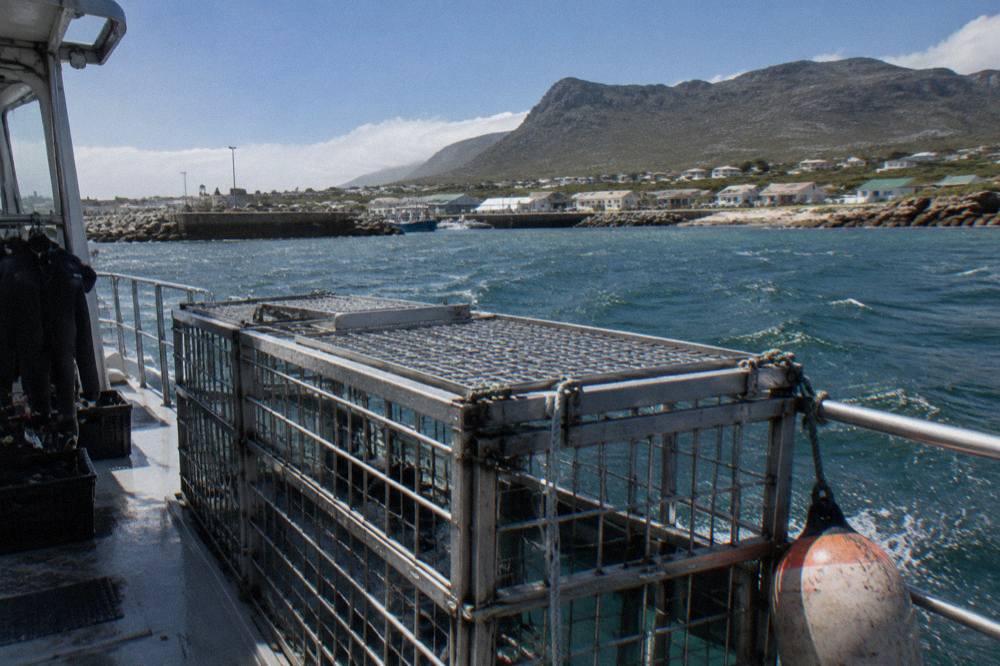
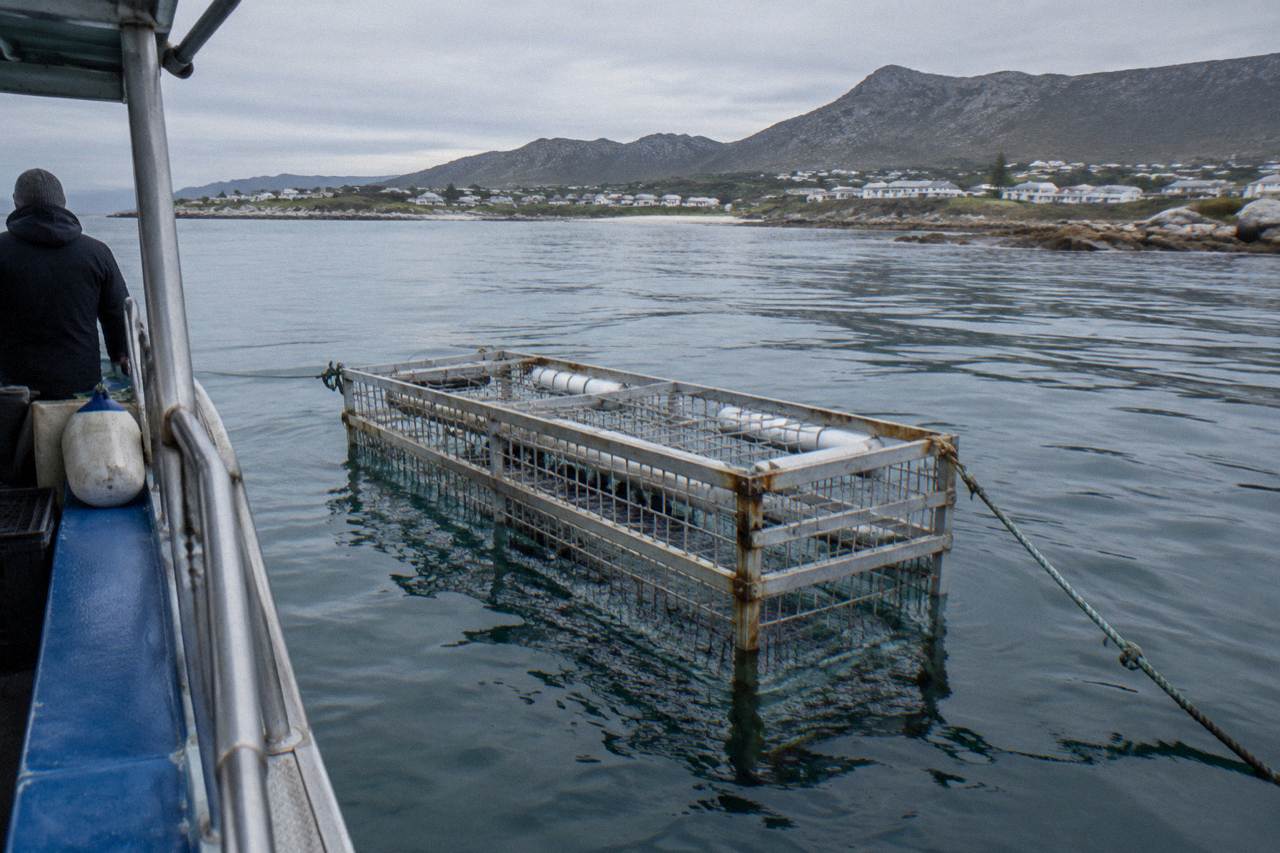
Why the first column is empty is not mysterious. South Africa regulates this industry tightly. The Department of Forestry, Fisheries and the Environment issues the operating permits under the NEMBA Threatened or Protected Marine Species Regulations, and the permit rules are specific about hardware: cages must be built to approved specifications, they must have lids, and the code of conduct bans touching the sharks outright. Chumming is allowed only as a lure, never as feeding. A shark that is never fed, never touched, and never able to reach a person behind welded steel has essentially no mechanism for injuring them.
The comparison that matters is with the water. Every operator on this coast will tell you that the most common medical event on a shark cage diving trip is seasickness, not shark contact. The boats anchor in open water, they roll, and guests who skipped the tablets spend the trip studying the horizon. If you are weighing up whether shark cage diving is safe in Cape Town, the honest answer is that the shark is the least dangerous thing on the itinerary.
If you want to see the cage-and-rulebook safety system in person, three Gansbaai listings make good study cases.
What Do The Injury Records Actually Show?
The documented record shows zero shark-caused guest injuries inside licensed South African cages, with one major operator noting no shark-related injuries on its boats since 2005. The only serious incident in the industry's modern history, the 2008 capsize of a Gansbaai-area vessel, killed three tourists through drowning and was ruled sea-condition negligence, with no shark involvement and no cage failure.
Start with what the sources actually say, because the internet is full of implied cage carnage that the files do not support. Industry-wide, the claim that holds up under scrutiny is that there are no documented shark-caused injuries or fatalities to paying guests inside cages in recent regulated operations. One source notes none since 2005 on a major operator's boats. That is a strong, specific, checkable claim, and it comes from the shark-education and operator community that would have every incentive to be honest about it, since a single counter-example would surface in a newspaper within hours.
The 2008 incident deserves its own careful description, because it gets mangled more than any other fact in this genre. A vessel called Shark Team capsized while anchored near Gansbaai when a large wave struck it. Three tourists drowned. The court that examined the case ruled it negligence related to sea conditions and anchoring, not sharks, and it was not a cage incident: nobody was in the water in a cage when it happened. The full judgment is public and worth reading for anyone who wants the primary record rather than the summary.
What the record does contain, in the minor-injury column, is unglamorous. Guests bang knees and elbows on cage frames while climbing in. Wetsuits chafe. Cold water takes the breath away, and the shock of a 16-degree Atlantic on bare skin is a genuine physiological event, not a mood. Jellyfish appear in summer months. Seasickness is the headline entry, flagged by operators themselves as the most common issue on the water, with no quantified rate but universal acknowledgement. None of this is shark contact, and none of it is unique to shark boats: it is the standard risk profile of any small-craft marine activity.
A useful way to frame the whole question is to compare the cage dive to the swimmer. South African shark incidents that do occur overwhelmingly involve swimmers, surfers, and, in a darker register, abalone poachers working outside any safety system. The cage diver is on the safe side of the statistics, sitting behind regulated steel with a lid, wearing a wetsuit, holding onto a bar. The ocean is not risk-free, but the risk has been engineered away from the shark and toward the weather.
| Injury type | Documented in licensed SA cage diving? | Typical cause | Severity range |
|---|---|---|---|
| Shark bite or laceration to a guest in a cage | No documented cases | N/A | N/A |
| Drowning in a cage | No documented cases | N/A | N/A |
| Seasickness | Very common, unquantified | Boat roll at anchor | Mild to miserable |
| Bruises and scrapes | Occasional | Climbing into the cage, frame contact | Minor |
| Cold-water shock | Common in winter | 15 to 17 degree water | Brief, startling |
| Serious boat incident | One, in 2008 | Capsize in large wave, anchoring decisions | Fatal to three, not shark-related |
The pattern in that table is the honest headline: the shark column is blank, and the sea fills the rest.
How Cage Construction Standards Prevent Injuries
Every licensed cage in South Africa is built to Department-approved specifications with a secure lid, floating at the surface beside the boat, with guests breathing at the surface or through an air line rather than on scuba tanks. The design philosophy is simple: the shark physically cannot reach the person, and the person physically cannot reach the shark, so neither party has a mechanism to injure the other.
The cage itself is the primary safety device, and it is worth understanding what one actually looks like, because footage often makes cages look flimsier than they are. A regulation cage is a welded steel frame, roughly the footprint of a small garden shed, buoyed at the surface, with viewing gaps sized to let a shark's head nowhere near a human body part. The lid is not optional: the permit rules require it, and it removes the one geometry, from above, where a large shark could otherwise interact with a diver's exposed upper body.
Guests stand inside the cage with heads above water between breath-hold dives, or breathe through a surface-supplied air line. No scuba certification is needed anywhere on this roster because nobody goes on scuba inside the cage. That matters for the injury question too: the most dangerous moments in recreational diving are usually compression, equipment, and panic, and the surface cage removes all three. You are never more than a raised head away from air.
The code of conduct layered on top of the hardware does the rest. Operators may chum and bait only as a lure, never feed the sharks, and never touch them. The bait line is handled by crew from the boat, at a regulated distance from the cage. Sharks are wild animals making their own choices about whether to approach, and the system is designed so that their choices have no path to a guest's skin. The permit rules and code of conduct as published by the Gansbaai operator community spell out the approved-spec requirement, the lid requirement, and the no-touch, no-feeding bans in plain language.
There is a secondary safety effect that rarely gets mentioned: the species shift since the orcas arrived has, if anything, reduced the physical stakes further. Since great whites largely abandoned Gansbaai and False Bay from around 2017 onward, following predation pressure from the orca pair known as Port and Starboard, the sharks around the cages are predominantly bronze whalers and broadnose sevengill cowsharks. These are large, impressive, genuinely wild sharks, and they are also not the animal a regulator designs a lid for. The cage standards were written for great whites and are now being applied to smaller species, which is a margin of safety the rulebook did not originally assume. To see how that change plays out for actual guests, this review breakdown of shark cage diving in Gansbaai covers what divers praise and what leaves them underwhelmed.
One listing on this roster makes the air-line approach its whole pitch: the Sharklady Adventures cage dive from Gansbaai includes a complimentary in-cage air line at no extra cost, so guests can breathe continuously underwater instead of holding their breath between dives. It runs about 3 hours 30 minutes, is rated 4.0 from 271 reviews, and starts from $188.73 per person, with free cancellation on the live listing. For a nervous first-timer, the ability to stay down and calm rather than popping up and down is a real comfort factor.
What The Code Of Conduct Rules Actually Ban
The operating code bans direct feeding of sharks, bans any touching of sharks by crew or guests, restricts baiting to natural fish-oil and bait lures, and requires cages built to approved specifications with lids, all monitored under DFFE permitting and SAMSA maritime rules. Every one of those bans exists to remove a specific mechanism by which a shark could injure a person.
Reading the regulations as an injury-prevention document is the clearest way to understand them. The ban on feeding exists because a fed shark associates boats with food and behaves assertively around them. The ban on touching exists because a handled shark is a defensive shark. The lure-only baiting rule exists because a shark that is drawn but never rewarded stays in investigative mode rather than feeding mode. The cage specification, including the lid, exists because steel geometry is the last line between a curious two-tonne animal and a soft human. Remove any one rule and you create a mechanism for harm; keep them all and the mechanisms are gone.
The great white has been fully protected in South African waters since 11 April 1991, the first such protection anywhere in the world, under the Marine Living Resources Act and its regulations. That protection is why the industry exists in its current form at all: the sharks cannot be harmed or captured, so the only legal commercial interaction is observational, from a boat, beside a cage, under permit. The protected status since 1991 is the legal foundation the whole safety code sits on.
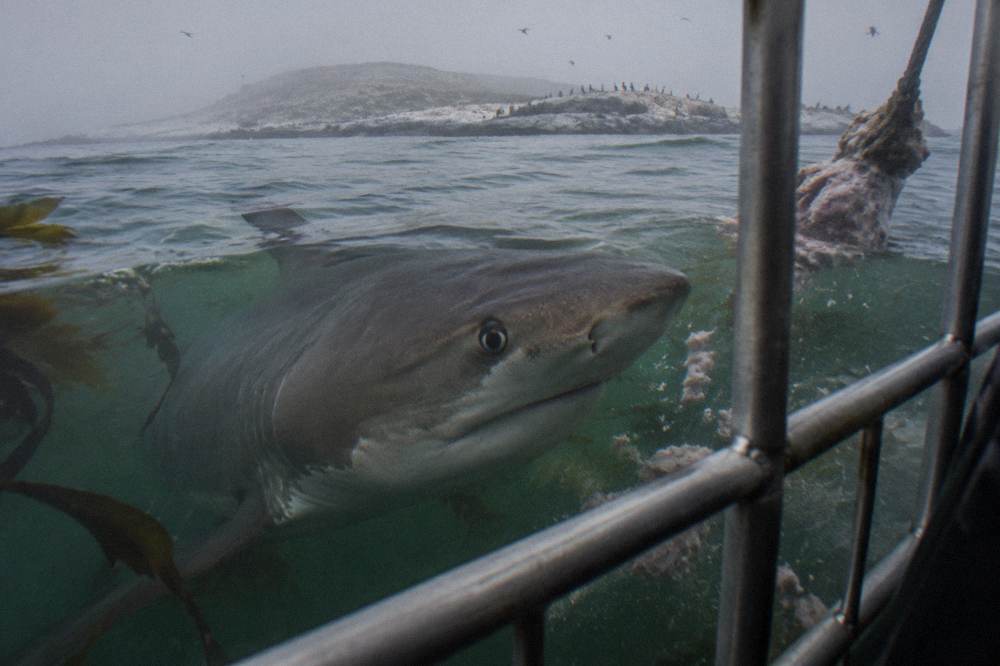
Guests sometimes ask whether a shark has ever bitten the cage itself. Sharks do investigate cages: they mouth the bait, they bump the frame, and footage of a shark's nose against the bars circulates widely precisely because it looks terrifying. But a cage bump is not an injury event. The steel takes the contact, the lid prevents over-the-top geometry, and the person inside is holding the bar with hands inside the frame. The dramatic clips are real, and the injuries they imply are not.
For readers comparing the hardware options, one listing upgrades the breathing system rather than the cage: the White Shark Diving Company's hookah trip in Gansbaai swaps breath-holding for a surface-supplied air line, runs about 4 hours, is rated 4.7 from 78 reviews, and starts from $205.08 per person with free cancellation. Same cage standards, same code of conduct, a different way to breathe.
What Actually Hurts People On These Trips?
The genuine injury profile of a shark cage diving trip is marine rather than predatory: seasickness at anchor, cold-water gasp in 15 to 17 degree water, bruises from cage frames and ladders, occasional jellyfish stings in summer, and sunburn on the ride back. Operators flag seasickness as the most common issue by a wide margin, and none of the common complaints involves the shark at all.
If you are the kind of reader who plans around real risks rather than cinematic ones, this is the section to act on. Take the seasickness medication before departure, not once you feel rough, because the boats anchor in open water and the roll is constant. Wear a swimsuit under warm layers, since the supplied 5mm wetsuit goes on over a costume and the boat deck is windy even in summer. Keep hold of the cage's internal bar rather than the outer frame, which is where knuckles get pinched. Bring a towel, sunscreen, and a hat for the surface interval.
The cold is a bigger deal than most visitors expect. Winter water around Gansbaai averages about 15.8 degrees, and even summer sits around 20 degrees. The first face-in-water moment produces an involuntary gasp, which is exactly why the breath-hold style of cage diving consists of short dips rather than long submersions, and why the air-line listings exist for people who would rather stay down and breathe. Our seasickness guide for shark cage diving boats covers the medication timing and the deck tactics in detail.
| Common complaint | How often reported | Prevention that works |
|---|---|---|
| Seasickness | Most common issue on the water | Medication the night before and morning of, ginger, stay on deck, watch the horizon |
| Cold-water shock | Common in winter months | Supplied 5mm wetsuit and booties, short dips, air line if you want longer bottom time |
| Bruises and pinches | Occasional | Hold the internal bar, mind fingers on ladder and frame |
| Sunburn | Common on the return leg | Sunscreen, hat, long sleeve for the ride |
| Jellyfish stings | Occasional in summer | Rash awareness, crew carry basic first aid |
None of those entries requires a change of heart about sharks. They require a packet of tablets, a decent hat, and the willingness to accept that the ocean, not the animal, sets the terms.
How The 2008 Gansbaai Capsize Changed Safety?
The 2008 Shark Team capsize, which drowned three tourists off Gansbaai, was ruled negligence over sea conditions and anchoring rather than anything shark-related, and it reshaped how operators judge weather, anchoring, and go-or-no-go decisions. Its legacy is stricter sea-state caution, which is precisely why modern trips get postponed rather than pushed.
The details matter because this incident is the one real tragedy in the industry's history, and it is regularly misused as evidence about sharks. The vessel was anchored when a large wave struck and capsized it. Three tourists drowned. The court process examined the conditions and the decisions and ruled the deaths a matter of negligence tied to sea conditions and anchoring, with no shark involvement and no cage failure. The full judgment is publicly available for anyone who wants the primary document rather than a summary.
The industry response was to treat sea state as the primary hazard, which is exactly right given that it is the only hazard that has actually killed anyone on these trips. Operators now cancel and reschedule more readily, brief guests on swell and wind before departure, and treat the morning window, which tends to be calmer, as the preferred slot. If your trip gets called off for weather, that is the 2008 lesson working as intended, not a failure of service.
For guests, the practical takeaway is to book with the cancellation posture in mind. Every listing on this roster except one offers free cancellation on the live listing, and weather cancellations are honoured as a matter of course. The one exception is the Apex Shark Expeditions trip from Simon's Town, which is non-refundable, so anyone booking that False Bay listing should weigh the sea-state risk against the price before committing. The rest of the roster carries no such tension: a weather scrub costs you a morning, not your money.
Does The Species Shift Change The Injury Picture?
Since great whites largely abandoned Gansbaai and False Bay from around 2017, driven off by the orca pair Port and Starboard, the sharks around licensed cages are predominantly bronze whalers and broadnose sevengill cowsharks, which lowers the physical stakes of any hypothetical contact without changing the safety system at all. The cages, lids, and conduct rules remain built to great-white specification, applied to smaller animals.
The biology here is worth a paragraph of its own. Port and Starboard, two male orcas named for their collapsed dorsal fins, have been linked to great white predation from 2017 onward, with carcasses found with livers surgically removed and eleven documented predation events recorded between 2017 and 2025. White shark sightings at Gansbaai collapsed, and Seal Island in False Bay went essentially white-free from around 2018 until a single sub-adult was filmed near the island on 23 September 2026, the first sighting there in about eight years. The marine biologists on record are explicit that one sighting is not a population recovery.
Into the vacancy came the bronze whalers and sevengills, and the operators rebuilt their trips around them. A peer-reviewed study in the journal Biology, published in June 2025, analysed roughly 560 hours of cage-diving boat observations from Gansbaai between 2009 and 2024 and recorded 423 white shark sightings with no site fidelity and no increase in sighting rate over the period. The study is the scientific backbone for what every operator now says openly: the reliable encounter at Gansbaai today is a bronze whaler, and that is what the briefings prepare guests for.
For the injury question, the shift is a quiet bonus. A bronze whaler is a powerful, fast, genuinely large shark, and nobody should describe a close pass as tame. But the safety architecture was engineered for an animal that can exceed two tonnes, and it is now deployed around animals well under that. The margin has widened without a single rule changing. If you want the full story of the orca effect, our piece on why sharks fear orcas covers the predation record in detail, and the deeper context sits in our guide to whether great whites are still in Gansbaai.
So Should The Cage Worry You?
The cage should not worry you, and the sea deserves your attention instead. Book the morning slot, take the seasickness tablets on schedule, dress in layers, and treat a weather cancellation as the system working. Choose a listing with free cancellation, hold the internal bar, and let the steel, the lid, and the no-touch rulebook do the job they have done for two decades.
That is the whole practical playbook, and it fits in one breath. The question of injuries has a cleaner answer than most travel safety questions because the mechanism of harm has been engineered out rather than merely warned about. Sharks investigate cages, they bump frames, they take bait from lines, and in two decades of licensed South African operations they have not produced a documented guest injury inside the steel.
The choice between listings then comes down to comfort and format rather than safety, since every permitted operator runs the same regulated hardware. Half-day Gansbaai trips run about 3 hours; full-day packages with Cape Town transfers run 9 to 10 hours; False Bay trips from Simon's Town run about 4. The Shark Cage Diving Cape Town comparison pages break these down listing by listing if you want the full spread, and the trio below covers the three formats most injury-conscious readers ask about: the air-line dive, the hookah upgrade, and the compact Kleinbaai trip.
One last framing thought. The people who ask this question are usually asking whether they will be hurt, and the honest answer is that they might feel rough, cold, bruised, and green-faced, and they will not be touched by a shark. The industry's injury record is not a marketing line, it is a permit file, a cage specification, and a code of conduct, all of which are public. Read them, then get in the water with the animal that the rules were written for, or the ones that replaced it.
Common Questions About Shark Cage Injuries
Has Anyone Ever Been Injured in a Shark Cage?
No documented case exists of a paying guest being injured by a shark inside a licensed South African cage, a record that includes two decades of commercial operations and one major operator reporting none since 2005. The injuries that do occur, seasickness, bruises, cold-water shock, are marine and mundane rather than predatory.
Has A Shark Ever Bitten A Cage With Someone Inside?
Sharks investigate and bump cages regularly, and dramatic footage of noses against the bars is real, but a cage bump is not an injury event. The steel takes the contact, the lid prevents over-the-top geometry, and guests keep hands on the internal bar. No licensed South African operation has produced a documented guest injury from cage contact.
Was The 2008 Gansbaai Accident A Shark Attack?
No. The 2008 capsize of the vessel Shark Team near Gansbaai drowned three tourists and was ruled negligence related to sea conditions and anchoring. No shark was involved, nobody was in a cage, and the incident reshaped weather and anchoring practice across the industry rather than saying anything about shark behaviour.
Do The Smaller Sharks Now Seen At Gansbaai Make Cages Safer?
The cages were built to great-white specification and are now mostly visited by bronze whaler and sevengill cowsharks, so the engineering margin has widened without any rule changing. The safety system is unchanged and still applied in full, but the animals it is deployed around are smaller than the ones it was designed for.
What Is The Most Common Injury On A Shark Cage Diving Trip?
Seasickness, by a wide margin, according to the operators themselves. Bruises from cage frames and ladders, cold-water shock in 15 to 17 degree winter water, sunburn, and occasional summer jellyfish stings fill out the list. None of these involves the shark.
Do I Need To Be A Strong Swimmer Or Diver To Avoid Injury?
No scuba certification or strong swimming background is required, because the cage floats at the surface and guests breathe at the surface or through an air line. General fitness is expected, and the practical injury-avoidance skills are holding the internal bar, minding the ladder, and taking seasickness medication on schedule.