Are There Still Great White Sharks In Gansbaai?
Gansbaai marketed itself for decades as the great white capital of the world. That title no longer matches what happens on the water, and this guide explains exactly what changed, when, and what a booking actually gets you today.
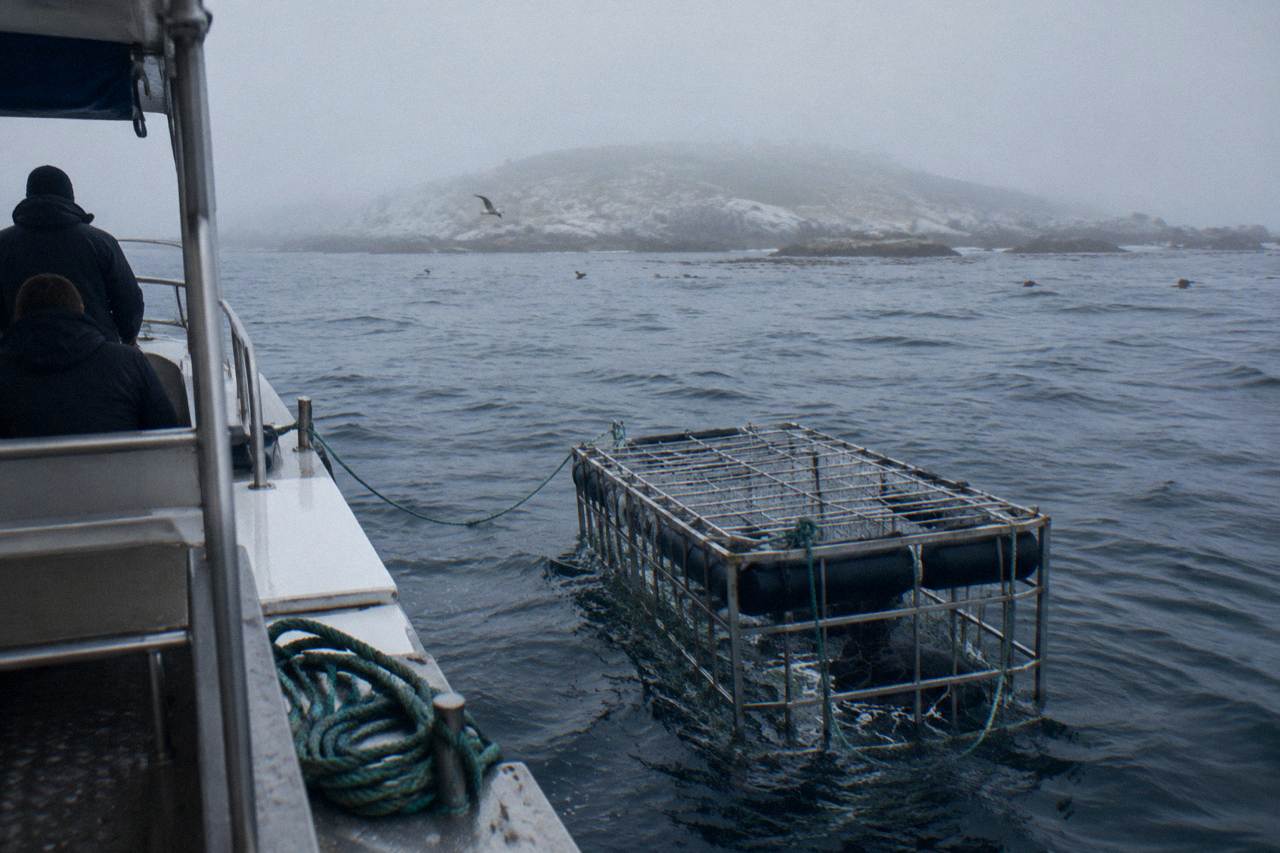
Short answer
No, not reliably. Great whites have been largely absent from Gansbaai since roughly 2017, when the orca pair Port and Starboard began preying on them. Cage dives there today mostly show bronze whaler and sevengill sharks. A peer-reviewed 2025 study found no recovery, and one September 2026 False Bay sighting does not change that.
Are There Still Great White Sharks In Gansbaai?
For most of two decades, the answer to this question was a simple yes. Gansbaai, and specifically the shallow channel between Dyer Island and Geyser Rock that operators call Shark Alley, was one of a handful of places on Earth where a paying guest could reasonably expect a great white shark to appear beside the cage. That expectation collapsed. This page is the site's central honesty page, and it exists because the question deserves a straight answer rather than a marketing one.
No, not reliably. Great whites have been largely absent from Gansbaai since roughly 2017, when two male orcas nicknamed Port and Starboard began preying on them, and the sharks never returned in numbers. Cage dives there today mostly show bronze whaler (copper) sharks and broadnose sevengill cowsharks. A peer-reviewed 2025 study of 16 years of boat data found no site fidelity and no increase in sightings, and a single September 2026 False Bay sighting does not change that picture.
The detail matters, because plenty of listings still carry "great white" in their titles, and plenty of visitors book on that strength alone. Below is the full timeline of what happened, what the science says, what you will actually see from a Gansbaai cage today, and where the great whites went. The short version of the last part: nobody knows precisely, but the orcas are the best-documented trigger.
What Happened To The Gansbaai Great Whites?
Two adult male orcas, named Port and Starboard for their collapsed dorsal fins, began killing great whites off the South African coast in 2017, removing their livers with surgical precision. The sharks fled Gansbaai, sightings collapsed, and by about 2020 the operator community acknowledged the local population was effectively gone. Eleven documented predation events were recorded between 2017 and 2025, and the site never recovered its old numbers.
The first wave came between February and June 2017, when five white shark carcasses washed up in the Gansbaai area, each with the characteristic wounds and a missing liver. Port and Starboard, well known to South African researchers, were present at each event. Researchers including Alison Towner documented the tactic: the orcas exploit tonic immobility, holding the shark upside down, and extract the liver, an energy-dense organ, leaving the rest of the carcass otherwise largely intact.
The sharks' response was immediate and total. Tracking data showed individual whites fleeing the area the moment orcas appeared, and the Gansbaai aggregation was abandoned for roughly two and a half years at a stretch. What had been one of the densest predictable white shark aggregations on the planet became, within a few seasons, a site where a white sighting was an event rather than an expectation. You can read the full behavioral story in why sharks fear orcas so much.
The industry did not hide from this. Wilfred Chivell, the founder of Marine Dynamics, put it bluntly in a June 2026 interview: the company had "an amazing shark population... we just don't have great whites at the moment. They've all been killed." In one recent month the operator logged 33 trips with 312 bronze whaler sightings and no great whites mentioned at all. A May 2025 update from another Gansbaai operator, Cape Shark Adventures, said the quiet part out loud: the chance of not seeing a great white had become greater than the chance of seeing one.
| Year or period | Documented event | Effect on Gansbaai whites |
|---|---|---|
| Feb to Jun 2017 | Five white shark carcasses wash up near Gansbaai, livers removed; Port and Starboard present | Immediate flight response, aggregation abandoned |
| 2017 to 2019 | Sustained orca presence in the area | Sightings drop toward zero |
| 2018 to 2019 | False Bay's Seal Island whites also disappear | Both classic sites effectively empty of whites |
| 2020 to 2021 | Operators acknowledge near-total local disappearance | Marketing shifts to bronze whalers and sevengills |
| 2022 to 2025 | 11 documented orca predation events on whites in total, plus sevengill kills | No sustained return of whites to Gansbaai |
| 2026 | Marine Dynamics founder confirms no great whites on recent trips | 312 bronze whaler sightings logged in one month, zero whites |
The orcas did not stop at whites. In February 2023, Port was recorded killing 17 sevengill sharks off Pearly Beach in a single day, using the same liver-targeting method. That matters for this article because sevengills are one of the two species Gansbaai cage dives now rely on, and it explains why operators watch orca movements so closely. It also explains why the broader South African shark conversation has shifted so much in under a decade, a shift covered across where to go shark diving in South Africa.
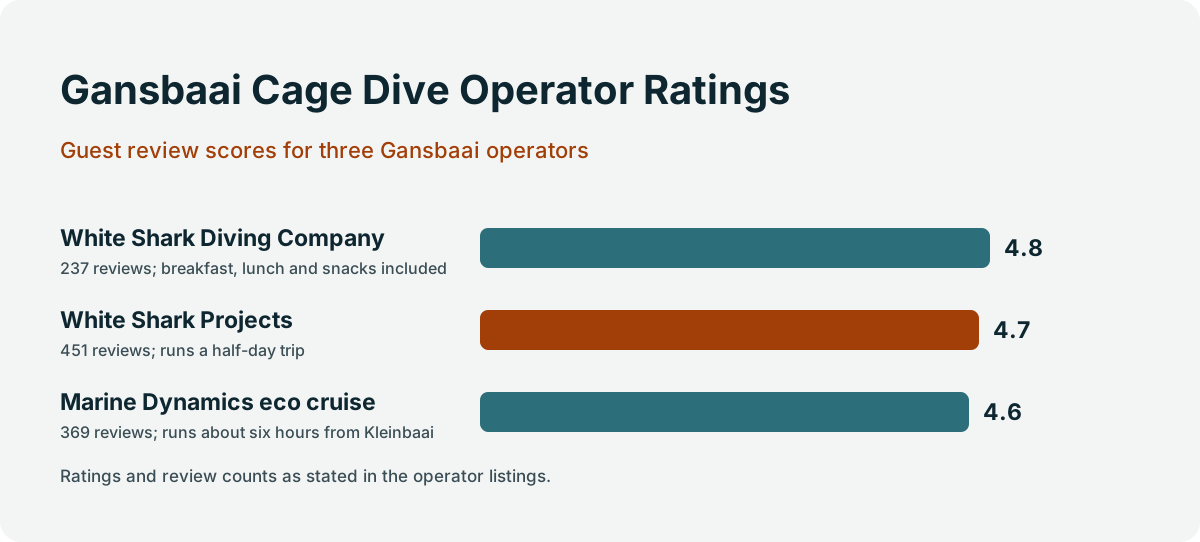
If you are weighing a booking against this reality, three listings represent the honest end of the market well:
What Do Cage Divers Actually See In Gansbaai Today?
Bronze whaler sharks, also called copper sharks, are the main attraction, backed up by broadnose sevengill cowsharks, plus the resident Cape fur seals of Geyser Rock, penguins, dolphins and, in season, southern right whales. Great whites are the exception, not the rule, and no honest operator promises one. The diving itself is unchanged: surface cage, no certification, wetsuit and mask supplied.
The bronze whaler is a large requiem shark that grows to about three metres, fast, curious, and perfectly capable of making a cage dive feel like a cage dive. Operators' 2026 trip reports routinely log multiple bronzies per trip, and guest reviews consistently name them as the main event. The sevengill cowshark, a prehistoric-looking predator with, as the name says, seven gill slits, adds variety and is the species most closely associated with the kelp and reef habitat around the Dyer Island complex.
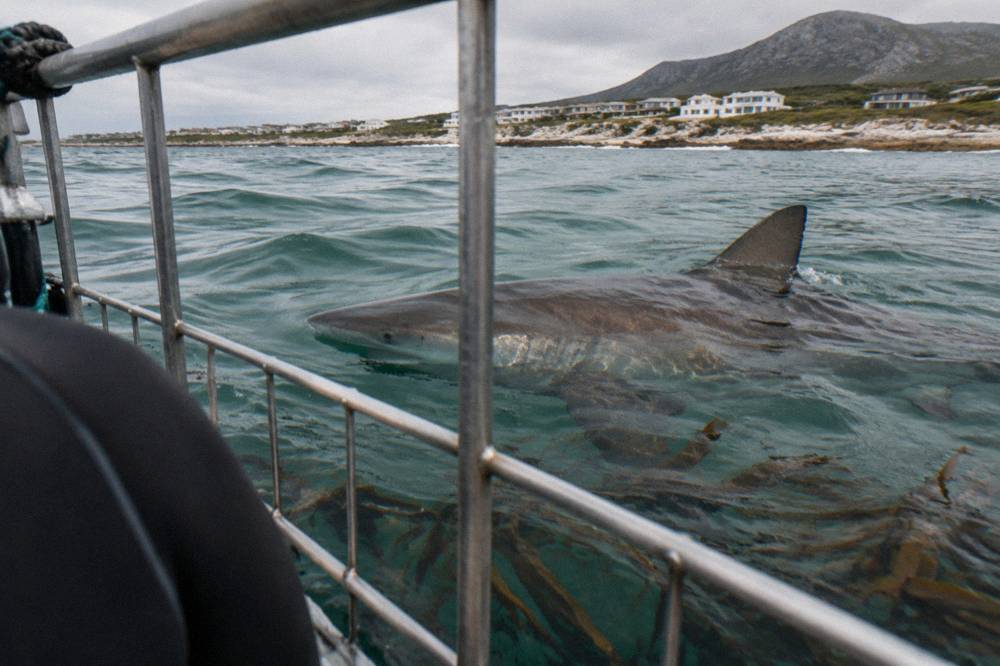
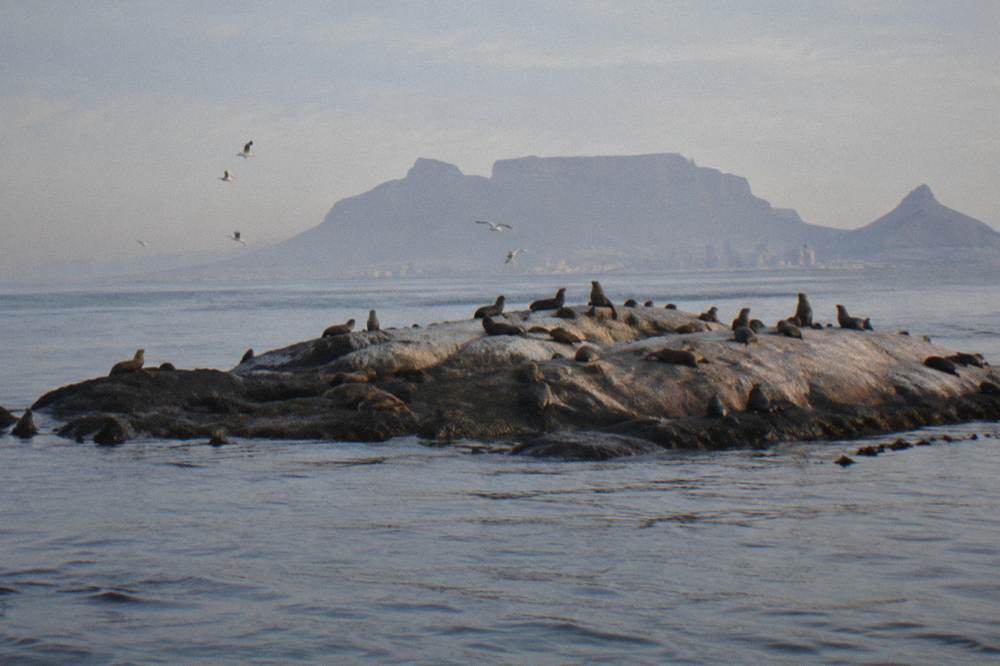
The Marine Dynamics eco cruise, this site's featured listing, leans into that honestly: a marine biologist rides along, the briefing covers the great white decline and the orca story, and the trip doubles as a marine safari past the 60,000-strong seal colony on Geyser Rock and the penguin colony on Dyer Island. It runs about six hours from Kleinbaai, with an optional Cape Town transfer, rates 4.6 from 369 reviews, and costs from $232 per person. It carries a genuine "often sells out" flag, and free cancellation applies. Details and dates are on the Marine Dynamics eco cruise page.
Other listings frame the same water differently. The conservation-focused cage dive from the White Shark Diving Company, 4.8 from 237 reviews and the highest-rated cage dive on this site's roster, builds its whole pitch around education, with breakfast, lunch and snacks included and no hotel pickup. White Shark Projects, one of Gansbaai's longest-running operators, runs a half-day trip at 4.7 from 451 reviews from $173, with a continental breakfast and on-board light lunch.
The table below is the honest species card for the area as it stands, not as older travel articles describe it.
| Species | Where and when seen today | Likelihood on a Gansbaai trip |
|---|---|---|
| Bronze whaler (copper) shark | Year-round at Kleinbaai, the reliable draw | High, the main attraction |
| Broadnose sevengill cowshark | Year-round, reef and kelp habitat nearby | Moderate, a genuine bonus |
| Great white shark | Rare to absent at Gansbaai since about 2017 | Very low, never promised |
| Cape fur seal | Geyser Rock colony, about 60,000 animals | Near-certain, visible from the boat |
| African penguin | Dyer Island, viewed from the water | Common from the boat |
| Southern right whale | Walker Bay, roughly June to November | Seasonal, often from the boat |
One more honesty note: several listings still carry "great white" or "white shark" in their marketing titles, because the operator names and product titles predate the collapse. The listings themselves have adapted; the titles have not always caught up. Read the species card above, not the title. A briefing on any current Gansbaai trip will name bronze whalers within the first ten minutes, and any operator that does not is one worth questioning before you hand over payment.
What Does The 2025 Biology Study Actually Say?
A peer-reviewed study published in the journal Biology in June 2025 analysed roughly 560 hours of cage-diving boat observations at Gansbaai from 2009 to 2024, recording 423 white shark sightings with only five re-sightings. It found no site fidelity and no increase in sighting rate over the period, contradicting any narrative of a slow recovery. Observation effort had collapsed to about nine hours per year by 2023 and 2024.
The study is the strongest evidence base available because it uses the operators' own boats as the observation platform, sixteen years of standardized data from the very site tourists dive. The headline findings cut in two directions. First, the sharks that do pass through Gansbaai are transients: 423 sightings, only five re-sightings, no individuals sticking around. Second, the sighting rate shows no upward trend, which matters because the hopeful reading of recent years was that the whites were gradually coming back. The data says they were not. The full index of guides sits on Shark Cage Diving Cape Town.
The full paper is open access at the Biology study page, and the broader orca story is documented at the Port and Starboard record. For planning purposes the takeaway is simple: any claim that Gansbaai whites are "returning" is not supported by the only long-run dataset we have.
Was The September 2026 False Bay Sighting A Comeback?
No. On 23 September 2026 a sub-adult great white was filmed swimming just north of Seal Island in False Bay, the first confirmed sighting there in about eight years, by the crew of African Shark Eco-Charters. The operator and independent marine biologists both stated plainly that a single animal does not indicate a population recovery, and no sustained return has followed.
It was a genuinely remarkable moment, and it made headlines across South Africa. But the framing from everyone with data was careful and consistent: one shark, one day, no trend. The standardized surveys that showed zero whites at Seal Island from mid-2018 onward have not reversed. The event is covered in full, with the correct caveats, in the False Bay great white sighting article, and the reporting is documented at the Daily Maverick report.
For a Gansbaai reader the relevance is indirect. False Bay is a separate ecosystem across the peninsula, about 169 kilometres and two hours twenty minutes of driving from Gansbaai, and its white shark history tracks the same orca-driven collapse from around 2018. If one shark at False Bay does not mean False Bay whites are back, it certainly does not mean Gansbaai's are. The Simon's Town operators, like their Gansbaai counterparts, now lead with bronze whalers and sevengills, and the False Bay dive scene is covered in the Simon's Town guide.
Where Can You Reliably See Great White Sharks Now?
Mossel Bay, about four and a half hours east of Cape Town, is currently the more consistent great white site in South Africa, with 2026 operator reports describing regular encounters and up to seven individuals sighted on a single early-2026 tour. Gansbaai and False Bay remain the bookable cage-diving bases closest to Cape Town, but they are bronze whaler and sevengill destinations today.
The Mossel Bay situation carries one caveat that this site states openly: there is no Mossel Bay listing on this site's roster. It is a real, permitted, operating great white site with one licensed commercial operator running from the harbour, and we describe it honestly in the Mossel Bay guide, but we do not sell it. If a great white is the single non-negotiable goal of your trip, that guide is where to start, and you would book directly with the operator there.
If your goal is a great shark experience within reach of Cape Town, the honest comparison looks like this:
| Site | Main species today | Drive from Cape Town | Bookable on this site |
|---|---|---|---|
| Gansbaai / Kleinbaai | Bronze whaler, sevengill, seals, seasonal whales | About 2 to 2.5 hours | Yes, 10 listings |
| False Bay / Simon's Town | Bronze whaler, sevengill | About 45 to 60 minutes | Yes, 3 listings |
| Mossel Bay | Great whites, most consistent in 2026 reports | About 4.5 hours | No, guide only |
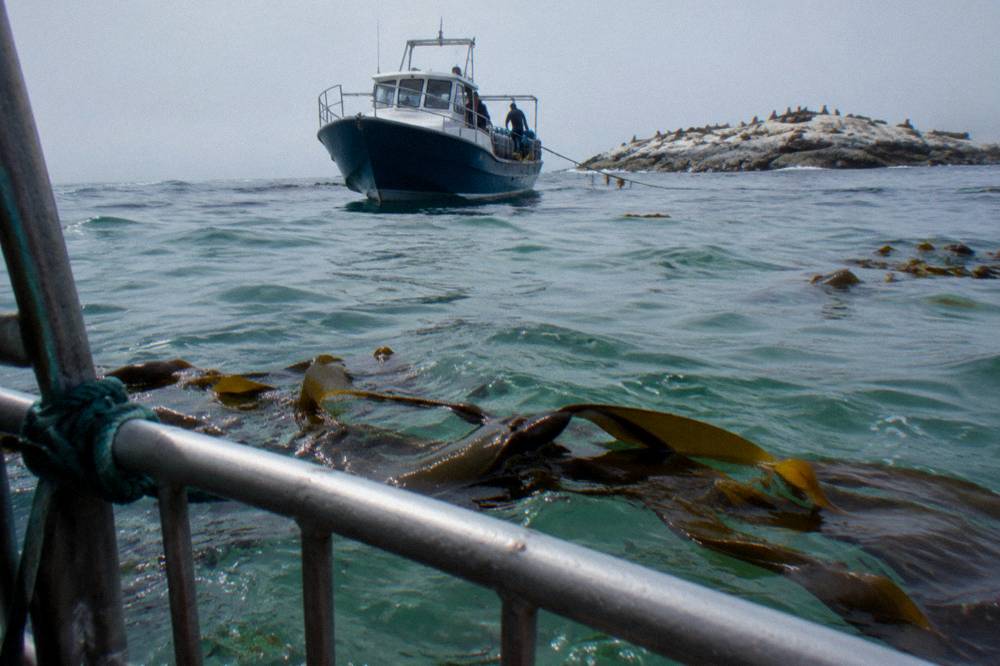
There is also a middle path worth naming. Gansbaai's whale-season combos pair the shark dive with a whale-watching leg in Walker Bay, which spreads the day's wildlife bet across two very different species. The Ivanhoe Sea Safaris combo, 4.6 from 22 reviews at from $286 with breakfast and lunch included, runs about six hours and refunds the whale leg if weather cancels it. The Cape Shark Adventures whale combo, 4.7 from 13 reviews at from $305, adds hotel pickup on top.
Should You Still Book A Gansbaai Cage Dive?
Yes, if you want a genuine large-shark encounter in a famous marine setting, and no, if only a great white will do. Gansbaai trips deliver bronze whalers reliably, a full marine safari around Dyer Island, and the infrastructure of the country's most established cage-diving town, with prices from $126 to $305 per person across this roster and free cancellation on every listing except one.
That is the honest pitch, and it is a good one. A three-metre bronze whaler arriving at a chum line is a formidable animal, and the setting, a narrow channel between a 60,000-strong seal colony and a protected penguin island, is unlike anywhere else. The trip is also the easiest cage dive in the country to reach from Cape Town, with transfers bundled on several listings. The transport and pickup guide lays out the self-drive versus transfer maths in detail.
The budget end of the roster is real, not a stripped-down decoy. Shark Zone's Gansbaai trip is the cheapest listing on this site at from $126 per person, 4.5 from 68 reviews, about three hours with wetsuit and mask included; the Cape Town pickup is a paid add-on rather than bundled, so self-drivers get the full value.
At the reviewed-quality end, the Cape Shark Adventures Kleinbaai trip is the top-rated cage dive among reviewed listings here, 4.9 from 17 reviews at from $171, a small review pool we state plainly rather than dressing up. Reviewers note that great whites are not guaranteed but other large sharks are commonly seen, which is exactly the honest framing this page exists to reinforce.
Decide with your eyes open. The Gansbaai cage diving guide covers the full logistics, and the cost comparison guide breaks down what drives the price spread. What a booking should never rest on is the phrase "great white", not at Gansbaai, not today. The site's homepage comparison exists precisely so you can weigh the real listings against the real species card.
Common Questions About Great White Sharks In Gansbaai
Are there still great white sharks in Gansbaai?
Not reliably. Great whites have been largely absent since roughly 2017, when the orca pair Port and Starboard began preying on them. A June 2026 statement from Marine Dynamics' founder confirmed no great whites on recent trips, while bronze whaler sightings continue in the hundreds per month.
Why did the great whites leave Gansbaai?
Two male orcas, Port and Starboard, began killing great whites off the coast in 2017, removing their livers. The sharks fled the area, and tracking data showed repeated abandonment. Eleven documented predation events were recorded between 2017 and 2025, and the aggregation never rebuilt.
What sharks do you see on a Gansbaai cage dive now?
Bronze whaler (copper) sharks are the main attraction, with broadnose sevengill cowsharks as a common bonus. Trips also pass the Cape fur seal colony at Geyser Rock, the penguin colony at Dyer Island, and, in season, southern right whales in Walker Bay.
Does the September 2026 False Bay sighting mean great whites are coming back?
No. One sub-adult great white was filmed near Seal Island on 23 September 2026, the first sighting there in about eight years. The operator and independent marine biologists both stated that a single animal is not a population recovery, and no sustained return has followed.
Where is the best place to see great white sharks in South Africa now?
Mossel Bay, about four and a half hours from Cape Town, is the more consistent great white site per 2026 operator reports. This site has no Mossel Bay listing to book, so its Mossel Bay guide covers the operator landscape there while the bookable roster covers Gansbaai and False Bay.
Do Gansbaai operators still advertise great white dives?
Some listing titles still carry the words, because operator names and product titles predate the collapse. The trips themselves have adapted, with briefings covering the decline and the focus on bronze whalers. Read the current species card, not the title.