Best Free Whale Watching Spots Along The Hermanus Cliff Path
A roundup of the free, no-booking whale watching viewpoints along the Hermanus Cliff Path, when to walk it, and how to pair it with Fernkloof Nature Reserve and a Gansbaai shark trip.
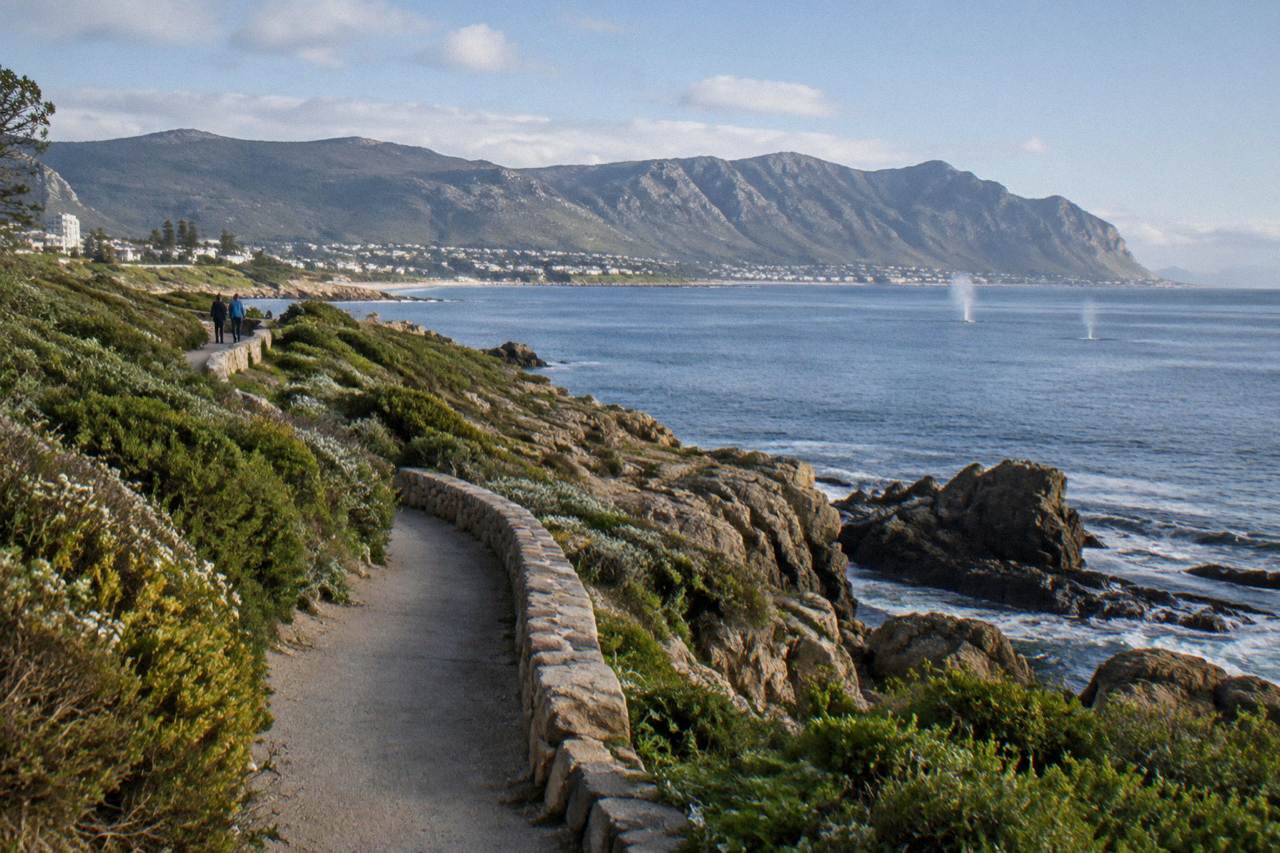
The Hermanus Cliff Path is the rare wildlife experience that costs nothing and needs no booking, no boat and no ticket queue. Southern right whales come so close to Walker Bay's shoreline that land-based viewers often stand within a few hundred metres of them, sometimes closer, and the roughly 12 kilometre public path along the cliff tops is built exactly for that moment. This roundup covers where to stand, when to go, what else in the area is genuinely free, and how the path fits into a day that could also include a shark cage dive. If you want the season dates and the best viewpoints before you set out, the guide to free whale watching from the Hermanus Cliff Path covers all of it, plus how to pair the walk with a shark cage dive.
Best Free Whale Watching Spots Along The Hermanus Cliff Path
The best free spots are Gearings Point, Sievers Punt, Kraalrots, and the stretches near Grotto Beach and the Old and New Harbour, all on the roughly 12 kilometre public Cliff Path, which needs no booking and charges no fee. Whales are frequently visible close to shore from these viewpoints during the season, roughly June to November and early December, peaking September to October for southern right whales, including mothers and calves.
The path itself is the main event. It threads along the top of the cliffs from the New Harbour area in the west toward Grotto Beach in the east, and almost any elevated section can produce a sighting in season. What separates the named viewpoints is the angle and the depth of the water just offshore. Gearings Point sits close to the town centre and works as the easiest first stop, a short walk from the market square. Sievers Punt and Kraalrots sit along rockier stretches where the water drops away quickly, which is what brings whales in tight against the rocks. The Grotto Beach end gives a long open view across the bay for spotting blows at distance.
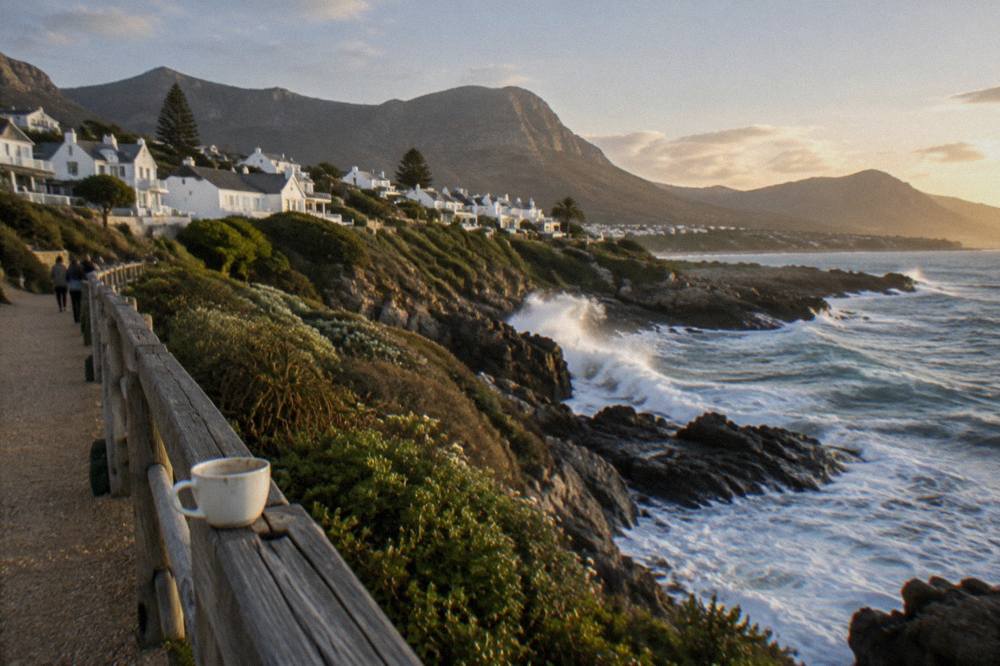
A practical way to work the path is to start at Gearings Point in the morning, walk east as far as time and legs allow, and turn back. The whole route is not a hike most families will finish in one outing with small children, and it does not need to be. Each viewpoint stands on its own, and the whales do not care which one you chose. The path is publicly accessible at multiple points, so short out-and-back segments are entirely normal use.
| Viewpoint | Where it sits | Why it works |
|---|---|---|
| Gearings Point | Central, near the town square | Easiest access, elevated view over the bay |
| Sievers Punt | Rocky stretch east of the centre | Deep water close in, whales hug the rocks |
| Kraalrots | Further along the clifftop path | Quieter, good sightlines both directions |
| Old Harbour and New Harbour | Either end of the central stretch | Historic setting, boats and whales share the view |
| Grotto Beach end | Eastern end of the path | Long open sightlines for distant blows |
One thing worth saying plainly: no viewpoint guarantees a whale. The season concentrates the odds heavily in your favour from September to October, but the sea decides the rest. Locals watch the bay daily, and the town's whale crier tradition exists precisely because sightings move around. Give it a couple of hours rather than ten minutes.
When Is The Best Time To Walk The Cliff Path For Whales?
Southern right whales are typically present in Walker Bay from roughly June through November and into early December, with peak activity in September and October, when mothers and calves come closest to shore. Humpback whales also migrate past the Cape coast in May and June and again from November into January, so early and late season walkers still have a real chance. Midwinter days are quieter on the path but rougher weather can push whales out or obscure them.
The September-October peak is the window most visitors should aim for if the trip can flex. That is when southern right cows with calves lounge in the shallows of Walker Bay, sometimes for days in the same spot, and the cliff-top viewpoints are at their best. The water in the bay is also at its coolest then, in the mid teens Celsius, which does not matter to a shore watcher but does shape what the whales are doing. Early morning light is calmer and the sea is flatter before the wind picks up, which makes blows and bodies easier to pick out.
Shoulder months reward the flexible. June and July deliver the first arrivals and far smaller crowds on the path, while November often still holds cows and calves plus the first passing humpbacks. December is a genuine tail rather than a guarantee, and from January to May the path is simply a beautiful coastal walk with dolphins, seals and seabirds as the likely sightings.
| Period | What you are likely to see | Path conditions |
|---|---|---|
| June to August | First southern right arrivals, increasing numbers | Cool, occasionally stormy, quiet path |
| September to October | Peak southern rights, mothers and calves close in | Peak crowds, best sighting odds |
| November | Late southern rights, first migrating humpbacks | Warming, moderate crowds |
| December to early January | Humpbacks passing, occasional late rights | Busy holiday season on the path |
| February to May | Dolphins, seals, seabirds | Quiet, whales largely absent |
Fernkloof Nature Reserve: The Other Free Hermanus Highlight
Fernkloof Nature Reserve, about 3 kilometres east of central Hermanus, is free to enter, with donations welcome, and offers dozens of kilometres of fynbos hiking trails across the Kleinrivier Mountains with viewpoints over Walker Bay. It is open daily, with hours varying by season, and a trail map can be bought for a small fee of roughly R20 at the reserve.
Fernkloof is the inland counterweight to the Cliff Path. Where the path gives you the ocean at eye level, Fernkloof climbs into the mountains behind the town and gives the bay back to you from above, with trails ranging from short loops to longer routes through proteas and ericas. Birdwatching is a genuine draw here, and the plant life is the reserve's real signature: this is fynbos country, one of the world's richest and most threatened floral kingdoms, and late winter into spring brings it into flower. A morning in Fernkloof and an afternoon on the Cliff Path is a full, entirely free day in Hermanus.
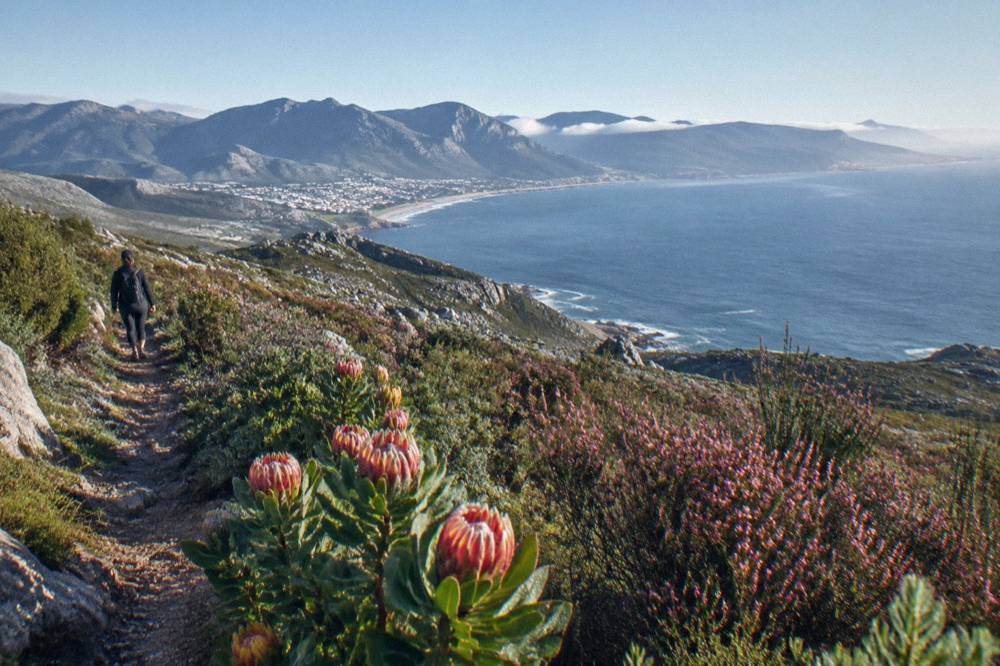
The reserve's own visitor information is the best source for current trail status and seasonal opening hours, which shift with the seasons. Bring water and sun protection even on cool days; the mountain is more exposed than the coastal path, and weather can turn quickly.
Not everything green nearby is free, and it is worth knowing the line. Walker Bay Nature Reserve, including the Die Plaat beach area and Klipgat Cave access, is fee-based, with day access around R65 to R70 for adults under CapeNature tariffs. Public beaches such as Grotto Beach and the Cliff Path itself cost nothing. Mixing the two up is a common trip-planning mistake, so check which landowner runs the site before assuming.
Pairing The Cliff Path With A Gansbaai Shark Cage Dive
Gansbaai is a 30 to 40 minute drive from Hermanus, which makes the Cliff Path and a shark cage dive a realistic same-day pairing: dive the cage from Kleinbaai Harbour in the morning, then walk the free path in the afternoon. Hermanus is a whale watching base rather than a shark cage diving departure town, so the boat leg of that day starts in Gansbaai, not Hermanus itself.
This is the pairing most shark-bound visitors to the Overberg should be planning, and the site's dedicated Hermanus shark cage diving guide covers the town's role in detail. The drive is short enough that a hotel base in Hermanus works well for a Gansbaai dive trip, and the reverse also holds: many divers finish a morning on the water and still have daylight for the Cliff Path, where the whales may be visible from shore at no cost at all.
For travellers who want both animals from the water rather than the clifftop, two combo trips on this site's roster do the pairing in one booked day. The Shark & Whale Trip Combo, run by Cape Shark Adventures from the Kleinbaai Harbour area, runs about 5 hours with hotel pickup included, from $305 per person, and holds a 4.7 rating from 13 reviews. The Gansbaai Shark Dive & Whale Watching Combo from Ivanhoe Sea Safaris runs about 6 hours from $286 per person, rated 4.6 from 22 reviews, with breakfast and lunch included and the whale leg refunded if weather cancels it.
The whale leg of any combo is weather-dependent, as the Ivanhoe listing states plainly, so a shore backup plan is worth having. The Cliff Path is exactly that backup: if the boat cannot go out, the whales are often still in the bay and the path costs nothing to walk. Booking the combo with free cancellation, which both these listings carry, keeps that flexibility real.
Divers who want the deeper Gansbaai experience rather than a combo can look at the Gansbaai eco-friendly shark cage diving cruise run by Marine Dynamics, from $232 per person, about 6 hours, rated 4.6 from 369 reviews, the most-reviewed trip on this site's roster. It often sells out, and it pairs the cage dive with the operator's marine research and penguin-rescue work around Dyer Island.
What Is Actually Free Around Hermanus, And What Is Not
Genuinely free: the Cliff Path, Fernkloof Nature Reserve, public beaches such as Grotto Beach, and coastal walks around Danger Point and De Kelders. Not free: Walker Bay Nature Reserve sections including Die Plaat and Klipgat Cave, at roughly R65 to R70 per adult, and the Boulders Beach penguin colony in Simon's Town, where SANParks charges international adults R245. Boat-based whale tours are a separate paid option.
The distinction matters because Hermanus markets itself on free whale watching, and visitors sometimes assume the whole coast follows suit. It does not. The Cliff Path and the town's beaches are the free core. Fernkloof is free with donations welcome, which is a real bargain for a reserve of its size and trail network. The CapeNature-run reserve sections to the east charge conservation fees, as does the SANParks penguin colony if your route extends around the peninsula.
| Activity | Cost | Notes |
|---|---|---|
| Hermanus Cliff Path | Free | Public path, no booking, about 12 km |
| Fernkloof Nature Reserve | Free, donations welcome | Map about R20, open daily |
| Grotto Beach and public beaches | Free | Swimming and shore walks |
| De Kelders and Danger Point coastal walks | Free | Whale sightings possible in season |
| Walker Bay Nature Reserve / Die Plaat | About R65 to R70 per adult | CapeNature fees apply |
| Klipgat Cave access | Fee-based | Within the reserve |
| Boat-based whale watching | Paid | Separate from the free path |
For a fuller list of what to do with a day or two in town, the site's Hermanus activities guide expands on restaurants, strolls and short drives, and the shark cage diving season guide covers how whale season lines up with shark sightings on the same coast.
Practical Tips For Walking The Cliff Path
Walk early for flatter seas and better light, wear layers because the clifftop wind is real even in summer, and give yourself at least two hours rather than a quick stop. The path is publicly accessible at multiple entry points, needs no permit, and morning departures tend to come with calmer conditions, which makes whale blows and surface activity far easier to spot. Bring binoculars if you have them, but many sightings are close enough for the naked eye.
Practicalities are simple, which is part of the appeal. There is no ticket, no gate and no booking for the path itself. Wear shoes with grip, since sections cross rock and sand, and take water on warm days. The whale crier, a Hermanus tradition, blows a horn to signal sightings in season, so if you hear it while in town, head for the nearest clifftop. Sun protection matters more than most visitors expect; the bay reflects light and the wind masks heat.
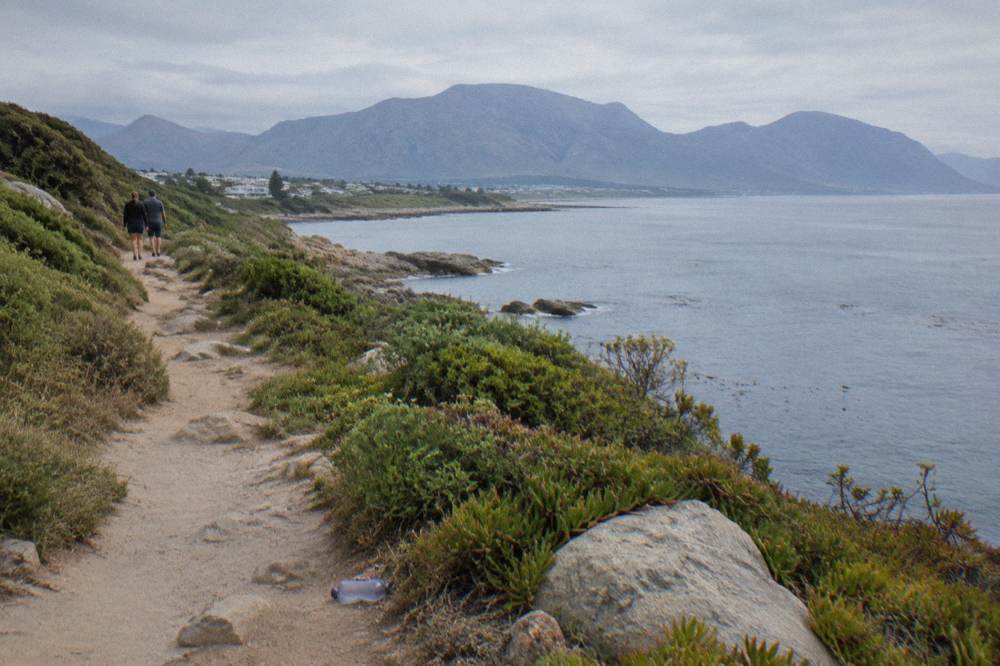
Families with children will find the central stretches the most forgiving, and the path connects back into town often enough that a tired walker is never far from a car or a coffee. Older walkers should treat the rocky sections with respect in wind. The path is usable year-round, but whale season is when it earns its reputation.
Photography deserves a note too. The light in Walker Bay is strongest in the first two hours after sunrise, and the angle from the clifftops looks west across the water for much of the central path, which means backlit whales are common in the afternoon. If photos matter, walk early. A phone camera handles close-in whales fine, but a long stretch of open bay rewards anything with real zoom. Do not chase the perfect shot at the expense of the moment; the path's best sightings are often the ones you simply stand and watch.
Combining Everything Into One Overberg Day
A strong free day looks like this: Fernkloof in the morning for the fynbos and the view from above, the Cliff Path from Gearings Point eastward in the early afternoon for whales, and Grotto Beach to finish. Add a Gansbaai shark cage dive and the day becomes a full marine itinerary, since the drive between Hermanus and the Kleinbaai departure harbour is only 30 to 40 minutes.
The order can flip depending on the season and the dive schedule. In September and October, the whales are the headline and the path deserves the prime hours. Outside the peak, a morning cage dive followed by a relaxed path walk is often the better sequencing, since shark boats leave Kleinbaai early and the afternoon light on Walker Bay is generous. This site's own Shark Cage Diving Cape Town comparison covers the full dive-side decision, including transport options from Cape Town for travellers who are not based in the Overberg at all.
For those basing in Cape Town, the day is longer but still workable: Simon's Town and False Bay sit about 45 to 60 minutes from the city on one side, while Gansbaai is roughly 2 to 2.5 hours the other way. A whale-focused trip that includes the free path works best with at least one night in Hermanus, which turns the drive into a feature rather than a cost. The town also earns a second evening easily: the path at sunset, with or without whales, is one of the Western Cape's better free views, and the restaurants along the seafront do the rest.
The one honest caveat on all of it: whales and sharks are wild animals, and no viewpoint, boat or season guarantees either. The free path stacks the odds as well as any land-based option in the world can, which is exactly why it carries the reputation it does. Plan the day around the season, keep the boat option in reserve, and let the clifftop do the heavy lifting.
Common Questions About The Hermanus Cliff Path
Best Free Whale Watching Spots Along the Hermanus Cliff Path?
Gearings Point, Sievers Punt, Kraalrots, and the stretches near Grotto Beach and the Old and New Harbour. All sit on the roughly 12 kilometre public Cliff Path, which is free and needs no booking, and whales are frequently visible close to shore in season.
When is whale season in Hermanus?
Roughly June through November and into early December, with peak activity in September and October, when southern right whale mothers and calves come closest to shore. Humpbacks also pass the coast in May and June and again from November into January.
Is the Cliff Path really free?
Yes. The path is publicly accessible, charges no fee and requires no booking. Nearby Fernkloof Nature Reserve is also free with donations welcome, though Walker Bay Nature Reserve sections and Klipgat Cave are fee-based under CapeNature tariffs.
How long does the Cliff Path take to walk?
The full route runs about 12 kilometres, so walking it end to end takes several hours. Most visitors walk shorter out-and-back segments between viewpoints, which is entirely normal use, and each viewpoint stands on its own.
Can you pair the Cliff Path with a shark cage dive?
Yes. Gansbaai is a 30 to 40 minute drive from Hermanus, so a morning cage dive from Kleinbaai Harbour and an afternoon on the free path is a realistic same-day pairing. Combo trips that book both animals from one boat also run from the Kleinbaai area.