Best Time For Shark Cage Diving: A Season-By-Season Guide
Timing shapes visibility, sea conditions and whether whales share your day on the water. Here is how the months stack up at each site, and what timing cannot promise.
Short answer
The best visibility at Gansbaai and False Bay runs April to September, when cooler water holds less plankton and underwater clarity can reach 12 to 16 metres. Southern right whales overlap June to November, peaking September to October. Timing improves viewing conditions and whale sightings, it does not guarantee great whites at Gansbaai or False Bay.
When Is The Best Time For Shark Cage Diving Near Cape Town?
The best window for underwater visibility runs April to September, with July to September typically the clearest months at Gansbaai and False Bay. Southern right whales overlap from June to November, peaking September to October, so late winter into spring is the strongest period for a combined shark and whale day. Timing changes what you see and how well you see it, but no month guarantees a great white at these sites.
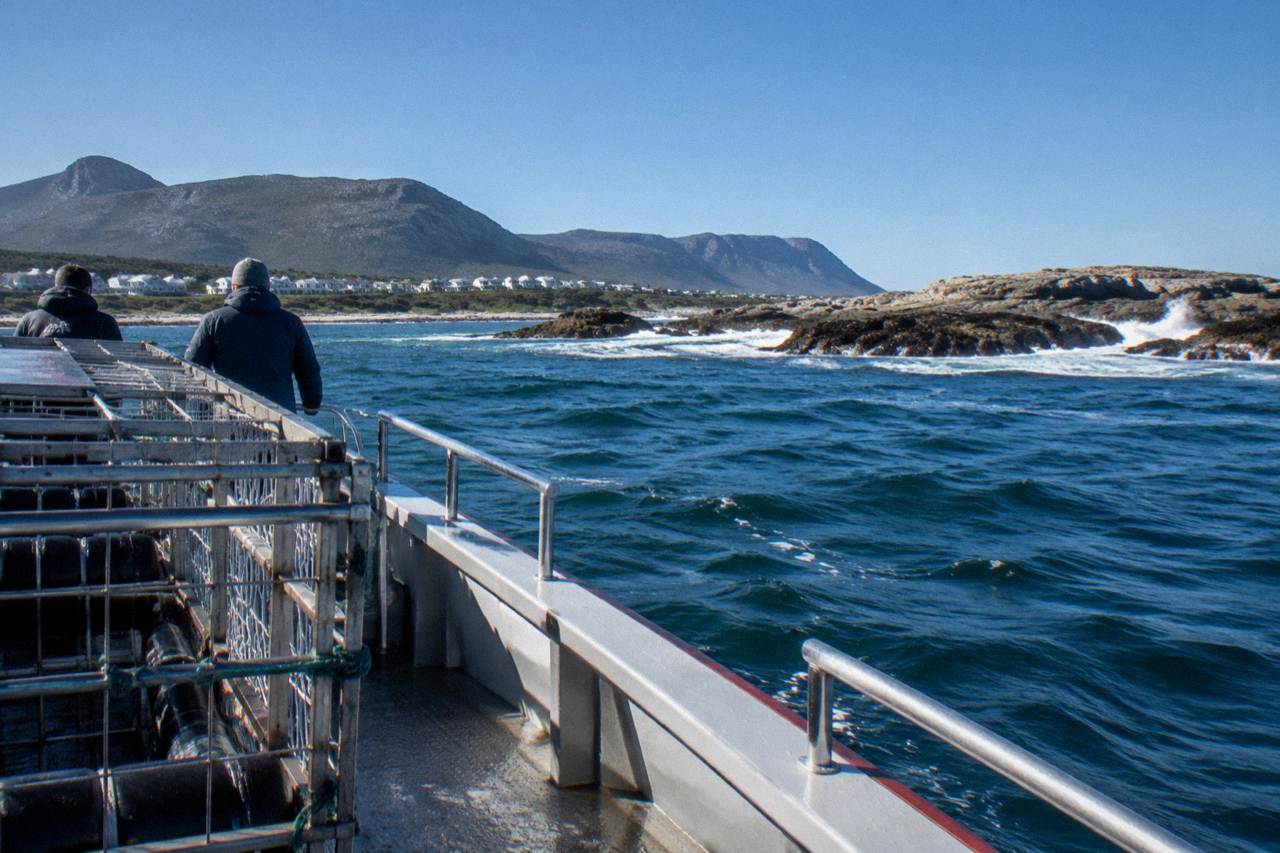
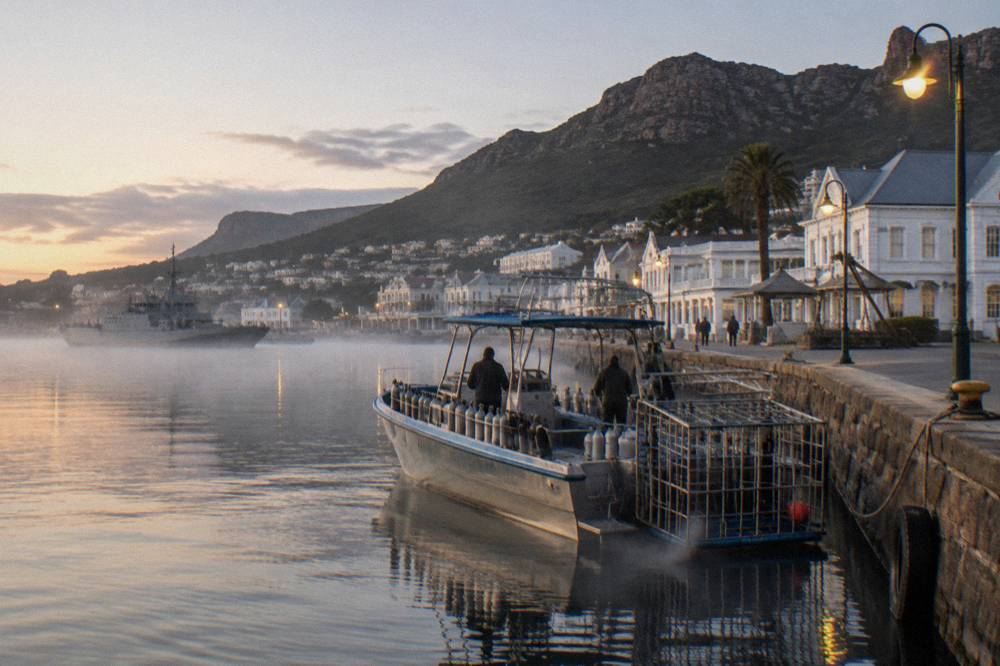
Shark cage diving around Cape Town runs year-round, which is one of the reasons the region works so well for travellers with fixed holiday dates. Operators launch from Kleinbaai Harbour near Gansbaai, from Simon's Town on False Bay, and from Mossel Bay further east along the Garden Route, in almost any month. What shifts through the year is not whether boats go out, it is the character of the day: how clear the water is, how rough the crossing feels, which sharks are around, and whether you share the bay with whales.
That last point matters more here than at most shark diving destinations in the world. Since roughly 2017, great whites have been largely absent from Gansbaai and False Bay, a shift researchers link to predation by two male orcas nicknamed Port and Starboard. Operators at both sites now feature bronze whaler (copper) sharks and broadnose sevengill cowsharks as the reliable encounters, and they brief guests honestly on the great white decline. A single sub-adult great white filmed near Seal Island in False Bay on 23 September 2026 was the first sighting there in about eight years, and marine biologists on record were explicit that it does not signal a population recovery.
So the honest version of the timing question has two parts. Picking the right month genuinely improves your trip: it buys clearer water, calmer mornings and a chance of whales breaching beside the boat. Picking the right month does not buy a great white at Gansbaai or False Bay, and any operator or article that tells you otherwise is selling you the pre-2017 story. This Shark Cage Diving Cape Town guide works through the data month by month so you can choose dates with realistic expectations.
How Does Water Temperature And Visibility Change Month By Month?
Water temperature at Gansbaai and False Bay swings from summer highs near 20 degrees Celsius to winter lows around 15 to 16, and visibility follows the opposite arc: plankton drops as the water cools, so clarity peaks in the cooler months. Expect 3 to 10 metres of visibility as the typical range, averaging 6 to 8, with the best days reaching 12 to 16 metres or more between April and September.
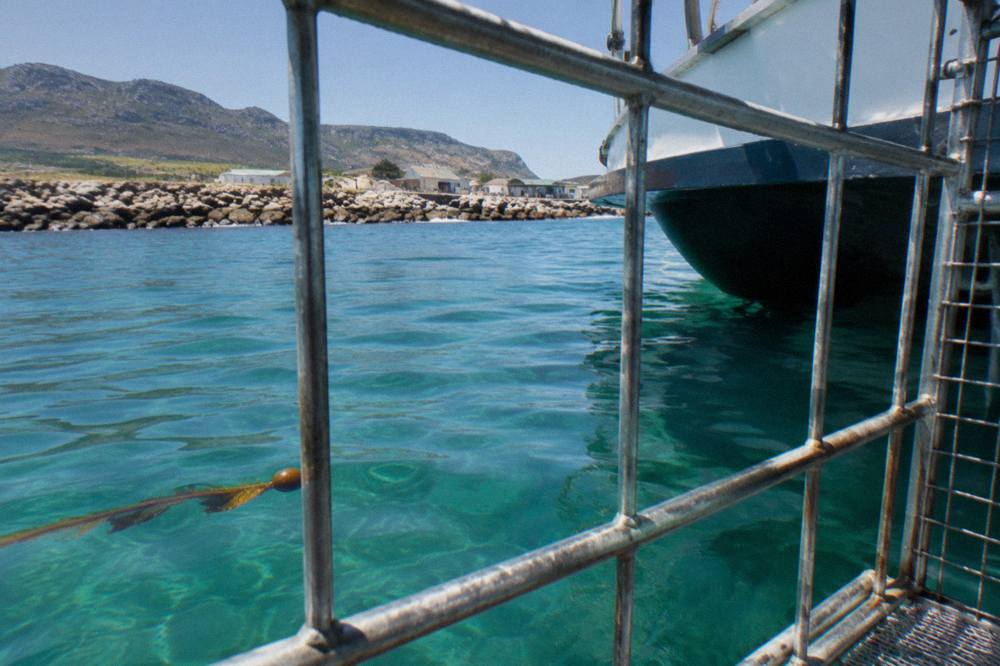
The mechanism is simple. Warmer summer water holds more plankton and more suspended matter, which scatters light and mutes the underwater view from the cage. As autumn cools the water the plankton dies back, swells settle, and the green murk gives way to the kind of visibility where you can track a bronze whaler from the moment it leaves the shadow of the boat. After a winter storm the pattern briefly reverses, which is why operators watch the forecast day to day rather than trusting the calendar blindly.
The table below shows approximate multi-year average sea surface temperatures for the three sites. Gansbaai and Mossel Bay track each other closely, while False Bay runs about a degree cooler through most of the year.
| Month | Gansbaai / Walker Bay (°C) | Mossel Bay (°C) | False Bay / Simon's Town (°C) |
|---|---|---|---|
| Jan | 20.7 | 20.7 | 19.5 |
| Feb | 20.3 | 20.0 | 18.9 |
| Mar | 20.6 | 20.3 | 19.3 |
| Apr | 18.8 | 18.1 | 17.8 |
| May | 17.4 | 16.6 | 16.9 |
| Jun | 16.7 | 16.1 | 16.3 |
| Jul | 15.8 | 16.1 | 15.4 |
| Aug | 15.8 | 16.0 | 15.4 |
| Sep | 15.8 | 16.5 | 15.4 |
| Oct | 16.8 | 16.9 | 16.3 |
| Nov | 18.3 | 18.4 | 17.5 |
| Dec | 19.8 | 19.8 | 18.7 |
Read the table as a visibility proxy rather than a comfort guide. You will be in a supplied 5mm wetsuit either way, so 15 degrees in the water is a non-issue; what the 15-to-16 rows buy you is the year's best underwater clarity. Summer's 20-degree water is pleasant on the skin and disappointing through a mask, which is the trade-off in plain terms. Operator guidance on visibility ranges matches this pattern, with the clearest conditions in the cooler months and murkier water in summer or after rough weather, per the frequently asked questions published by a long-running Gansbaai operator.
If your dates are flexible and your priority is seeing sharks clearly from the cage, target May through September, with July to September as the sweet spot. If your dates fall in the South African summer, a shark trip is still absolutely worth booking: bronze whalers remain the reliable draw, boats run through the whole year, and you simply trade some visibility for warmer air and longer daylight for the drive. The featured trip on this site, the Marine Dynamics eco cruise from Gansbaai, runs in every month and includes a marine biologist on board who can explain what the season is doing to the day's sightings.
What Does Shark Season Look Like At Each Site?
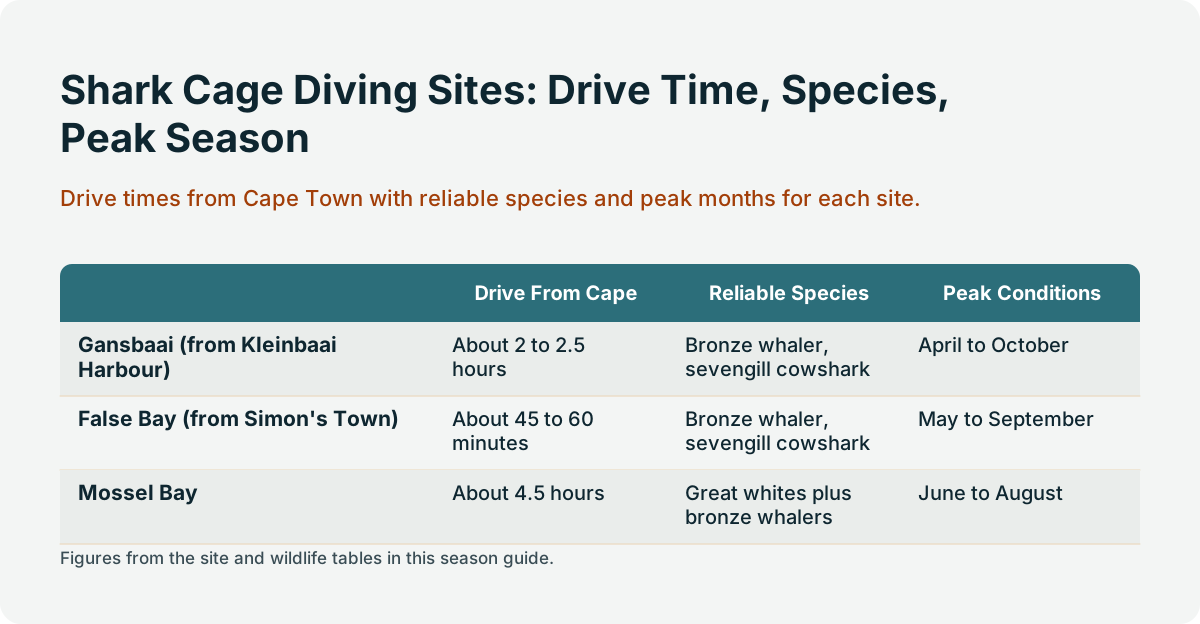
Gansbaai runs year-round with bronze whalers as the reliable species and peak activity and visibility April to October. False Bay offers bronze whalers and sevengill cowsharks year-round from Simon's Town. Mossel Bay is currently the more consistent great white site, with winter peaks June to August, though this site has no Mossel Bay listing to book.
The three sites are not interchangeable, and the season question has a different answer at each. Gansbaai, departing Kleinbaai Harbour, is the most established shark diving base in the country, anchored by the Dyer Island ecosystem: Shark Alley, the channel between Dyer Island and the seal colony on Geyser Rock, historically the magnet that drew great whites to the area. Today the boats work bronze whaler sharks reliably in every month, with sevengill cowsharks and stingrays as secondary encounters, and peak conditions through the cooler half of the year. The story behind that narrow channel and the islands it separates is a fascinating one, and our guide to Shark Alley and the Dyer Island ecosystem covers how the area became the country's shark diving heartland.
False Bay, departing Simon's Town, is the closest option to Cape Town at roughly 45 to 60 minutes from the city centre, and it runs a similar species story: bronze whalers and sevengills year-round, with great whites largely absent since about 2018 until that single September 2026 sighting near Seal Island. Mossel Bay, about four and a half hours' drive from Cape Town, is the one site where 2026 operator reports describe more consistent great white encounters, alongside bronze whalers. That is a genuine difference, and it is why our Mossel Bay shark cage diving guide exists, but it comes with an honest booking gap: this site has no bookable Mossel Bay listing, so the real purchasable options remain the Gansbaai and False Bay trips on the roster.
| Site | Departure Point | Drive From Cape Town | Reliable Species Today | Peak Conditions |
|---|---|---|---|---|
| Gansbaai | Kleinbaai Harbour | About 2 to 2.5 hours | Bronze whaler, sevengill cowshark | April to October |
| False Bay | Simon's Town | About 45 to 60 minutes | Bronze whaler, sevengill cowshark | May to September |
| Mossel Bay | Mossel Bay harbour | About 4.5 hours | More consistent great whites, plus bronze whalers | June to August |
One timing nuance at False Bay is worth flagging before you book. The Apex Shark Expeditions trip from Simon's Town, rated 4.7 from 129 reviews and from $277.05 per person, is the one listing on this site's roster that is non-refundable, with no free cancellation. Every other listing offers free cancellation. If you are travelling in winter precisely because the visibility is best, that same winter carries a higher chance of a weather reschedule, and a non-refundable ticket changes how a reschedule affects your wallet. Check the operator's terms on the live listing before committing to that one.
The featured Gansbaai eco cruise, run by Marine Dynamics, is one of the most-reviewed trips on this roster at 4.6 from 369 reviews, from $232 per person for about 6 hours, with free cancellation and an optional Cape Town transfer. It also carries a genuine "often sells out" flag, which matters for season planning: the clearest months are the busiest months, so the travellers who get the dates they want in July and August are usually the ones who booked weeks ahead. The operator runs its own research and penguin-rescue work through the Dyer Island Conservation Trust, which is why the trip reads as an eco cruise rather than a pure adrenaline product.
When Do Whales Overlap With Shark Season?
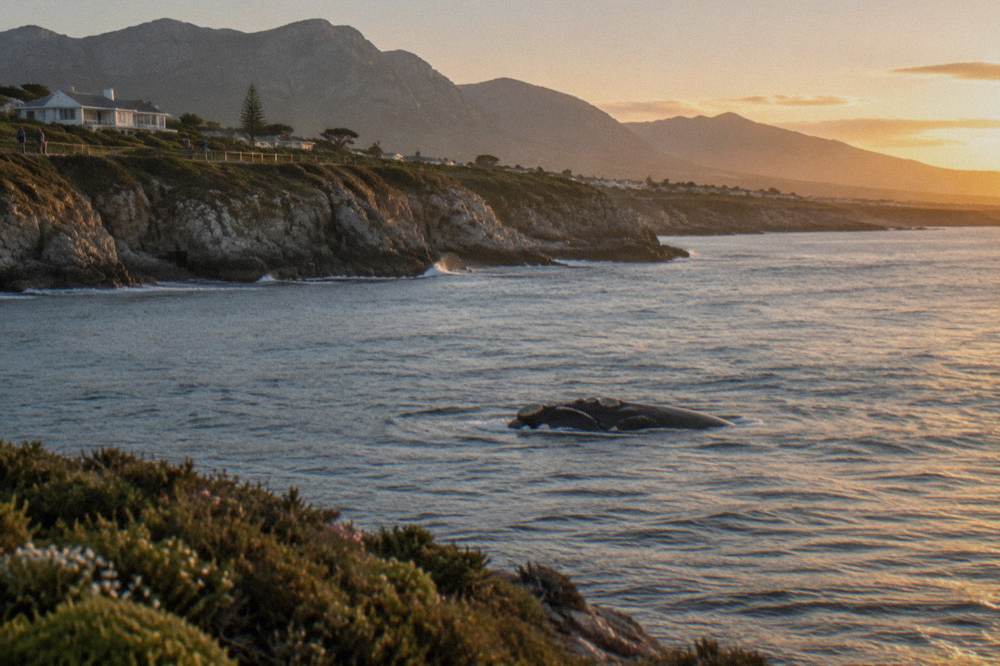
Southern right whales are present in Walker Bay and False Bay roughly June to November, peaking September to October, with occasional December tail-end sightings. Humpbacks migrate through both areas in May to June and November to January. Late winter and early spring is when a shark trip most plausibly becomes a two-predator day.
This is the part of the timing question that most first-time visitors underestimate. The Gansbaai boats pass through some of the best whale waters in South Africa on the way to the dive site, and in peak season the crew will often slow for a southern right mother and calf in Walker Bay. The combo listings on this roster formalise that overlap: the Cape Shark Adventures shark and whale combo, rated 4.7 from 13 reviews and from $305 per person for about 5 hours with hotel pickup included, and the Ivanhoe Sea Safaris version, rated 4.6 from 22 reviews and from $286 per person with breakfast and lunch, both run from the Kleinbaai Harbour area. On both, the whale leg is weather-dependent, and the Ivanhoe listing refunds that leg if it is cancelled.
| Wildlife | Present Around Gansbaai / False Bay | Peak Months | Seen From |
|---|---|---|---|
| Southern right whale | June to November, occasional December | September to October | Shark boats, shore viewpoints |
| Humpback whale | May to June and November to January | Migration windows | Shark boats, occasionally from shore |
| Bronze whaler shark | Year-round | April to October for best visibility | The cage |
| Sevengill cowshark | Year-round | Cooler months | The cage, some sites |
| Cape fur seal | Year-round, about 60,000 at Geyser Rock | All year | Shark Alley transit |
If whales are a significant part of why you are travelling, September and October are the strongest single answer to the whole timing question: visibility is still near its best, southern right cows and calves are thick in Walker Bay, and the weather is starting to ease. You can extend the whale side of the trip for free on land, too. The Hermanus Cliff Path, about 30 to 40 minutes' drive from Gansbaai, is a public shoreline walk where whales are frequently visible close to shore at no cost, which our free whale watching on the Hermanus Cliff Path piece covers in detail. Pairing a morning shark dive with an afternoon on the cliffs is a realistic same-day plan in season.
The whale combo listing is the direct way to buy that overlap as one ticket.
How Do Sea Conditions And Seasickness Change Through The Year?
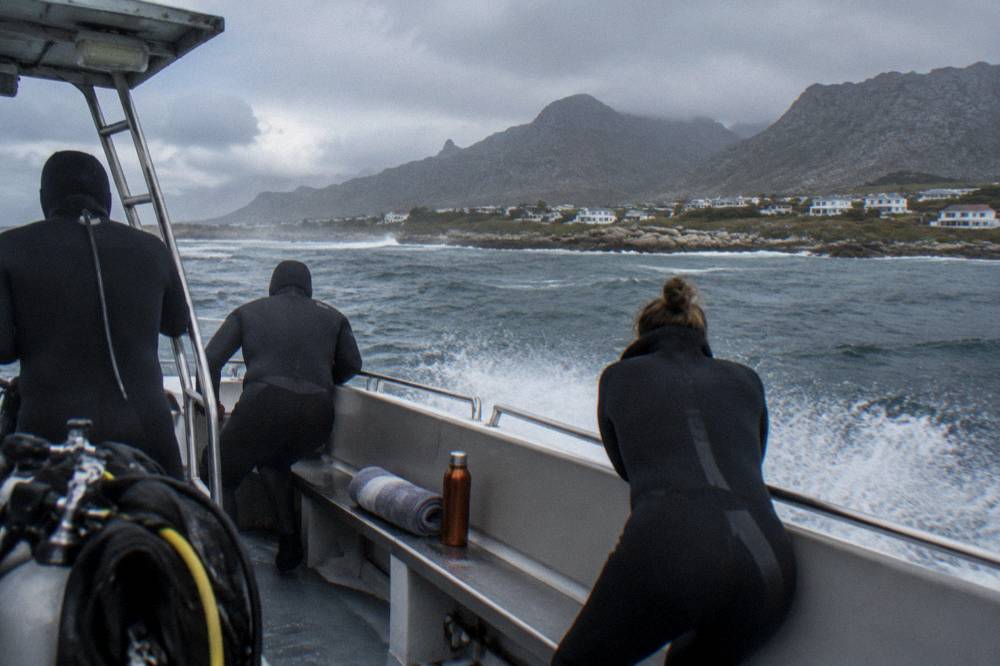
Winter brings the best visibility but also the bigger swells and stronger winds, while summer crossings are usually gentler. Seasickness is the most commonly reported issue on shark diving boats, with no quantified rate, and morning departures tend to be calmer than afternoon ones at any time of year.
There is an honest tension in the winter recommendation. The same cool, settled, plankton-poor water that gives you 12-metre visibility also comes with the season's stronger cold fronts, and the anchoring pattern of a cage dive, holding station in swell while you wait for sharks, is exactly the motion that turns stomachs. Operators brief on this and most keep medication, ginger and practical advice on hand, but the mitigation that actually works is the one you do before the boat: take a seasickness tablet well before departure, not once you feel wrong. Our seasickness on a shark diving boat guide covers the full playbook.
Practical season-by-season shape of the sea, as a planning range rather than a promise:
| Period | Typical Conditions | Visibility Trend | Seasickness Risk |
|---|---|---|---|
| April to June | Cooling water, fronts passing | Improving steadily | Moderate |
| July to September | Best clarity, strongest winter fronts | Peak, 12 to 16 metres on good days | Higher, mornings calmer |
| October to November | Warming, seas settling | Good, starting to soften | Moderate |
| December to March | Warmest, plankton returns | Typically 3 to 10 metres | Lower, but murkier water |
Two structural points soften the winter risk. First, morning departures dominate the schedule because the wind picks up in the afternoon, so an early start is both the calmest and the most productive slot. Second, every trip is weather-dependent and operators cancel or reschedule when conditions are unsafe, which is precisely why free cancellation matters when you book a winter date. The 2008 Gansbaai-area boat capsize, in which three tourists drowned, was ruled negligence related to sea conditions and anchoring, not sharks, and it is the incident that hardened the weather-cancellation culture on these boats. On safety overall, including the fact that there are no documented shark-caused guest fatalities in licensed cages, see our is shark cage diving safe in Cape Town guide.
What Time Of Day And How Far Ahead Should You Book?
Book the earliest departure slot available, since mornings bring calmer wind and sea states and most operators schedule the first launch around dawn. For dates, book two to six weeks ahead in the July to September peak, and a few days to two weeks ahead outside it, with the two sell-out-flagged trips needing the longest lead time.
The daily pattern on this coastline is reliable enough to plan around. Mornings are calmer, the light is better for photography from the cage, and the boats are back at the harbour by early afternoon, which leaves room for the Hermanus cliffs or the drive back to Cape Town. Afternoon wind is the reason operators do not sell many late slots, not a quirk of their scheduling.
Lead time splits by season and by listing. In the April-to-October visibility peak, Gansbaai boats fill with a mix of international visitors and South African weekenders, and the two listings carrying real "often sells out" flags, the Marine Dynamics eco cruise and the Simon's Town open-water dive, are the ones where a last-minute booking genuinely risks missing out. Outside the peak, a week's notice is usually comfortable. If you are relying on a specific date because of a flight or a tour group, book the moment the date is fixed: every listing on this roster except the Apex False Bay trip offers free cancellation, so an early booking costs you flexibility rather than money.
A budget note for the shoulder season. The cheapest listing on the roster, the Shark Zone trip from Van Dyks Bay near Kleinbaai at from $126 per person, rated 4.5 from 68 reviews, prices the same in every month, but its Cape Town pickup is a paid add-on rather than a bundled transfer. Compare that against the full-day packages with transport from $277.71 or $303.54 per person when you are weighing total trip cost, and our shark cage diving cost guide breaks the full price ladder down.
The False Bay operator's listing is the one to watch for date flexibility, since it does not refund.
How Should You Actually Choose Your Dates?
Choose September or October if you want the full package: near-peak visibility, peak southern right whales, and the first easing of winter weather. Choose July to August for maximum clarity if you can handle rougher water, or December to March for calm seas and warmer days if murky water is an acceptable trade. Any month works for bronze whalers, which is what these sites reliably show.
The decision is really about what you are optimising for. A photographer wants the winter clarity window and will accept the seasick tablet. A family with younger children, where cage entry commonly starts around 10 to 12 years depending on the operator, may prefer a calmer summer crossing and a shorter False Bay drive over an extra few metres of visibility. A traveller combining the trip with Hermanus whale watching wants September or October and nothing else. All three are correct answers to the timing question, because the sharks, the bronze whalers that actually show up, are present in every one of those windows.
That is the honest framing to hold onto while you pick dates. Timing at Gansbaai and False Bay is a visibility and whale question, not a great white question, and the operators themselves now market it that way, with marine biologists on board explaining the orca story during the ride out. If seeing a great white is the single non-negotiable goal, the current answer is Mossel Bay, with the caveat that this site has no bookable listing there, and our are there still great whites in Gansbaai guide covers the evidence in full.
For everyone else, the season data points to a clear default: book a morning departure in the April-to-October window, with September and October as the strongest all-round months, hold your date with a free-cancellation listing, and let the bronze whalers do what they reliably do in every month of the year.
Common Questions About Shark Cage Diving Seasons
What Is The Best Month For Shark Cage Diving In Gansbaai?
September and October are the strongest all-round months: visibility is still near its peak, southern right whales are at their most numerous in Walker Bay, and winter's roughest weather has started to ease. July and August give the clearest water of the year if calmer conditions matter less to you.
Can You See Great White Sharks In Gansbaai In Any Month?
No month guarantees great whites at Gansbaai. They have been largely absent since roughly 2017 following orca predation, and operators now feature bronze whaler and sevengill cowsharks as the reliable encounters. Mossel Bay is currently the more consistent great white site, though this site has no bookable listing there.
Is Winter Too Cold For Shark Cage Diving?
No. Operators supply 5mm wetsuits, booties and masks, so water temperatures of 15 to 16 degrees in July and August are comfortable in the water. The bigger winter consideration is sea state, since stronger fronts bring bigger swell, which is why morning departures and seasickness preparation matter most in that season.
When Can You Combine Shark Diving With Whale Watching?
Southern right whales are present around Gansbaai and False Bay roughly June to November, peaking September to October, so any shark dive in that window can turn into a whale sighting from the boat. Two combo listings on this roster, from $286 and from $305 per person, build the whale leg into the ticket, and the Hermanus Cliff Path offers free shore-based whale watching 30 to 40 minutes from Gansbaai.
Is Shark Cage Diving Open Year-Round Near Cape Town?
Yes. Gansbaai and False Bay operators run in every month, with bronze whalers present year-round. What changes through the year is visibility, which typically runs 3 to 10 metres and peaks in the cooler April-to-September window, plus sea conditions and the whale overlap.
How Far In Advance Should You Book A Peak-Season Shark Dive?
For July to September, book two to six weeks ahead, and longer for the two listings that carry a genuine "often sells out" flag, the Marine Dynamics eco cruise and the Simon's Town open-water dive. Outside the peak, a few days to two weeks is usually enough, and all but one listing on this roster offer free cancellation.