Dyer Island Shark Diving: What The Boat Ride To Shark Alley Actually Looks Like
Every cage diving trip out of Kleinbaai Harbour heads for the same stretch of water: a protected bird island, a seal colony of roughly 60,000 animals, and the shallow channel between them. Here is what that geography means for what you actually see in the water.
Short answer
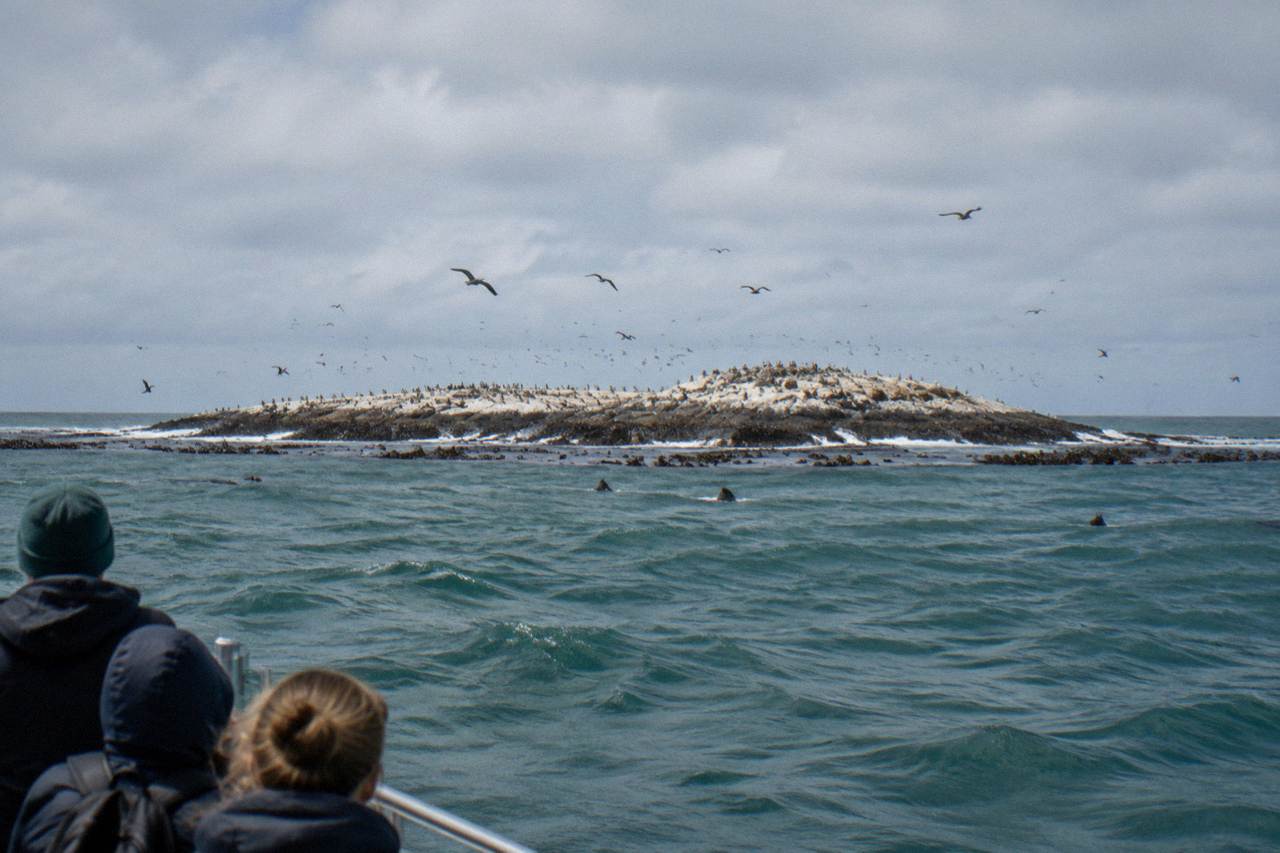
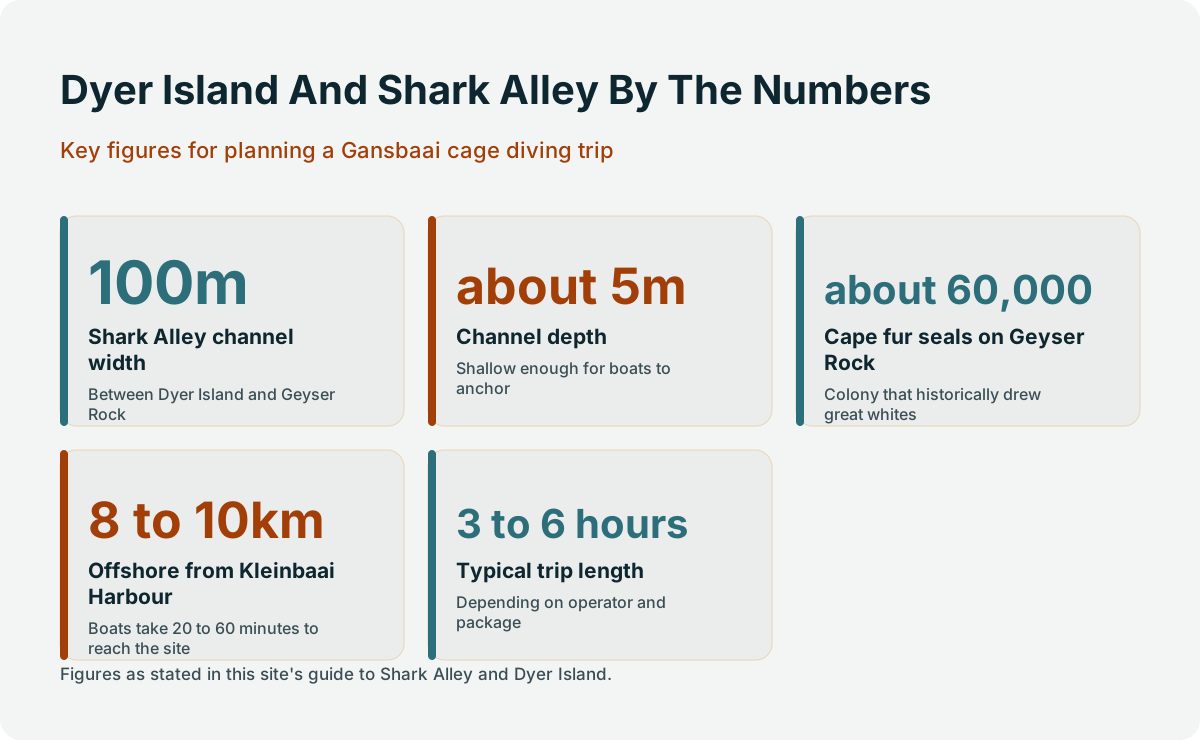
Dyer Island shark diving trips depart Kleinbaai Harbour near Gansbaai and motor about 8 to 10km offshore to Dyer Island, a protected bird sanctuary, and Geyser Rock, home to roughly 60,000 Cape fur seals. The boats work Shark Alley, the roughly 100m channel between them. Today's trips mostly show bronze whaler and sevengill sharks, not great whites.
Great white sharks made this stretch of South African coastline famous, but the geography did the heavy lifting long before the first cage went into the water. Two small pieces of land sit off Gansbaai: Dyer Island, a protected bird sanctuary of about 20 hectares, and Geyser Rock, a roughly 3 hectare outcrop carrying a Cape fur seal colony of about 60,000 animals. Between them runs a shallow channel roughly 100m wide and about 5m deep, the strip of water the industry named Shark Alley.
This guide explains exactly where the boats go, what lives at each stop, and what that means for the sharks you are likely to encounter in the water today. It is a planning piece, not a brochure. The honest version of Dyer Island shark diving includes a chapter most operators' marketing glosses over: great whites have been largely absent from this area since roughly 2017, and the trips that made Shark Alley world famous now run on bronze whaler and sevengill sharks. That is still a genuinely good day out. It is just a different day than the one the old documentaries promised.
For the wider picture on operators, prices and departure logistics, the Gansbaai cage diving guide covers the full picture, and the site's own trip picker and homepage comparison walk through the same choice in three questions.
Where Is Dyer Island And What Happens On The Boat Ride Out?
Dyer Island sits roughly 8 to 10km offshore from Kleinbaai Harbour near Gansbaai, about 2 to 2.5 hours' drive from Cape Town. Boats typically take 20 to 60 minutes to reach the dive site depending on conditions, and the island itself is a protected bird sanctuary with no public access. Trips run 3 to 6 hours depending on the operator and package.
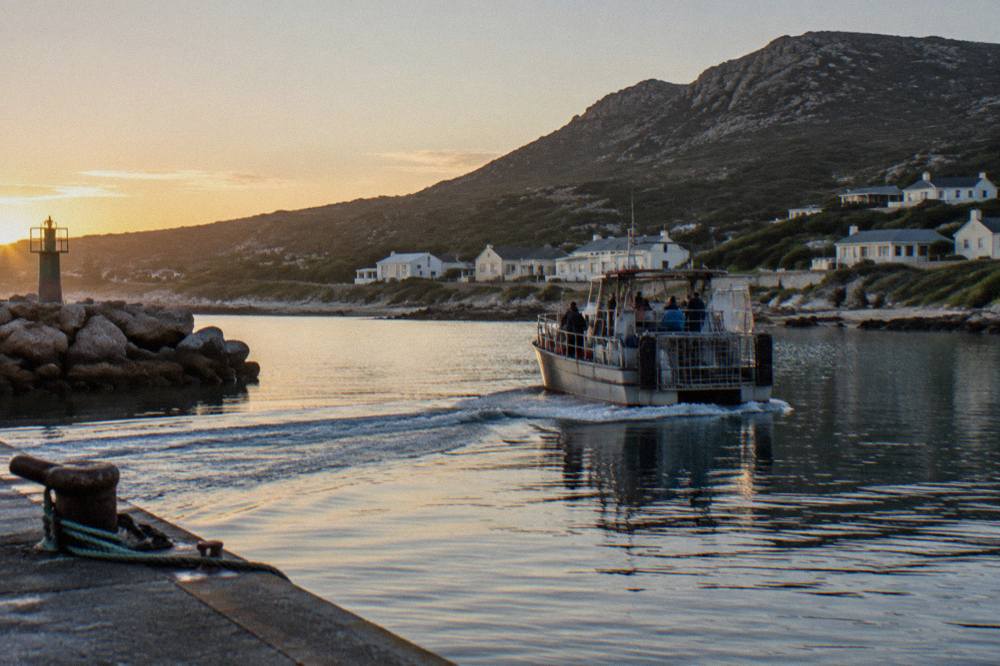
Kleinbaai is the working harbour on the Gansbaai waterfront where nearly every cage diving operation in the area launches. The ride out is part of the trip, not dead time. Depending on where the sharks have been active, skippers anchor either in the shallows near Geyser Rock, along the edge of Shark Alley, or in deeper water further offshore where bronze whalers gather. The crew watches conditions, recent sighting reports and tide before committing to a spot, and the anchor point can change from morning to afternoon on the same day.
The island you are heading toward has a specific legal status that shapes the whole trip. Dyer Island is part of the Dyer Island Nature Reserve Complex, a designated Ramsar wetland site, and it is off limits to the public. Boats may work the surrounding water under permit, but nobody lands. The permits themselves come from the Department of Forestry, Fisheries and the Environment under the Threatened or Protected Marine Species Regulations, which historically allocated 8 commercial cage diving permits to the Dyer Island/Gansbaai area. The rules those permits carry matter to you as a passenger: chumming is allowed only as a natural bait or fish-oil lure, never direct feeding, and touching sharks is banned outright. The full regulatory framework is documented at Shark Watch SA's permit and regulations page.
What that means in practice is that the shark behaviour you watch is wild behaviour. A shark that approaches the cage is investigating, not feeding, and the operators' compliance with the no-provisioning rule is one reason the South African cage diving industry has kept its permits for decades. The island's other job, as a bird sanctuary, is visible the moment you get close: African penguins, cormorants and other seabirds use it as breeding ground, though the penguin colony here has declined sharply and is now one of the conservation concerns the better operators discuss on board.
The ride also doubles as a wildlife cruise. En route to the dive site, boats regularly pass Cape fur seals hauled out on Geyser Rock, dolphins in the deeper water, and, in season, southern right whales in Walker Bay. Several operators have built their whole framing around this: the Marine Dynamics eco cruise, this site's featured trip, runs about 6 hours from Kleinbaai and treats the seals, penguins and whales as part of the product rather than scenery. You can Check availability on its live listing, which is rated 4.6 from 369 reviews and priced from $232 per person with an optional Cape Town transfer.
What Is Shark Alley And Why Is It Famous?
Shark Alley is the narrow, shallow channel between Dyer Island and Geyser Rock, roughly 100m wide and about 5m deep. It earned its name because it sits directly between a seal colony and open water, historically the corridor where great white sharks patrolled. Today it is a working anchorage for cage diving boats and a seal-watching corridor, not a guaranteed great white venue.
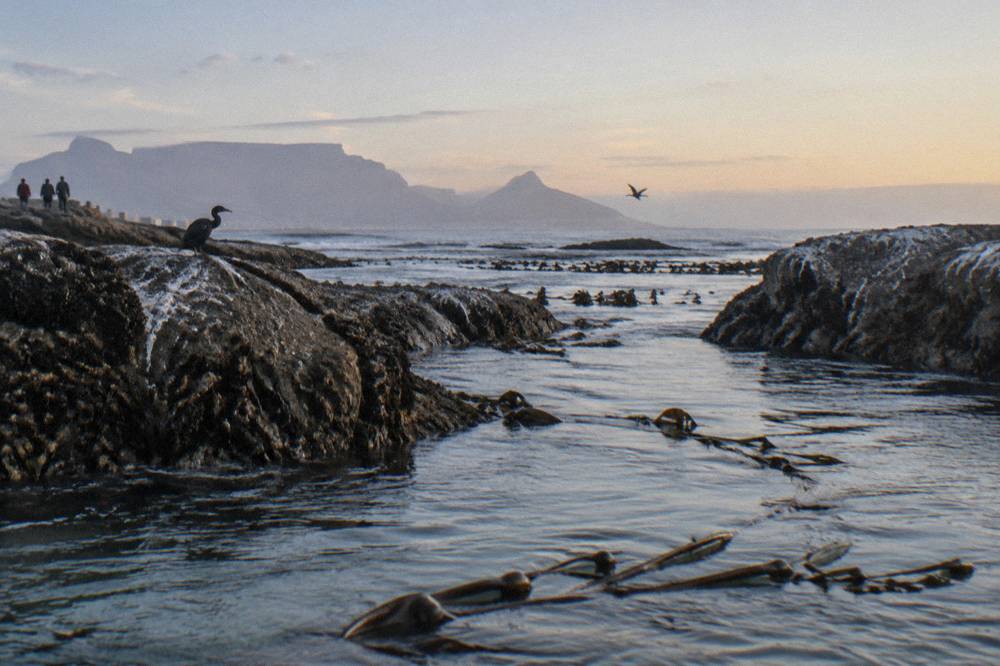
The logic behind the name is simple predator geography. Cape fur seals breed and rest on Geyser Rock. Great white sharks, historically, hunted seals, and young seals moving between the colony and open water had to cross a shallow, confined strip of water to get there. A channel that funnels prey past a waiting predator is about as good as hunting grounds get, and for years Shark Alley delivered exactly what its name promised. Documentary crews, photographers and the entire Gansbaai cage diving industry were built on the reliable presence of large sharks in this one small stretch of water.
The channel's physical character still shapes every trip. At roughly 5m deep and 100m across, it is shallow enough that boats anchor comfortably in it and the cage sits well within view of the surface. That shallowness is also why the water here can churn: swell pushes through the gap between the two islands, and conditions in the Alley can be lumpier than the deeper anchorage spots nearby. Skippers read that daily. Some of the best cage sessions happen just outside the Alley in deeper water where bronze whalers cruise more freely.
The fame, though, needs an honest footnote. The great whites that made Shark Alley a household name among shark enthusiasts have been largely absent from Gansbaai since roughly 2017, when a pair of male orcas nicknamed Port and Starboard began preying on them, with 11 documented predation events recorded between 2017 and 2025. The guide to whether great whites are still in Gansbaai covers that story in full. The short version: the sharks that made the Alley famous fled it, and the operators adapted. The channel is still there, the seals are still there in their tens of thousands, and the boats still anchor there, but the star attraction changed species.
None of that makes Shark Alley a letdown. Watching several thousand seals porpoise through a 100m channel while a cage floats in the same water is a genuinely atmospheric experience, and the bronze whalers that patrol the area now are large, fast, curious sharks that come close to the cage. It is worth arriving with the right expectations, which is the point of this guide.
What Lives On Geyser Rock And Why Did It Draw Great Whites?
Geyser Rock is a roughly 3 hectare outcrop beside Dyer Island carrying a Cape fur seal colony of about 60,000 animals. That colony was the historic engine of the whole area: it provided the prey base that drew and held great white sharks, and it still anchors the marine ecosystem the cage diving trips work within today.
Sixty thousand seals is a number worth pausing on. Geyser Rock is not much bigger than a few rugby pitches, and it hosts a colony that would fill a stadium. The noise reaches you before the smell does, and both reach the boat well before you can pick out individuals. Cape fur seals are charismatic, noisy, argumentative animals, and the boat ride past the colony is reliably the part of the trip that gets the most photos, sometimes more than the sharks do.
For the sharks, the colony was the whole reason to be here. A dense, resident seal population means a predictable food supply, and predictable food supply means predictable sharks, which is precisely what a commercial cage diving operation needs. The great whites that historically worked this stretch of coast did so because Geyser Rock guaranteed them juvenile seals throughout the year. The industry's boats anchored between the colony and the open sea because that is where the sharks were.
The colony's role did not end when the great whites left. Bronze whaler sharks, the species that now dominates Gansbaai trips, are opportunistic predators that scavenge and hunt around seal colonies too, along with the fish the seals themselves chase. The ecosystem is still a feeding ground, just with a different apex visitor. And the orcas that displaced the great whites, Port and Starboard, have themselves been recorded killing sevengill sharks in this area, 17 in a single day off Pearly Beach in February 2023, using the same liver-targeting tactic they used on the whites. The waters around Geyser Rock are a working food web, not a theme park exhibit.
The seals also matter to you as a passenger in one direct, practical way: seal colonies attract great white sharks' replacement predators, and they attract the smaller sharks' food fish, so the anchorage spots near Geyser Rock remain among the most productive on the trip even now. When a skipper says the boat is anchoring "in the Alley", what they mean is they are putting you between a 60,000 strong seal colony and the open ocean, in shallow water, with bait in the water. That is still the best available bet for shark activity in this area, whatever species shows up.
Which Sharks Do You Actually See On A Dyer Island Trip Today?
Today's Gansbaai trips overwhelmingly show bronze whaler, or copper, sharks, alongside broadnose sevengill cowsharks. Great whites have been largely absent since roughly 2017. No operator can promise a great white here, and any listing that leans on the old great white framing should be read with that reality in mind.
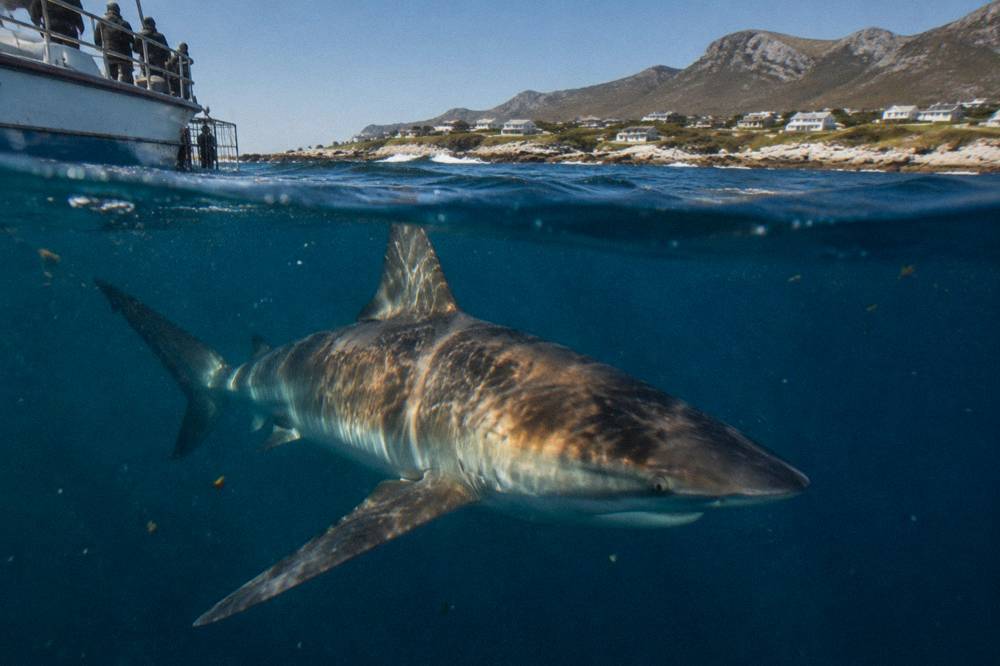
Bronze whalers are not a consolation prize in any physical sense. They run 2 to 3m as adults, they move fast, and they approach the cage with real confidence. Divers who booked these trips report the same thing across the review pools: the sharks come close, the water time delivers, and the experience holds up as a wildlife encounter even once you know the great whites are gone. The sevengills, when they show, are slower, stranger looking animals with a prehistoric silhouette that many guests find more interesting than a whaler. More of these guides are collected on Shark Cage Diving Cape Town.
The honesty point matters because several listings in this area still carry "great white" in their marketing heritage, and the geography itself, Shark Alley, the seal colony, the cage, invites you to expect the old headline species. The verified position is this: great whites have been largely absent from Gansbaai since roughly 2017 to 2020, a peer-reviewed analysis of 16 years of boat data found no site fidelity among the whites that were seen, and the one recent great white headline from the region, a single sub-adult filmed near Seal Island in False Bay in September 2026, was hundreds of kilometres of coastline away and explicitly not a sign of a returning population. Mossel Bay, not Gansbaai, is currently the more consistent great white site, and the Mossel Bay guide covers that honestly, including the fact that this site has no Mossel Bay listing to book.
What you can reasonably book for this stretch of water is a strong bronze whaler trip with a marine biologist on board, and the roster here has several. The table below shows the current Gansbaai listings side by side.
| Listing | Card name | Rating | From (pp) | Duration |
|---|---|---|---|---|
| Marine Dynamics eco cruise | Most-Reviewed Eco Cage Dive | 4.6 from 369 reviews | $232 | 6 hours |
| White Shark Projects half-day | White Shark Projects Half-Day | 4.7 from 451 reviews | $173 | 3 hours |
| Conservation-focused cage dive | Conservation-Focused Cage Dive | 4.8 from 237 reviews | $169 | 4 hours 30 minutes |
| Hookah air-supply cage dive | Hookah Air-Supply Cage Dive | 4.7 from 78 reviews | $205.08 | 4 hours |
| Sharklady air-line cage dive | Sharklady Air-Line Cage Dive | 4.0 from 271 reviews | $188.73 | 3 hours 30 minutes |
| Cape Shark Adventures viewing trip | Best-Rated Kleinbaai Cage Dive | 4.9 from 17 reviews | $171 | 3 hours |
| Shark Zone tours | Shark Zone, Cape Town Add-On Pickup | 4.5 from 68 reviews | $126 | 3 hours |
Two entries deserve a flag. The Cape Shark Adventures listing carries a 4.9 rating, but from only 17 reviews, so it is top-rated among reviewed listings rather than a proven quantity. And reviewers on that same listing note plainly that great whites are not guaranteed, which matches the verified species picture. The White Shark Projects half-day, at 4.7 from 451 reviews and from $173 per person, is one of the area's longest-running operators with breakfast and an on-board light lunch included.
The conservation-focused listing from the same operator family, at 4.8 from 237 reviews, is the highest-rated cage dive on this roster, and its framing leans into marine education, which suits the current species reality well: a trip that explains the orca displacement and the ecosystem shift is more honest, and usually more interesting, than one that pretends nothing changed.
What Does A Dyer Island Trip Cost And How Do The Packages Differ?
Gansbaai cage dive listings on this roster run from $126 to $305 per person, with the standard half-day trips clustered between $169 and $232. The variables that move the price are duration, meals, air supply in the cage, and whether a Cape Town transfer is bundled. Every Gansbaai listing on this site offers free cancellation except where noted.
The cheapest listing, Shark Zone at from $126 per person, keeps the price down by stripping the extras: it is a 3 hour trip from Van Dyks Bay or Kleinbaai with wetsuit and mask included, and the Cape Town pickup is a paid add-on rather than bundled. At the other end, the shark and whale combos run from $286 to $305 per person because they add a second wildlife leg. In between sit the standard half-days, and the differences between them are mostly about comfort and framing rather than the core experience, since nearly all of them anchor in the same water.
| Package type | Typical price range (pp) | What moves the price |
|---|---|---|
| Basic half-day, self-drive | $126 to $173 | Wetsuit and mask included, meals minimal, no transfer |
| Standard half-day with meals | $169 to $232 | Breakfast and light lunch, longer boat time, biologist on board |
| Hookah or air-line upgrade | $188.73 to $205.08 | Surface-supplied air instead of breath-hold |
| Full-day with Cape Town transfer | $277.71 to $303.54 | Round-trip transport, breakfast and refreshments bundled |
| Shark and whale combo | $286 to $305 | Second boat leg, weather-dependent, hotel pickup on one listing |
The transfer question is the biggest single swing. A self-drive trip from Cape Town means a 2 to 2.5 hour drive each way to Kleinbaai, which is entirely doable as a long day trip and is covered in the Gansbaai day trip planning guide. A bundled transfer, such as the Marine Dynamics full-day package at from $303.54 per person for 10 hours round trip, converts the same dive into a door-to-door day with breakfast and light refreshments included. Which is better depends on whether you want a rental car's freedom or a seat on a bus at 5am.
One roster-wide note on cancellation: every listing on this site's Gansbaai, False Bay and combo rosters offers free cancellation on the live listing except the Apex Shark Expeditions False Bay trip, which is non-refundable. For a weather-dependent activity like this, that policy difference is worth real money. Sea conditions cancel trips, and a refundable booking means a cancelled departure costs you a reschedule rather than the fare.
The Shark Zone listing is the budget anchor of the roster, and at 4.5 from 68 reviews it holds up well for a no-frills trip.
When Is The Best Time To Visit Shark Alley And Dyer Island?
Gansbaai runs year-round, with peak shark activity and the best water visibility generally from April to October. Water temperatures range from about 15.8 to 20.7 degrees Celsius across the year, coolest in July through September. Winter trips bring better visibility and rougher seas, summer brings calmer conditions and murkier water.
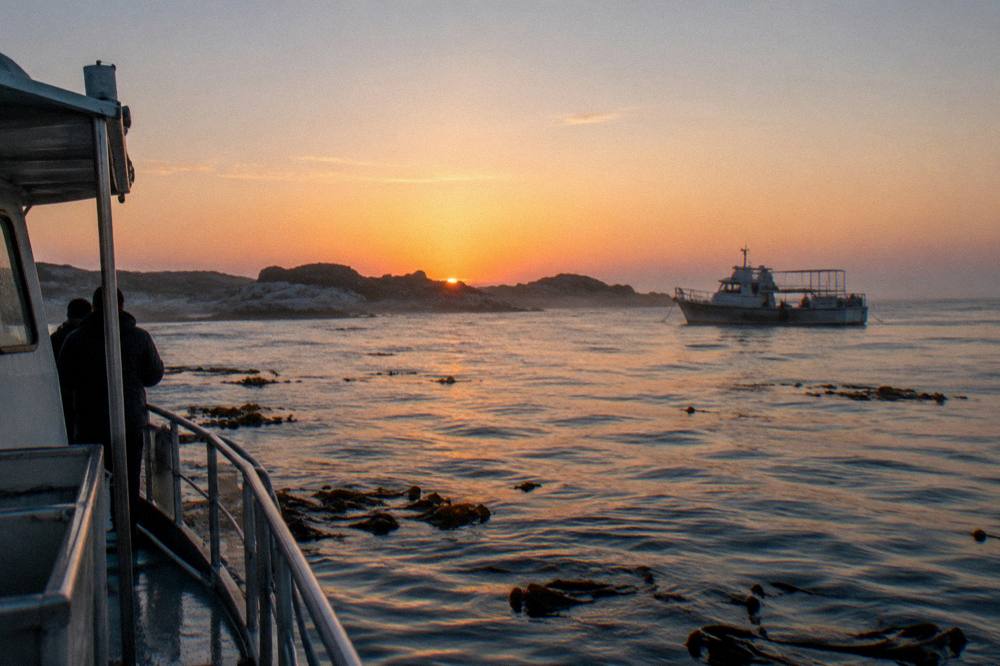
The seasonal pattern here is driven by two things: shark behaviour and water clarity. Bronze whalers are present year-round, but the cooler months concentrate them and clear the water. Visibility in this area typically runs 3 to 10m, averaging 6 to 8m, and the best conditions, up to 12 to 16m in strong spells, arrive in the cooler months from April to September when plankton levels drop. Summer plankton blooms and post-storm swell both cut visibility sharply, which matters a lot in a surface cage where you are watching sharks approach through the water column.
| Month | Gansbaai water temp (°C) | Conditions note |
|---|---|---|
| January | 20.7 | Warmest water, plankton reduces visibility |
| March | 20.6 | Calmer seas, summer crowds |
| May | 17.4 | Shoulder season, visibility improving |
| July | 15.8 | Coolest water, best clarity, rougher swells |
| September | 15.8 | Peak visibility, whale season overlapping |
| November | 18.3 | Warming, whale season tail |
The rough-with-clear trade-off in winter is the single biggest planning decision. A July trip gives you the best shot at clear water and active sharks, and also the highest chance of a lumpy boat ride. Seasickness is the most commonly reported issue on these trips, precisely because the boats anchor and drift rather than run, and the seasickness guide covers mitigation in detail. If anyone in your party is prone, either book the warmer months and accept murkier water, or medicate properly and take the morning departure, which tends to run calmer than the afternoon one.
There is also a wildlife overlay worth planning around. Southern right whales are present in Walker Bay roughly June to November, peaking September to October, and humpbacks migrate through May to June and November to January. A September or October trip therefore stacks three experiences: peak visibility, active sharks, and whales on the ride out. The season guide unpacks the full calendar, and the best time to visit guide logic applies to the whole Gansbaai roster since every operator launches from the same harbour into the same water.
What Else Can You Combine With A Dyer Island Trip?
Hermanus sits 30 to 40 minutes' drive from Gansbaai and is the natural pairing: shore-based whale watching on the free Cliff Path, the free Fernkloof Nature Reserve, and paid boat trips. Boulders Beach penguins near Simon's Town are a separate paid SANParks site at R245 for international adults. The two towns are far enough apart that pairing them in one day is a stretch.
The Gansbaai to Hermanus run is the most realistic same-day pairing on this coast. You dive in the morning, drive east after lunch, and walk the Cliff Path in the afternoon, where southern right whales frequently pass within metres of the shore during the June to November season with no booking and no fee. The things to do in Hermanus guide covers the full list, including which activities are genuinely free and which carry fees: the Cliff Path and Fernkloof are free, while sections of Walker Bay Nature Reserve charge CapeNature access fees of roughly R65 to R70.
| Pairing | Distance from Gansbaai | Cost | Notes |
|---|---|---|---|
| Hermanus Cliff Path | 30 to 40 minutes' drive | Free | Whales close to shore, June to November, peak September to October |
| Fernkloof Nature Reserve | Near Hermanus | Free, donations welcome | Fynbos hiking trails, open daily |
| Boulders Beach penguins | Near Simon's Town, about 2h 20m away | R245 international adult | SANParks fee, valid through 31 Oct 2026, ID required |
| Klipgat Cave / Walker Bay reserve | Local | Roughly R65 to R70 | CapeNature day access fee applies |
The Boulders Beach pairing deserves its own honesty note because it is widely misreported as free. It is not: Boulders is a paid SANParks site within Table Mountain National Park, charging R245 for international adults and R120 for children aged 2 to 11, with discounted rates for SADC and South African visitors and free entry for under 2s. The penguins are present year-round, but the site is a 2 hour 20 minute drive from Gansbaai in the opposite direction from Hermanus, so it fits a False Bay itinerary rather than a Gansbaai one. The Boulders Beach entry fee post has the full fee table.
If you are building the whole day from Cape Town, the realistic structure is: early transfer or self-drive to Kleinbaai, morning on the water, lunch in Gansbaai or Hermanus, Cliff Path walk in the afternoon, and the drive back. That is a full but workable day, and it is exactly what the full-day transfer packages are designed around. Trying to add Simon's Town or the Cape Point side of the peninsula to the same day does not work; the distances are too long and the shark trip's timing too fixed.
Common Questions About Dyer Island And Shark Alley
Can You Visit Dyer Island Itself?
No. Dyer Island is a protected bird sanctuary within the Dyer Island Nature Reserve Complex, a Ramsar wetland site, and there is no public access to the island. Boats work the surrounding water under permit, but no tour lands passengers there.
Are There Great White Sharks In Shark Alley Now?
Not reliably. Great whites have been largely absent from Gansbaai since roughly 2017, when orca predation triggered a sustained decline. A peer-reviewed study of 2009 to 2024 boat data found no site fidelity among the whites seen and no increase in sightings. Operators now feature bronze whaler and sevengill sharks.
How Far Offshore Is The Dive Site From Kleinbaai?
Dyer Island sits roughly 8 to 10km offshore from Kleinbaai Harbour, and the boat ride out typically takes 20 to 60 minutes depending on conditions and where the skipper anchors. Total trip durations run from 3 hours for basic half-days to 10 hours for full-day Cape Town packages.
Why Are There So Many Seals At Geyser Rock?
Geyser Rock hosts a Cape fur seal colony of roughly 60,000 animals on about 3 hectares of rock. The colony was the historic prey base that drew great white sharks to the area, and it still anchors the local food web that supports the bronze whalers and sevengills seen on today's trips.
Is Shark Alley Rough For Seasickness?
It can be. The channel is shallow, about 5m deep, and swell pushes through the gap between the two islands, so anchored boats move. Seasickness is the most commonly reported issue on these trips. Morning departures tend to be calmer, and medication taken in advance works far better than remedies taken once on board.
Do You Need Scuba Certification For Dyer Island Shark Diving?
No. The cage floats at the surface and you either breath-hold or use a surface-supplied air line depending on the listing. No scuba certification is required for any trip on this roster. The hookah and air-line listings simply upgrade the breathing method.